Category:
EconomyBhutan's Egg Self-Sufficiency Crisis: The Boom-and-Bust Cycle
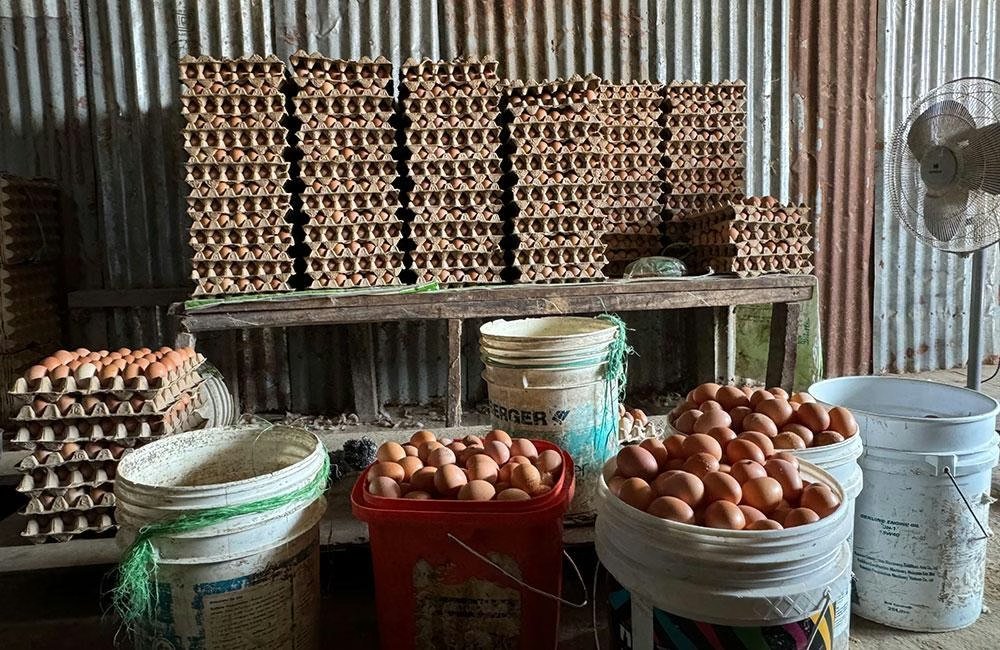
The Paradox of Plenty: How Bhutan Lost Its Egg Independence 🥚
Bhutan once stood as a beacon of agricultural self-reliance. In 2012, the nation achieved a remarkable milestone—complete egg self-sufficiency with zero imports and even a modest export surplus. Yet today, this achievement feels like a distant memory. Despite decades of government intervention and policy initiatives, Bhutan finds itself repeatedly importing eggs to meet domestic demand, caught in a frustrating cycle of production swings that threatens the nation's food security ambitions.
The current egg crisis represents more than just a temporary market hiccup. It reflects deeper structural vulnerabilities in Bhutan's poultry sector that policymakers have struggled to resolve for years.
Understanding the Boom-and-Bust Production Cycle 📊
Economists and food policy experts describe Bhutan's situation as a classic "boom-and-bust" production cycle, also known as fragile self-sufficiency or import relapse. This pattern emerges from a combination of interconnected factors that create predictable waves of oversupply and shortage.
The mechanism is deceptively simple but devastating in its consequences. When egg prices fall below production costs, farmers reduce their flocks or exit the business entirely. Months later, when supply tightens and prices climb, producers attempt rapid expansion. However, this lag between decision-making and production creates alternating periods of glut and scarcity.
The biological reality compounds the problem. Day-old chicks (DOCs) require 18 to 20 weeks before reaching laying maturity, with peak production occurring several weeks later. This means stocking decisions made today directly influence egg availability five to six months into the future. Farmers operating without coordinated planning inevitably create mismatches between supply and demand.
The Numbers Tell a Troubling Story 📉
Consider the recent production data:
- 2023: An unplanned supply of 718,094 DOCs flooded the market
- Result: Egg oversupply crashed prices to Nu 190 per tray in summer 2024—below production costs
- Farmer Response: Flock reduction and business exits
- 2024-25 Planning: Only 293,014 of 453,900 planned female DOCs were restocked
- 2025 Production: Egg output plummeted from 98.17 million to 84.85 million units
This boom-and-bust pattern demonstrates how uncoordinated decision-making at the farm level creates systemic instability at the national level.
Why Consumers Pay South Asia's Highest Prices 💰
Bhutanese consumers face an uncomfortable reality: they pay the highest egg prices across South Asia, averaging Nu 18 per egg according to the Competition and Consumer Affairs Authority. This pricing paradox exists despite the nation's agricultural focus and production capacity.
The supply chain reveals significant inefficiencies. Eggs produced at Nu 450-460 per tray at farms in Shompangkha, Sarpang—Bhutan's largest egg-producing district—reach Thimphu markets at Nu 590-600 per tray. This represents a dealer profit margin of 30-31 percent per tray, reflecting transportation costs, spoilage risks, and distribution complexities across Bhutan's challenging terrain.
These margins persist even when domestic production theoretically should stabilize prices. The infrastructure limitations and geographic dispersal of Bhutan's population create structural cost pressures that no amount of local production can fully eliminate.
The 2025-2026 Import Relapse: A Case Study in Crisis Management 🚚
When egg production declined sharply in 2025, the government took decisive action. The Food Corporation of Bhutan (FCBL) imported 34,041 cartons—approximately 7.15 million eggs—beginning March 27, 2026. These imported eggs were distributed through 33 warehouses and outlets nationwide at government-fixed wholesale prices of Nu 300 per tray and maximum retail prices of Nu 330 (inclusive of GST).
The import initiative showed initial success, with roughly 90 percent of the first consignment selling within 12 days. However, operational challenges soon emerged. Storage constraints, spoilage issues, and distribution difficulties proved more complex than anticipated. By July 2026, the government discontinued imports, leaving 16,134 cartons from the fourth consignment never imported.
During the import period, local brown egg prices declined from Nu 540 per tray in early May to Nu 515 in late July 2026. Yet when imports stopped, prices rebounded to approximately Nu 540 by mid-October—demonstrating how dependent the market had become on temporary import relief.
Structural Challenges Beyond Market Cycles 🌡️
Agriculture and Livestock Minister Younten Phuntsho identified multiple vulnerabilities threatening egg production stability:
- Disease outbreaks disrupting flocks unpredictably
- Feed shortages and quality issues affecting bird nutrition and productivity
- Water and electricity disruptions impacting farm operations
- Extreme temperatures in southern districts stressing birds during peak heat
- Transport difficulties delaying deliveries and increasing spoilage
- Contamination risks compromising product safety and marketability
These challenges exist independently of market price signals, meaning even perfectly coordinated production planning cannot fully protect against supply shocks.
The One-Child-One-Egg Initiative: Ambitious Goals, Mounting Pressure 🎓
In February 2025, Bhutan launched the One-Child-One-Egg (OCOE) initiative in collaboration with the Food and Agriculture Organization of the United Nations (FAO). Simultaneously, the government increased monthly student stipends to Nu 3,100, with egg inclusion as a nutritional component.
These initiatives increased national egg requirements to 130.19 million eggs annually—a significant jump from baseline demand. While the policy objectives align with nutritional and social welfare goals, they also created additional pressure on an already-stressed production system precisely when supply was contracting.
This timing mismatch exemplifies the coordination challenges facing Bhutan's agricultural policy. Demand-side interventions cannot succeed without corresponding supply-side stability.
Private Importers and the Temporary Solution 🤝
Recognizing that domestic production recovery would require time, the government opened controlled import windows for private businesses. By October 2026, nine importers received approval to import eggs subject to Bhutan Food and Drug Authority (BFDA) requirements and veterinary certification standards.
This private import mechanism represents a pragmatic interim solution. However, it also signals acknowledgment that self-sufficiency targets—originally aimed for April 2026, then August 2026—cannot be met through domestic production alone in the near term.
The reliance on private importers introduces new variables: international price fluctuations, currency exchange rates, and supply chain vulnerabilities beyond Bhutan's borders. This dependency contradicts the original self-sufficiency vision.
The Historical Context: 2012 and Beyond 📚
Bhutan's path to self-sufficiency began with the 2008 ban on egg imports, implemented due to bird flu concerns and domestic industry protection objectives. By 2012, through coordinated government support and farmer development programs, the nation achieved complete self-reliance.
This success, however, proved fragile. Without sustained mechanisms to prevent the boom-and-bust cycle, the gains gradually eroded. The pattern suggests that achieving self-sufficiency differs fundamentally from maintaining it—the latter requiring continuous institutional coordination and farmer education that Bhutan's system has struggled to provide consistently.
Lessons from South Asian Comparisons 🌏
Bhutan's experience contrasts sharply with larger South Asian neighbors that maintain more stable egg markets through:
- Larger integrated production systems reducing individual farmer impact
- Diversified supply chains with multiple production clusters
- Better infrastructure for storage, transport, and distribution
- More developed futures markets allowing price hedging
- Economies of scale in feed production and veterinary services
Bhutan's smaller scale creates inherent vulnerabilities that policy alone cannot fully overcome.
What Needs to Change: Policy and Infrastructure Priorities ⚙️
Addressing Bhutan's egg production instability requires multifaceted approaches:
Coordination Mechanisms: Establishing mandatory DOC stocking coordination committees with farmer participation, government oversight, and quarterly planning cycles.
Infrastructure Investment: Developing regional egg storage facilities with temperature control, improving rural road conditions, and ensuring reliable electricity and water supplies to farms.
Risk Management Tools: Introducing crop insurance schemes, establishing price support floors, and creating farmer cooperatives for collective bargaining and planning.
Supply Chain Resilience: Diversifying feed supply sources, developing local feed production capacity, and establishing disease surveillance networks.
Market Information Systems: Creating transparent price reporting mechanisms and production forecasting tools to improve farmer decision-making.
The Path Forward: Realistic Expectations 🔮
Bhutan's egg self-sufficiency journey illustrates a broader truth in agricultural development: achieving self-reliance requires not just production capacity but sophisticated market coordination, infrastructure, and institutional capacity. The boom-and-bust cycle will likely persist unless policymakers address these underlying structural issues.
Short-term import windows provide breathing room, but they are not solutions. The government's willingness to permit controlled imports demonstrates pragmatism, yet also reflects the limits of current domestic production systems.
True food security for Bhutan's egg sector requires acknowledging that in a small nation with geographic challenges, some reliance on imports may be economically rational. The goal should shift from absolute self-sufficiency to resilient self-reliance—maintaining substantial domestic production while developing reliable, diversified import partnerships that prevent price spikes during supply disruptions.
Until Bhutan's policymakers implement coordinated production planning, infrastructure improvements, and market stabilization mechanisms, the nation will remain trapped in cycles of crisis and temporary relief. The 2012 achievement of self-sufficiency was real, but maintaining it requires sustained commitment that extends far beyond production targets into the complex realm of institutional coordination and supply chain management.
You May Also Like

Economy
Govt Opens Egg Imports to Private Firms Amid Pricing Crisis
November 18, 2026
Economy
West Bengal's Bumper Harvest Threatens Bhutan's Potato Export Market
November 18, 2026

Economy
BCCI Presidential Election Results Upheld After Thorough Complaint Review
November 17, 2026
Economy
Organic Farming Success: Chheng Farmers Transform Rural Economy
November 15, 2026