Category:
EnvironmentWeak Environmental Planning Unveiled by Rinchending Bypass
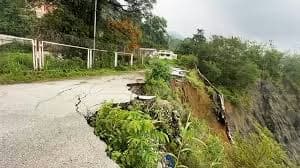
The Unseen Challenges of Rinchending Bypass 🌧️🚧
The Rinchending bypass in Phuentsholing was envisioned as a crucial support corridor to mitigate landslide threats, yet it now poses significant environmental challenges. This 1.6-kilometer stretch, constructed last year at a cost of Nu 13 million, was supposed to safeguard Bhutan's primary trade route. However, it has inadvertently exposed the frailties in environmental planning and assessment.
A Troubling Environmental Legacy 🌱
The bypass, while addressing immediate concerns, has introduced new risks due to the steep terrain above the existing highway. Rainfall mobilizes loose soil and construction debris, which then cascades down onto the highway, disrupting traffic and increasing flood risks. This situation underscores a critical oversight in integrating environmental considerations into the planning and execution phases of such infrastructure projects.
The Broader Impacts on Local Communities 👥
The environmental impact extends beyond the highway. Debris flows and rainwater runoff pose a threat to nearby settlements, such as the Army camp and Phuentsholing Primary School. These areas face heightened flood risks, particularly during the monsoon season. Concerns are mounting as debris management practices, like roadside deposition, exacerbate downstream impacts, threatening public infrastructure.
Health Concerns Emerge 🚑
The bypass area's environmental degradation has led to health issues, particularly among children. Students at Phuentsholing Primary School are experiencing skin allergies due to dust exposure, a concern that parents have raised on social media. Dust pollution affects the community's quality of life, as residents struggle to maintain hygiene amid persistent dust and mud.
The Department of Surface Transport's Response 🛠️
The Department of Surface Transport (DoST) acknowledges the slope instability and the resultant challenges. Immediate actions include installing a crib wall to stabilize the slope and deploying monitoring teams at vulnerable locations. Permanent solutions, such as gabion walls and random rubble masonry (RRM) toe walls, are planned to address these issues more effectively.
The Path Forward: Lessons Learned and Future Actions ➡️
This situation highlights the need for robust environmental planning in infrastructure development. Implementing comprehensive environmental assessments, continuous monitoring, and adaptive management strategies are essential. The integration of sustainable practices can prevent similar issues in future projects, ensuring that infrastructure development aligns with environmental conservation goals.
Conclusion: A Call for Resilient Infrastructure Planning 🔎
The Rinchending bypass serves as a cautionary tale about the consequences of inadequate environmental planning. As Bhutan continues to develop its infrastructure, there is a pressing need to prioritize environmental considerations. By learning from this experience, policymakers and planners can implement more resilient strategies to safeguard not only economic interests but also the environment and public health.
You May Also Like
Environment
Climate Crisis in the Himalayas: Bhutan's Cold Reminder
August 29, 2026
Environment
WBH Conservation Project Delivers Clean Water to Rural Homes
August 29, 2026
Environment
HKH Climate Crisis: Why Regional Unity Matters Now
August 29, 2026
Environment
Bhutan's Solar Power Revolution: Energy Security Strategy
August 26, 2026