Category:
EnvironmentWaste to Wealth: Laya's Circular Economy Revolution
From Discarded Plastics to Community Prosperity 🌍
High in Bhutan's remote highlands, a quiet revolution is unfolding. The residents of Laya are discovering that what was once considered worthless garbage can be transformed into beautiful, functional products—and more importantly, into sustainable income opportunities. This grassroots movement represents a powerful intersection of environmental responsibility and economic empowerment, particularly for women in one of Bhutan's most isolated communities.
The transformation began when a visionary founder established SHE-Cycle Solutions in 2025, a community-based organization dedicated to waste management and women's empowerment. What started as a simple idea has blossomed into a thriving initiative that brings together more than 20 women and girls from Laya, spanning multiple generations and united by a common purpose: turning waste into useful products while protecting their pristine mountain environment.
The Genesis of Change: How It All Started 💡
Like many remote communities, Laya faced persistent challenges with waste disposal and environmental management. Plastic packets from milk powder, flour, and other household goods accumulated without a clear solution for their disposal. The community lacked both the infrastructure and the awareness needed to address this growing problem effectively.
Sangay Wangmo, who leads the SHE-Cycle group in Laya, recalls the mindset shift that had to occur first. "Before, people did not know how to dispose of waste properly. They also did not know that these waste materials could be turned into useful products," she explains. This knowledge gap was the first barrier to overcome.
The initiative's founder, Chogyal Lhamo, recognized an opportunity to address multiple challenges simultaneously: environmental degradation, lack of economic opportunities for women, and limited awareness about waste management. By teaching women traditional weaving techniques adapted for modern materials, the organization created a sustainable model that benefits both people and the planet.
Transforming Trash Into Treasure: The Process 🎨
The production process is refreshingly straightforward and accessible to community members of all skill levels. Women collect discarded plastic packets—primarily milk powder and flour packaging—from their own households and from community members who bring materials directly to them. These humble materials are then woven into an impressive array of products.
The range of items created through this upcycling process includes:
- Handbags and pouches - stylish accessories with genuine character
- Picnic and lunch baskets - practical containers for daily use
- Woven textiles - decorative and functional pieces
- Upcycled clothing - giving discarded garments a completely new purpose
What makes this approach particularly effective is its flexibility. The group operates without rigid schedules, allowing members to work whenever time permits and materials are available. This adaptability is crucial in a mountain community where women juggle multiple responsibilities including household duties, farming, and childcare.
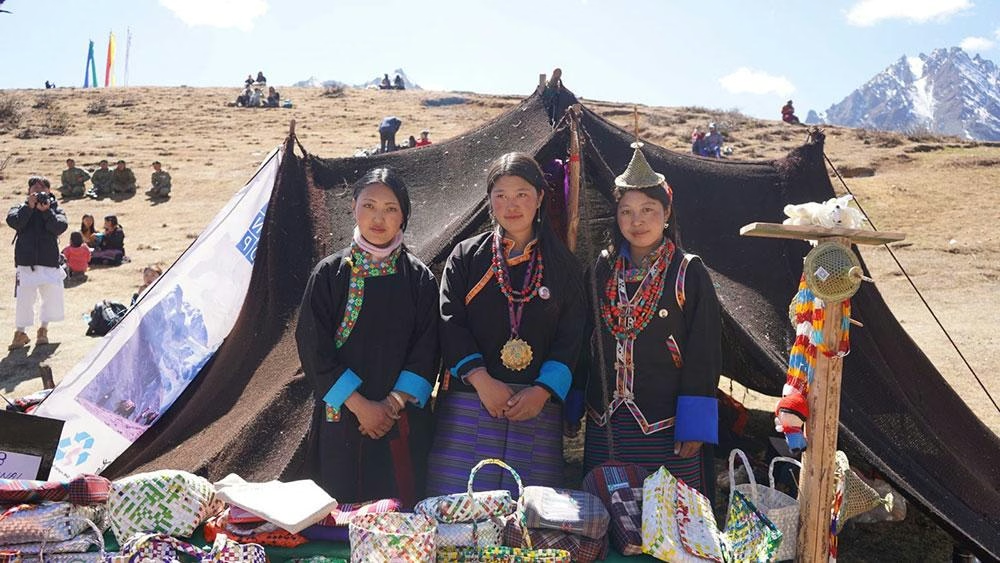
During Laya's Royal Highland Festival, the community proudly showcased these creations, demonstrating that waste transformation has moved from a niche experiment to a celebrated community achievement. The visibility at such a prominent event helped shift public perception of both the initiative and the value of waste materials.
Breaking Down Barriers: Awareness and Community Buy-In 🚀
Initial resistance was inevitable. Many community members struggled to comprehend how discarded plastic packets could become desirable products. Overcoming this psychological barrier required patience, demonstration, and gradual community engagement.
Sangay Wangmo notes that understanding varied significantly across the community at first. "People's understanding varied, but awareness and community support had gradually improved," she reflects. This gradual acceptance reflects a broader global trend: as environmental consciousness grows worldwide, even remote communities are beginning to embrace circular economy principles.
The improvement in community attitudes directly correlates with measurable environmental benefits. Waste management practices in Laya have improved significantly since the initiative's launch. Residents now view waste not as a disposal problem but as a resource with potential value. This mindset shift represents perhaps the most important achievement of all—transforming how an entire community relates to consumption and waste.
Empowering Generations Through Shared Purpose 👩👧👦
One of the most remarkable aspects of SHE-Cycle Solutions is how it bridges generational divides. The initiative brings together older women with valuable traditional skills and younger women eager to learn and contribute to environmental protection. This intergenerational collaboration strengthens community bonds while preserving traditional knowledge.
The organization is actively extending its reach to younger generations through educational partnerships. Laya Central School now incorporates waste management and upcycling lessons into its curriculum, teaching students how to manage waste and transform discarded plastic into useful products. By introducing these concepts early, the initiative ensures that environmental consciousness and practical sustainability skills become embedded in community culture.
This educational component addresses a critical gap in environmental literacy. Young people learning these skills develop both practical competencies and a deep understanding of their community's environmental challenges and solutions.
Navigating Market Challenges in Remote Communities 📊
While the production process has proven successful, selling products in Laya presents genuine obstacles. The local market is limited—the community is small, and many residents have modest purchasing power. This geographical and economic reality requires creative solutions.
Chogyal Lhamo has become an essential bridge to broader markets. The founder personally transports finished products to Thimphu and other urban centers, connecting Laya's artisans with buyers who appreciate the unique story and environmental value behind each item. This market linkage is crucial for the initiative's financial sustainability.
The challenge of market access highlights a broader issue facing rural artisan communities worldwide. While the products are high-quality and carry significant environmental and social value, connecting producers with consumers remains complex. Potential solutions could include:
- Developing online platforms for direct-to-consumer sales
- Partnering with tourism operators to sell products to visitors
- Creating cooperative networks with other rural communities
- Seeking certification programs that highlight the environmental and social benefits
Environmental Impact: Measuring Success Beyond Numbers 🌱
The environmental benefits of this initiative extend far beyond simple waste reduction statistics. In a highland community like Laya, where waste collection and disposal infrastructure is minimal, preventing plastic waste from accumulating around villages has tangible ecological consequences.
Plastic pollution in remote mountain areas poses unique challenges. Materials take decades to decompose in cool, high-altitude environments, and disposal options are severely limited. By collecting and reusing plastic packets, the initiative prevents environmental contamination while reducing the need for new plastic production—with its associated carbon emissions and resource consumption.
The reduction in plastic waste being discarded has been noticeable and meaningful. As more community members participate in collection and reuse, fewer packets end up scattered across the landscape or buried in informal dumps. This visible environmental improvement reinforces community commitment to the initiative.
Economic Empowerment: More Than Just Income 💰
For the women involved, SHE-Cycle Solutions represents far more than a simple income-generating activity. It provides economic agency in a context where women's financial independence is often limited. By developing marketable skills and producing goods with genuine commercial value, participants gain confidence, autonomy, and practical experience in entrepreneurship.
The initiative also challenges traditional economic structures. Women who might otherwise have limited access to income-generating opportunities now control a production process from raw material collection through finished product creation. This agency extends beyond economics into social empowerment and community status.
Moreover, the income generated—while modest by urban standards—holds significant meaning in a mountain community where cash income opportunities are scarce. These earnings support household expenses, enable investment in education, and provide financial security.
Scaling the Model: Lessons for Other Communities 🔄
The success of SHE-Cycle Solutions in Laya offers valuable lessons for other remote and rural communities facing similar waste management and economic challenges. The model demonstrates that:
- Local solutions matter - Community-based approaches that respect local culture and capacity often succeed better than top-down interventions
- Multiple benefits compound - Initiatives addressing environmental, economic, and social goals simultaneously create stronger incentives for participation
- Skills matter - Teaching practical, marketable skills ensures sustainability beyond initial enthusiasm
- Flexibility enables participation - Allowing flexible work schedules increases accessibility for people with multiple responsibilities
- Generational inclusion strengthens communities - Bringing together people of different ages creates resilience and knowledge transfer
Other highland communities, and indeed rural areas worldwide, could adapt this model to their specific contexts and available materials.
Looking Forward: The Future of Waste Transformation in Laya 🌟
As SHE-Cycle Solutions continues to grow, several opportunities and challenges lie ahead. Expanding market access remains critical—potentially through digital platforms, tourism partnerships, or cooperative networks with other communities. Scaling production while maintaining quality and community participation will require careful planning.
The initiative also demonstrates Bhutan's commitment to its constitutional mandate of maintaining at least 60% forest coverage and its broader environmental conservation goals. By empowering communities to manage waste sustainably, initiatives like this contribute to national environmental objectives while respecting local autonomy and cultural values.
The work in Laya also aligns with global sustainable development goals, particularly those focused on responsible consumption and production, gender equality, and decent work and economic growth. As international attention to circular economy principles grows, community-based initiatives like this gain both relevance and potential support.
Key Takeaways: Waste as Resource 🎯
The transformation happening in Laya reminds us that waste is not inevitable. Through creativity, community engagement, and practical skill-building, discarded materials become valuable products. More profoundly, the initiative demonstrates that environmental protection and economic empowerment need not be competing priorities—they can be mutually reinforcing.
For Sangay Wangmo and the other women of Laya, SHE-Cycle Solutions represents something larger than a waste management program. It embodies the possibility of building sustainable livelihoods while protecting the pristine mountain environment they call home. As this initiative continues to grow and inspire other communities, it offers a powerful model for how remote areas can create prosperity without sacrificing environmental integrity—proving that in the circular economy, yesterday's waste truly becomes tomorrow's wealth.
You May Also Like
Environment
Gender Goals Lag in Global Biodiversity Framework Implementation
October 28, 2026
Environment
Bhutan's Digital Genetic Resources: A Path to Prosperity
October 24, 2026
Environment
GPS Collar Tracks Snow Leopard in Nubri
October 24, 2026
Environment
Biodiversity Finance: The Critical Fault Line at COP17
October 24, 2026