Category:
EnvironmentBiodiversity Finance: The Critical Fault Line at COP17
The Funding Crisis Reshaping Global Conservation Efforts 🌍
As nations gather for the 17th Conference of the Parties to the Convention on Biological Diversity, a fundamental tension has emerged that threatens to undermine decades of conservation progress. The question is no longer whether we need to protect nature—it's how we'll pay for it, and who bears that responsibility.
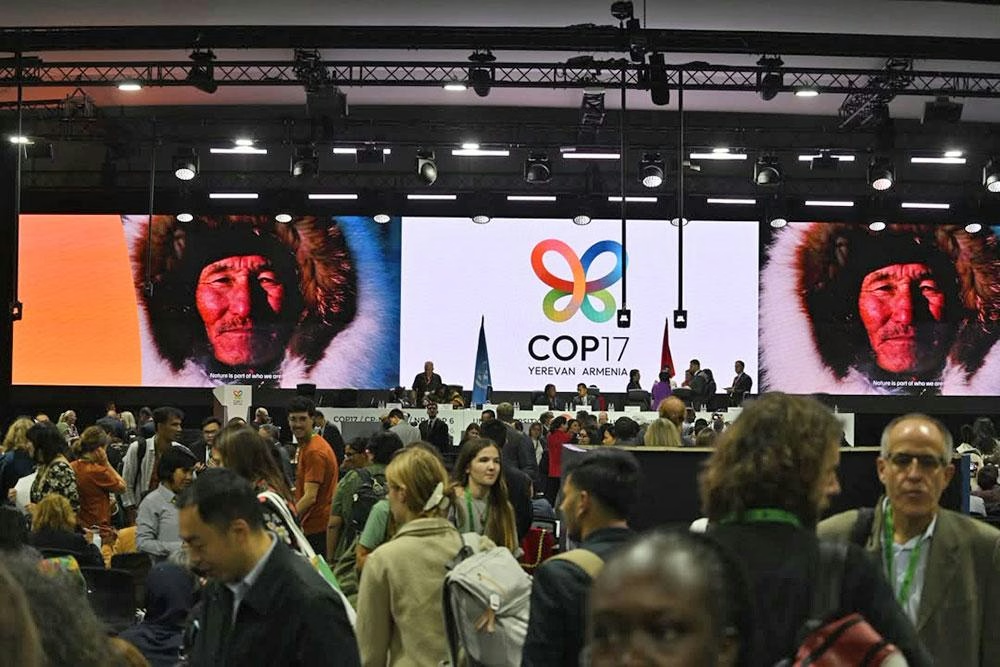
The Kunming-Montreal Global Biodiversity Framework, adopted in 2022, represents humanity's most ambitious attempt to reverse environmental degradation. With 23 specific targets, including the protection of 30 percent of the world's land and sea areas, this framework demands unprecedented coordination and investment. Yet as COP17 convenes in Yerevan, Armenia, the first comprehensive review reveals a sobering reality: biodiversity finance has become the central fault line dividing developed and developing nations.
Understanding the Biodiversity Finance Gap 💰
The numbers tell a stark story. Global biodiversity financing currently averages between $75 billion and $92 billion annually when accounting for domestic public spending, international public finance, and private investment. Yet the actual need is staggering: the financing gap reaches approximately $700 billion per year to effectively address biodiversity loss worldwide.
The framework itself calls for mobilizing at least $200 billion annually from all sources by 2030, with a specific commitment that international biodiversity finance for developing countries should reach $30 billion annually by the same deadline. This represents the difference between aspirational goals and the resources actually available to implement them.
For context, this financing gap exceeds the entire GDP of many nations. It's a challenge that cannot be solved through incremental budget adjustments or modest philanthropic contributions. The scale demands systemic change in how the global economy values and finances conservation.
The Developing World's Dilemma 🌿
Countries like Bhutan face a particularly acute challenge. These nations often hold disproportionate shares of the world's biodiversity—Bhutan itself maintains over 60 percent forest coverage and serves as a critical watershed for South Asia—yet they lack the financial resources to match their conservation ambitions with concrete action.
The tension centers on a fundamental question of equity: Should countries that have already industrialized and extracted natural resources bear primary responsibility for financing global conservation? Or should the burden be shared equally among all nations, regardless of their economic capacity?
Developing countries emphasize that biodiversity finance must be predictable, accessible, and genuinely additional to existing development assistance. They argue that conservation commitments cannot compete indefinitely with pressing needs in healthcare, education, and infrastructure development. The debate isn't merely academic—it determines whether ambitious environmental goals remain aspirational or become achievable.
Subsidy Reform: A Contentious Strategy ⚖️
The framework proposes identifying and reforming subsidies that harm nature, with a target to reduce such subsidies by at least $500 billion annually by 2030. On the surface, this seems straightforward: eliminate financial incentives that encourage environmental degradation.
However, developing countries have raised critical concerns. They fear that subsidy reform could become a substitute for direct international financial support rather than a complement to it. Agricultural subsidies, for instance, often support rural livelihoods in poorer nations. Removing them without providing alternative income sources could deepen poverty while failing to deliver conservation benefits.
This represents a classic policy dilemma: the most economically efficient solution may not be the most socially equitable one. Negotiators must balance environmental objectives with developmental realities.
The Cali Fund: Testing Global Benefit-Sharing Principles 🧬
Among the most innovative—and currently most problematic—mechanisms is the Cali Fund, established to share benefits from digital sequence information on genetic resources. In practical terms, this means ensuring that when pharmaceutical companies, agricultural firms, or biotechnology enterprises develop products based on genetic material from biodiverse nations, those countries receive a share of the profits.
The concept is elegant and fair. A malaria treatment derived from a plant found in a tropical forest, for instance, generates billions in revenue. Shouldn't the nation where that plant originated benefit from its commercial success?
Yet the fund's current state reveals implementation challenges. With only approximately $10,000 contributed so far, the mechanism has failed to gain traction among private sector participants. This raises critical questions: How can the fund be restructured to attract broader business participation? How should benefits be distributed among nations, indigenous peoples, and local communities? How can the mechanism function across different legal systems and regulatory frameworks?
For biodiversity-rich countries, the Cali Fund represents a test case for whether global frameworks can translate principles into tangible benefits. Success could establish a model for equitable benefit-sharing across multiple sectors. Failure would reinforce skepticism about whether international agreements deliver meaningful support to developing nations.
Bhutan's Strategic Position 🏔️
Bhutan's experience illustrates both the opportunities and challenges at stake. The nation has positioned conservation at the center of its development philosophy, constitutionally mandating that at least 60 percent of the country remain forested. This commitment has made Bhutan a global leader in environmental stewardship—the nation is carbon-negative, absorbing more carbon dioxide than it produces.
Yet maintaining this position requires sustained investment. Scientific monitoring systems, community engagement programs, infrastructure that minimizes environmental impact, and capacity-building initiatives all demand resources that compete with other development priorities. International finance and technology support can strengthen these efforts, but only if such support is reliable and accessible.
Bhutan's situation raises a broader question for all conservation-focused nations: How can countries maintain ambitious environmental commitments while ensuring that conservation costs don't fall disproportionately on their own populations and economies? This isn't merely a technical question—it's fundamentally about justice and sustainability.
Implementation Gaps and Systemic Challenges 📊
The first global review of progress under the Kunming-Montreal Framework reveals that while countries have made advances in setting national targets and preparing biodiversity plans, implementation remains insufficient. The gap between commitment and action reflects several systemic challenges:
- Institutional fragmentation: Environmental ministries often lack authority over decisions in agriculture, infrastructure, and finance that directly impact biodiversity
- Short-term political cycles: Conservation requires decades of consistent investment, but political leaders typically operate on election cycles
- Competing priorities: Development needs in healthcare, education, and poverty reduction legitimately compete for limited government resources
- Technical capacity gaps: Many developing nations lack the scientific expertise and monitoring infrastructure needed for effective conservation
- Private sector engagement: Businesses remain inadequately incentivized to prioritize biodiversity in their operations and supply chains
Addressing these challenges requires more than financial transfers. It demands institutional reform, policy integration, and genuine partnership between developed and developing nations.
The Political Week Ahead: Critical Decisions Loom 🎯
The first week of COP17 focused primarily on technical negotiations and draft decisions. The second week promises greater political engagement and higher stakes. October 26 is designated Finance and Biodiversity Day, while the high-level political segment runs October 27-28, with the conference concluding October 30.
During this crucial period, ministers must navigate several interconnected challenges:
- Establishing credible financing mechanisms that move beyond pledges to actual resource transfers
- Defining clear pathways for accessing international biodiversity finance
- Balancing equity concerns with pragmatic implementation approaches
- Strengthening the Cali Fund to make genetic benefit-sharing operationally viable
- Integrating biodiversity into broader economic and development decisions
These negotiations will determine whether the Kunming-Montreal Framework becomes a transformative force for conservation or remains another well-intentioned agreement lacking implementation capacity.
Broader Context: Why Biodiversity Finance Matters Now 🌱
The urgency surrounding biodiversity finance reflects accelerating environmental change. Species extinction rates have increased dramatically, with current losses occurring at 100 to 1,000 times the natural background rate. Ecosystem degradation threatens food security, water availability, and climate stability for billions of people.
Simultaneously, the economic case for conservation has strengthened. Research increasingly demonstrates that nature-based solutions—wetland restoration, forest protection, marine conservation—often provide more cost-effective approaches to climate adaptation and disaster risk reduction than purely technological solutions.
Yet this economic case hasn't translated into corresponding financial commitments. The biodiversity finance gap persists because nature's economic value remains inadequately reflected in national accounting systems and international financial flows.
The Path Forward: Integration and Accountability 🔄
Resolving the biodiversity finance fault line requires moving beyond traditional environmental policy frameworks. Biodiversity must be integrated into decisions on agriculture, infrastructure development, financial regulation, and business operations, rather than remaining siloed within environment ministries.
This integration approach offers multiple benefits:
- Agricultural policy can incentivize farming practices that enhance rather than degrade biodiversity
- Infrastructure development can incorporate environmental considerations from the planning stage
- Financial regulation can require companies to account for and manage biodiversity risks
- Business operations can embed conservation into supply chain management and product development
Such integration requires accountability mechanisms and transparent reporting. Countries and corporations must face consequences for failing to meet biodiversity commitments, while those making genuine progress receive recognition and support.
Conclusion: A Critical Moment for Global Conservation 🌏
The biodiversity finance debate at COP17 represents far more than a technical negotiation about funding levels. It reflects fundamental questions about global equity, intergenerational responsibility, and the kind of world we're building for future generations.
For nations like Bhutan, the outcome will directly affect their ability to maintain conservation commitments while pursuing sustainable development. For the global community, the result will signal whether international agreements can translate principles into meaningful action.
The second week of COP17 will reveal whether political leaders can bridge the biodiversity finance gap or whether this fault line will continue to fracture global conservation efforts. The decisions made in Yerevan will echo far beyond the conference hall, shaping conservation possibilities for decades to come. What happens next will determine whether we've truly committed to halting and reversing nature loss, or whether we've merely created the appearance of commitment while allowing biodiversity to continue its decline.
You May Also Like

Environment
Bhutan's Digital Genetic Resources: A Path to Prosperity
October 24, 2026
Environment
GPS Collar Tracks Snow Leopard in Nubri
October 24, 2026
Environment
COP17 Yerevan: Global Biodiversity Review Shapes Nature's Future
October 21, 2026
Environment
Wildlife Conflict Crisis: How Neglected Private Land Threatens Tashicholing
October 19, 2026