Category:
EnvironmentGPS Collar Tracks Snow Leopard in Nubri
Groundbreaking Wildlife Monitoring Initiative Takes Flight 🐆
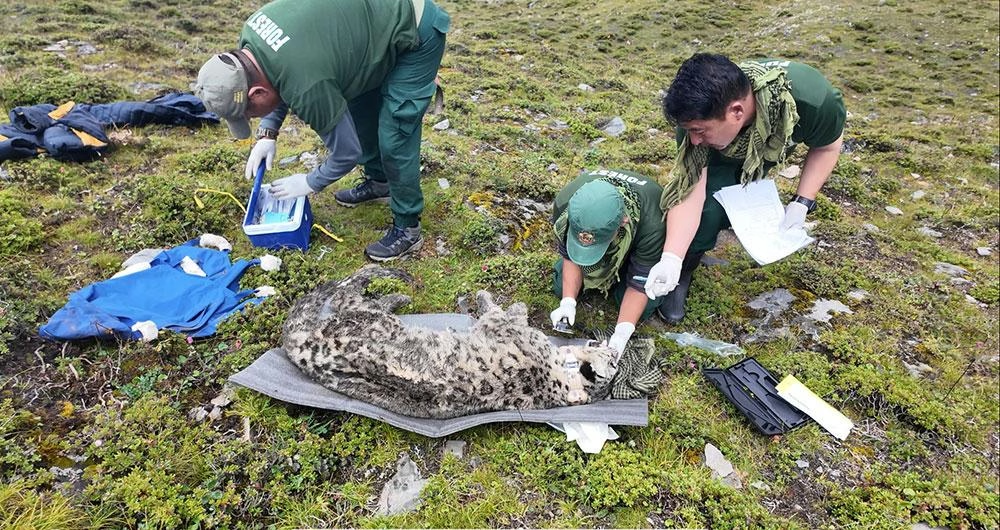
In a significant stride toward understanding one of the world's most elusive big cats, conservation authorities in Bhutan have successfully fitted a female snow leopard with a cutting-edge GPS collar in the remote Nubri region. This pioneering effort represents a transformative moment in snow leopard research and represents a critical advancement in protecting this vulnerable species across the Himalayan landscape.
The initiative, spearheaded by the Department of Forests and Park Services (DoFPS) in collaboration with WWF-Bhutan, marks the beginning of an ambitious multi-year program designed to illuminate the secretive lives of these magnificent predators. With fewer than 8,000 snow leopards remaining in the wild globally, every data point collected through this collaring program holds immense value for species preservation.
Understanding the GPS Collar Technology 📡
The device fitted to the snow leopard operates with remarkable precision, recording the animal's exact location every one to two hours. This frequency of data collection provides researchers with unprecedented insight into movement patterns that were previously shrouded in mystery.
Key capabilities of the GPS collar include:
- High-resolution location tracking across vast mountain terrain
- Two-year operational lifespan providing continuous data collection
- Ability to function in extreme high-altitude conditions exceeding 3,000 meters
- Real-time transmission capabilities for adaptive research adjustments
- Minimal impact on the animal's natural behavior and survival
The collar's sophisticated technology transforms how scientists approach snow leopard conservation. Rather than relying solely on occasional camera-trap footage, researchers now access detailed movement corridors and behavioral patterns that reveal how these animals navigate their expansive territories.
The Nubri Landscape: A Critical Snow Leopard Habitat 🏔️
Located within Thimphu district at elevations surpassing 3,000 meters, the Nubri region represents one of Bhutan's most important snow leopard strongholds. This rugged, alpine terrain provides the isolated habitat that snow leopards require, yet simultaneously makes them extraordinarily difficult to study through conventional methods.
The challenging geography that protects snow leopards from human interference also presents significant obstacles for researchers. Field teams have documented spending 15 to 20 consecutive days in certain areas without successfully locating or capturing a single animal. This reality underscores why technological solutions like GPS collars have become indispensable tools for modern conservation science.
Addressing Knowledge Gaps Through Data 📊
The collared snow leopard will provide comprehensive information addressing critical knowledge gaps in our understanding of the species. Tandin, Programme Specialist at WWF-Bhutan, emphasizes that while camera-trap technology has confirmed snow leopard presence throughout Bhutanese highlands, these static monitoring methods reveal little about how animals actually move across landscapes.
Primary research objectives include:
- Movement Pattern Analysis - Understanding daily, seasonal, and annual movement behaviors across fragmented habitats
- Habitat Utilization Studies - Identifying preferred terrain types, elevation ranges, and microhabitats within territories
- Human-Wildlife Interaction Mapping - Determining when and where snow leopards venture into livestock grazing areas
- Climate Resilience Modeling - Projecting how shifting environmental conditions might alter movement corridors
- Corridor Identification - Pinpointing critical pathways connecting isolated populations
This data will prove invaluable for developing evidence-based conservation strategies that balance snow leopard protection with the livelihood concerns of rural communities dependent on livestock.
Mitigating Human-Snow Leopard Conflict 🤝
One of the most pressing conservation challenges in Bhutan involves reducing conflicts between snow leopards and herding communities. When snow leopards descend into areas occupied by yaks, sheep, and goats, livestock losses occur, creating tension between predator protection and human economic interests.
The GPS collar data will enable authorities to predict movement patterns and implement targeted interventions. By identifying specific times and locations where snow leopards typically enter livestock zones, communities can deploy enhanced herding practices, protective enclosures, or temporary animal relocations during high-risk periods.
This predictive capability transforms conflict management from reactive responses to proactive prevention—a crucial distinction for long-term coexistence between humans and wildlife.
Expanding the Collaring Program 🎯
The successful collaring of the initial female snow leopard establishes a foundation for an expanded initiative. Between 2026 and 2027, DoFPS aims to fit a minimum of three snow leopards with GPS tracking devices, creating a network of data points across different populations and habitats.
Two additional snow leopards are expected to receive collars within the coming year, building momentum for this transformative research program. This phased approach allows researchers to refine capture and collar deployment techniques while accumulating increasingly robust datasets.
Bhutan's Snow Leopard Population Status 📈
According to the comprehensive 2022-2023 national snow leopard survey, Bhutan supports an estimated 134 snow leopards—representing roughly 1.7% of the global population. This significant concentration of individuals places Bhutan among the world's most important snow leopard conservation territories.
Jigme Dorji National Park harbors the country's highest density of snow leopards, while the Paro Forest Division highlands also represent critical habitat for the species' long-term survival. These regions form interconnected landscapes essential for maintaining viable, genetically diverse populations.
Globally, the International Union for Conservation of Nature lists snow leopards as Vulnerable, with populations threatened by habitat loss, climate change, poaching, and human-wildlife conflict. Bhutan's commitment to rigorous monitoring and science-based management positions the nation as a conservation leader.
Tourism and Economic Opportunities 💰
Beyond pure conservation science, the GPS collar program opens intriguing possibilities for sustainable snow leopard-based tourism development. The Jomolhari landscape, encompassing multiple collaring study areas, possesses significant ecotourism potential.
Accurate movement data enables tourism operators to identify high-probability observation zones and optimal viewing seasons. This information transforms snow leopard tourism from speculative ventures into evidence-based experiences, enhancing visitor satisfaction while generating revenue that supports conservation initiatives.
Communities benefit economically when wildlife becomes more valuable alive than as targets for poaching or livestock predation. Strategic tourism development, informed by GPS collar insights, creates powerful incentives for local support of snow leopard protection.
Climate Change Adaptation and Corridor Protection 🌍
As global temperatures rise, snow leopard habitats face unprecedented transformation. Alpine ecosystems are shifting upward in elevation, potentially fragmenting populations and disrupting established movement corridors.
The GPS collar data will enable researchers to model how snow leopards might respond to different climate scenarios. By understanding current movement patterns, scientists can project future habitat suitability and identify corridors requiring special protection as conditions change.
This forward-looking approach ensures that conservation strategies remain effective even as environmental conditions evolve. Protecting critical movement pathways today safeguards population connectivity for decades to come.
Collaborative Conservation Excellence 🤲
The collaring initiative exemplifies modern conservation through partnership. The Department of Forests and Park Services leads implementation, with substantial support from WWF-Bhutan, WWF-US, and WWF South Korea. The Department of Livestock contributes expertise regarding human-livestock interactions.
This multi-stakeholder approach combines government authority, international conservation expertise, and local knowledge into a cohesive strategy. Such collaboration strengthens program effectiveness while building political support for long-term funding and policy commitments.
Looking Forward: Two Years of Discovery ⏳
Over the next 24 months, the GPS collar will transmit thousands of location data points, each one revealing aspects of snow leopard ecology previously unknown to science. Researchers will analyze movement speeds, habitat preferences, seasonal patterns, and individual behavioral variations.
This information will directly inform the next generation of snow leopard conservation initiatives in Bhutan and potentially influence strategies across the species' range spanning multiple Central Asian nations. The knowledge generated through this single collared individual will benefit snow leopards across thousands of kilometers of Himalayan terrain.
Conclusion: A New Era for Snow Leopard Science 🌟
The GPS collar fitted to the Nubri snow leopard represents far more than a technological achievement—it symbolizes a fundamental shift in how Bhutan approaches wildlife conservation. By combining rigorous science with innovative monitoring tools, the nation demonstrates commitment to protecting its most iconic species while supporting rural communities.
As additional snow leopards receive collars and data accumulates, our understanding of these elusive predators will deepen dramatically. This knowledge will prove essential for ensuring that snow leopards continue roaming Bhutan's magnificent highlands for generations to come, maintaining the ecological integrity and cultural significance of these remarkable animals.
You May Also Like

Environment
Bhutan's Digital Genetic Resources: A Path to Prosperity
October 24, 2026
Environment
Biodiversity Finance: The Critical Fault Line at COP17
October 24, 2026

Environment
COP17 Yerevan: Global Biodiversity Review Shapes Nature's Future
October 21, 2026
Environment
Wildlife Conflict Crisis: How Neglected Private Land Threatens Tashicholing
October 19, 2026