Category:
EconomyUnlocking the Economic Power of Bamboo and Cane
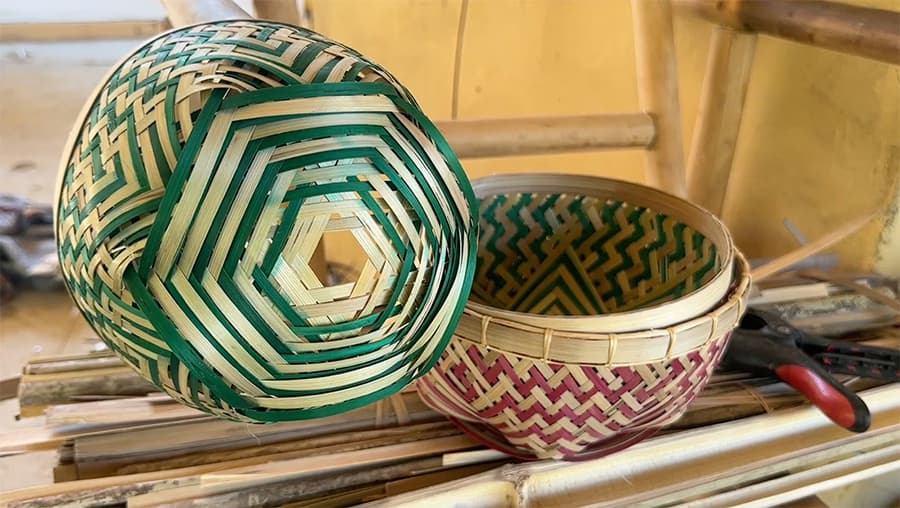
In the serene landscapes of Bhutan, a revolution is quietly unfolding 🌿. Communities are beginning to tap into the economic potential of bamboo and cane, transforming these abundant resources into viable sources of income.
A Promising New Beginning 🌟
During the recent Haa Spring Festival, the air buzzed with excitement. Amidst the stalls of local handicrafts, one particular stand drew attention. Displayed were bamboo containers and gift baskets crafted by young artisans like Kumari Rai. For Kumari, this was more than just a business venture; it was a dream come true.
Growing up in the village of Sertena, Kumari was surrounded by bamboo and cane. Traditionally used for making simple baskets or fences, these materials were part of everyday life but never considered as income-generating assets. That changed when Kumari participated in a 14-day intensive training program focused on diversifying bamboo products.
Training: The Key to Economic Transformation 🔑
The training program, organized with support from the International Climate Initiative (IKI) and facilitated by the Bhutan TSHAR Institute, was a turning point. It brought together 25 participants from various villages, aiming to enhance craftsmanship and promote innovative product designs. The goal was to shift perceptions and unlock the economic potential of these sustainable resources.
The program emphasized sustainable practices, teaching participants how to create market-ready products while respecting the delicate balance of human-wildlife coexistence in the region. By the end of the training, the young artisans had sold products worth Nu 20,000 🤑, demonstrating the tangible benefits of their new skills.
The Broader Economic Impact 📈
Ugyen Takchu, a senior forest ranger, highlights the untapped economic potential of bamboo and cane. Traditionally, these materials were overlooked, yet they hold immense promise for generating sustainable livelihoods. The training not only fostered technical skills but also encouraged entrepreneurship among participants.
Bamboo and Cane: A Sustainable Choice 🌱
- Bamboo and cane are eco-friendly, renewable resources
- They have been integrated into cultural practices for centuries
- New techniques allow for the creation of diverse products, expanding their market appeal
Overcoming Challenges and Looking Forward 🔍
Despite their success, Kumari and her peers face challenges, particularly the lack of access to advanced machinery needed for production. However, plans for further up-skilling training sessions are underway, promising better support and resources.
Kumari remains hopeful, stating, "The festival was the perfect platform to showcase our work. We are eager to continue learning and growing our craft." Her words reflect the determination of her community to build a sustainable future through these natural resources.
A Bright Future for Bamboo and Cane Industries 🌅
The bamboo and cane industries in Bhutan are on the cusp of transformation. With continued support and training, these resources can be pivotal in driving economic growth in rural areas. Communities like those in lower Haa are leading the way, proving that with the right knowledge and resources, traditional materials can powerfully impact modern economies.
As Bhutan continues to prioritize sustainable development, the potential for bamboo and cane is vast. This is just the beginning of a journey where culture, tradition, and innovation intersect to create a thriving economic landscape.
You May Also Like

Economy
Indian Banks Slow to Adopt Bhutanese UPI Payments
October 12, 2026
Economy
Government Addresses 400+ Business Issues to Boost Economy
October 10, 2026
Economy
Bhutan's Bold Vision: Two USD 50M Enterprises by 2030
September 27, 2026
Economy
Mega Dry Port in Pasakha: Bhutan's Trade Revolution
September 25, 2026