Category:
EducationTwo Students Transform Library System Into Digital Solution
From Frustration to Innovation 🚀
Searching through a library's physical catalog can be an exercise in patience and persistence. Students often find themselves wandering aisles, consulting outdated card systems, or asking librarians repeatedly whether specific books are available. This common educational challenge became the catalyst for an extraordinary digital transformation at Motithang Higher Secondary School in Bhutan.
Two remarkable teenagers—commerce student Tshering Tobgay and science student Pravakar Chhetri—recognized this widespread problem and decided to solve it. Rather than simply accepting the limitations of their school's traditional library management system, they channeled their technical skills into creating a comprehensive e-library platform that would revolutionize how students interact with their school's collection.

The Birth of an E-Library System 💡
The journey began when both students found themselves frustrated during their search for academic materials. "We were looking for some books and wanted to know whether they were available in our school library," Pravakar Chhetri explained. "That's when we realized we didn't have any platform where we could look up the books. Many other institutions have similar platforms, but our school didn't have one."
This realization sparked the seven-month development process that would transform their school's library experience. What makes their achievement particularly impressive is that these high school students accomplished this entirely independently, without external consultants or institutional funding. They leveraged their classroom knowledge of JavaScript—a programming language taught in their computer science curriculum—to build a functional, user-friendly system.
How the Digital Solution Works ⚙️
The e-library system operates through a streamlined, intuitive interface accessible via the school's website. Here's what makes it effective:
- User Authentication: Students log in using their library identification numbers
- Real-Time Search: The system displays current availability of books in the collection
- Online Reservations: Students can reserve books directly through the platform
- Automated Confirmation: The system generates a unique reservation ID for collection verification
- Seamless Integration: The platform connects directly to Google Sheets, ensuring rapid performance even with high user traffic
This technological architecture represents a significant upgrade from the school's previous systems. The librarian, Sherab Wangchuk, noted that the institution had previously relied on form-based systems during scheduled library periods, later transitioning to Excel spreadsheets. However, as student usage increased, the Excel system became increasingly sluggish and unreliable.

The Journey of Self-Taught Excellence 📚
What truly distinguishes this digital solution is the path these students took to develop it. Pravakar Chhetri's coding journey began years before this project, sparked by genuine curiosity and determination. "I was interested in coding and programming at a very young age," he shared. "When lockdown happened in 2020, I got enough time to learn. I went to YouTube, and I asked my cousins who are abroad to buy me courses. That's how I learned the basics, and that's how I developed my journey in coding."
This self-directed learning approach reflects a broader trend in modern education, where motivated students increasingly supplement formal instruction with online resources, peer mentoring, and independent study. The COVID-19 pandemic, despite its disruptions, inadvertently created opportunities for young people like Pravakar to develop advanced technical skills during lockdown periods.
Tshering Tobgay, his collaborator since sixth grade, brought complementary skills and problem-solving abilities to the project. The partnership between a commerce student and a science student demonstrates how diverse academic backgrounds can converge to create innovative solutions.
Overcoming Real-World Obstacles 🏆
The development process wasn't without challenges. "The main problem that we faced was the internet," Tshering Tobgay explained. "We had to go to our friend's house, or we had to come to school and stay late just so we could work on our website."
This obstacle—reliable internet connectivity—remains a significant challenge in many developing nations, including Bhutan. Despite this limitation, the students persisted, demonstrating the resilience and problem-solving mindset essential for technology professionals. They adapted their workflow around connectivity constraints, working during school hours when possible and coordinating sessions at locations with stable internet access.

Recognition and Impact 🎓
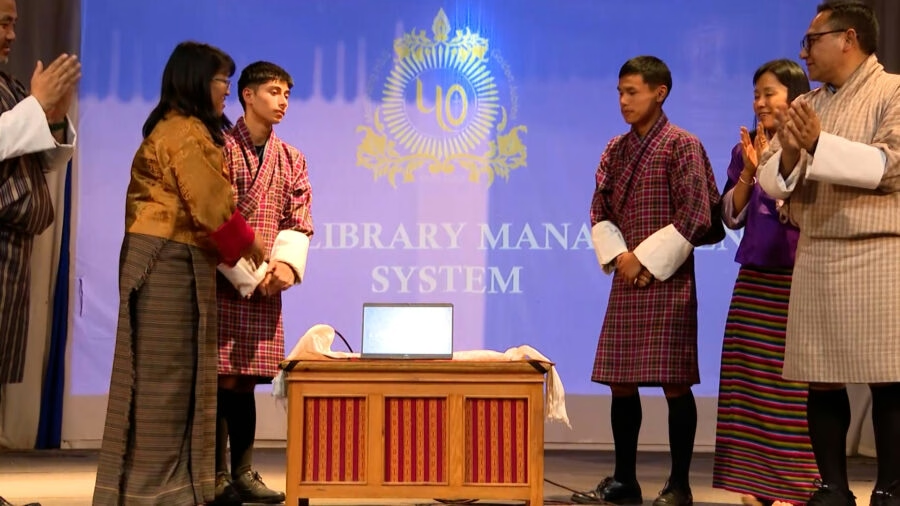
The students' achievement received significant recognition when they officially launched their e-library system during their school's symposium. The enthusiastic response from their fellow students validated the months of dedicated work and problem-solving.
Librarian Sherab Wangchuk provided professional validation of the system's effectiveness: "The system they've developed is directly linked to Google Sheets, so as long as there is an internet connection, it works much faster and more efficiently." This technical endorsement from an educational professional confirms that the students created not just a functional tool, but a genuinely superior solution to existing alternatives.
Broader Implications for Bhutanese Education 🌍
This project exemplifies a critical educational principle: transforming classroom theory into practical application. Students often learn programming languages and technical concepts without understanding real-world implementation. Pravakar and Tshering's e-library system bridges this gap, demonstrating how academic knowledge becomes tangible innovation.
As Bhutan continues its strategic pivot toward becoming a technology-driven society, projects like this showcase the nation's emerging talent pool. The government has emphasized digital transformation across multiple sectors, and educational institutions represent crucial testing grounds for young innovators.
The success of this e-library system also highlights the importance of empowering student entrepreneurs and technologists. When educational institutions provide platforms for student-led innovation, they cultivate the next generation of digital leaders who will drive national development.
Lessons for Educational Institutions 📖
Other schools can learn valuable lessons from this experience:
- Encourage Student Innovation: Create frameworks that allow students to identify and solve institutional problems
- Support Technical Education: Invest in programming and coding curricula that teach practical, applicable skills
- Provide Resources: Ensure students have access to internet connectivity and development tools
- Recognize Achievement: Celebrate student accomplishments publicly to inspire peer participation in innovation
- Embrace Digital Transformation: Transition from outdated systems to technology-based solutions that improve efficiency
Looking Forward: The Future of Educational Technology ✨
For Pravakar Chhetri and Tshering Tobgay, this e-library system represents just the beginning of their technology careers. Their demonstrated capability in problem identification, technical development, and project management positions them well for advanced studies and professional opportunities in the rapidly expanding tech sector.
Their success also sends a powerful message to other Bhutanese students: technology innovation isn't reserved for established companies or external consultants. Young people with determination, access to learning resources, and institutional support can create meaningful solutions that improve their communities.
As Bhutan navigates its digital future, stories like this remind us that the nation's greatest technological assets are its young, creative minds. When given opportunities to apply their skills toward solving real problems, students like these two demonstrate that innovation thrives in educational environments that foster curiosity, experimentation, and practical learning.
Key Takeaways 🎯
The e-library system at Motithang Higher Secondary School represents more than just a convenient tool for book searches. It embodies the intersection of education, technology, and youth empowerment. These two students transformed a common library problem into a scalable digital solution, proving that age and experience matter less than creativity, determination, and access to learning opportunities.
Their achievement serves as an inspiration for other students considering technology careers and a validation of Bhutan's commitment to developing a knowledge-based, technology-enabled society. As educational institutions across the nation continue modernizing their operations, student-led innovations like this e-library system point toward a future where technology enhances learning experiences for all.
You May Also Like

Education
Strengthening School Support for Students Unable to Afford Tuition
September 13, 2026
Education
Student Citizen Journalism: Breaking Silence on Bullying
September 12, 2026
Education
Tashithang ECCD Centre: Nurturing Young Learners in Rural Bhutan
September 6, 2026

Education
Primary Dzongkha Teacher Crisis: 69 Graduates, 10 Vacancies
September 5, 2026