Category:
EducationBumthang Schools Revive Theatrical Tradition Through Competition
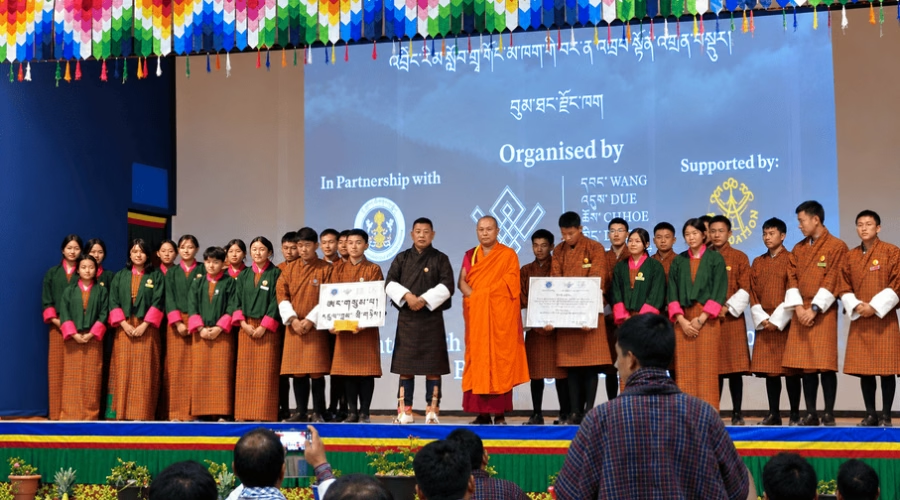
Bringing Cultural Stories Back to the Stage 🎭
Theatre has long served as a powerful vehicle for cultural preservation and youth development, yet many schools across Bhutan have seen dramatic performances fade from their curricula in recent years. In a meaningful effort to reverse this trend, four educational institutions in Bumthang recently participated in an innovative theatrical competition designed to reignite students' passion for performing arts while simultaneously safeguarding centuries-old cultural narratives.
The competition, orchestrated by the Wangduechhoeling Palace Museum and Cultural Centre in collaboration with district administration, represented more than just an entertainment event—it symbolized a deliberate commitment to keeping Bhutanese theatrical traditions alive in contemporary educational settings. With financial backing from the Yang Ya Foundation in Thimphu, organizers created an accessible platform for students to explore their creative potential while deepening their connection to heritage.
The Power of Cultural Performance in Education ✨
School theatre performances have historically played an instrumental role in Bhutanese education, serving as conduits for cultural transmission, confidence-building, and creative expression. However, the gradual decline of these activities across the nation has prompted cultural institutions to take proactive measures. Educational experts increasingly recognize that theatrical engagement develops critical skills including public speaking, emotional intelligence, teamwork, and cultural literacy—competencies that extend far beyond traditional academic metrics.
The Bumthang competition exemplified this holistic educational philosophy by requiring each participating school to develop and present a 30-minute theatrical production. Rather than imposing rigid themes, organizers encouraged schools to select narratives rooted in local culture, traditions, and values, allowing students to become active researchers and storytellers of their own heritage.
Celebrating Excellence: Competition Highlights 🌟
Ura Central School's Yaklha Choedpa Performance
Ura Central School earned top recognition from the judging panel for their compelling portrayal of Yaklha Choedpa, a sacred ritual practiced primarily by high-altitude pastoral communities inhabiting the Ura Valley. This specialized ceremonial practice serves essential functions within herding communities, invoking blessings for livestock health, fertility, and protection. By bringing this specialized cultural knowledge to the stage, Ura Central School demonstrated how theatrical performance can illuminate traditions that might otherwise remain confined to specific geographical or occupational communities.
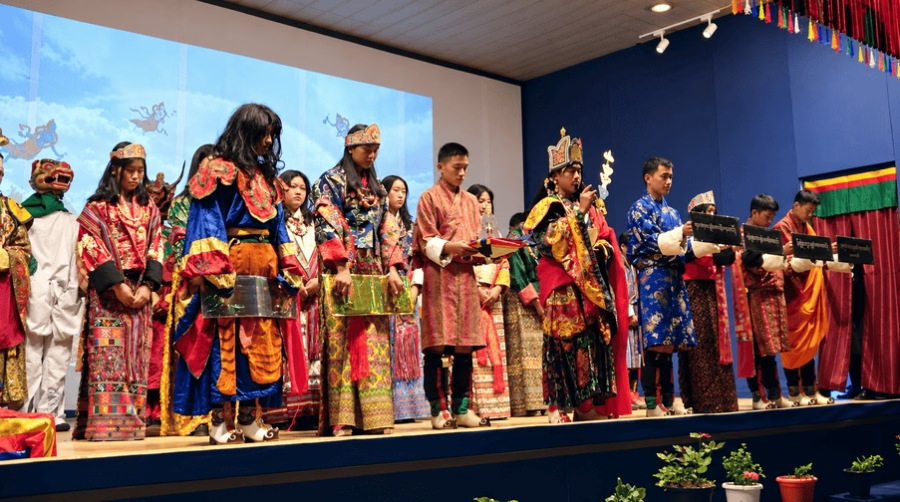
Chumey Central School's Historical Narrative
Chumey Central School presented Tamzhing Phaglha Choedpa, a sacred festival commemorating the 16th-century construction of Tamzhing Monastery. This performance connected students with one of Bhutan's most significant historical events—the establishment of this important religious institution by Tertoen Pema Lingpa, the revered saint and treasure revealer whose contributions profoundly shaped Bhutanese Buddhist spirituality. Through theatrical interpretation, students engaged with complex historical narratives in ways that textbooks alone cannot achieve.
Jakar Higher Secondary School's Spiritual Drama
Jakar Higher Secondary School staged an ambitious drama depicting Guru Rinpoche's legendary visit to Bumthang, one of Bhutan's most sacred narratives. This performance connected students with foundational spiritual narratives that underpin Bhutanese Buddhist identity and cultural consciousness.
Tang Central School's Contemporary Cultural Reflection
Tang Central School tackled the urgent challenge of cultural erosion by highlighting traditions gradually losing relevance among younger generations. This production addressed a critical concern facing modern Bhutan: the tension between globalization and cultural preservation, demonstrating how theatre can facilitate intergenerational dialogue about cultural continuity.
Why Theatrical Platforms Matter in Central and Eastern Bhutan 💫
Kuenga Lhuendup, PhD, Executive Director of Wangduechhoeling Palace Museum and Cultural Centre, articulated a crucial disparity in educational opportunities across Bhutan's regions. Schools in western districts, particularly those near Thimphu, consistently enjoy greater access to cultural programming, artistic workshops, and performance opportunities. Conversely, institutions in central and eastern regions—including Bumthang's schools—historically faced significant limitations in accessing similar enrichment activities.
This geographical inequity has profound implications for cultural preservation and youth development. Students in remote regions deserve equivalent opportunities to explore their creative potential and engage meaningfully with their heritage. The Bumthang theatrical competition directly addressed this systemic imbalance by bringing professional-quality cultural programming to schools that might otherwise lack such resources.
Building Skills Beyond the Spotlight 🎬
Theatrical participation offers multifaceted developmental benefits that extend well beyond performance itself:
- Confidence Enhancement: Public performance builds self-assurance and communication abilities
- Cultural Literacy: Students deepen understanding of heritage narratives and traditional practices
- Collaborative Skills: Theatre production requires coordination, compromise, and collective problem-solving
- Creative Expression: Performance provides outlets for artistic exploration and emotional development
- Historical Engagement: Students become active researchers investigating their own cultural narratives
- Intergenerational Connection: Theatre bridges generational divides by making heritage relevant to contemporary youth
Recognition and Sustainability 🏆
All participating schools received cash prizes and certificates acknowledging their creative efforts and commitment to theatrical excellence. This tangible recognition validates students' work while signaling institutional support for cultural programming. Importantly, organizers have committed to establishing this competition as an annual event, transforming what might have been a one-time initiative into a sustainable, recurring opportunity.
The establishment of regular theatrical competitions creates predictable opportunities for schools to plan, develop, and execute productions. This consistency enables educators to integrate theatrical projects into curriculum planning and allows students to anticipate meaningful platforms for creative expression.
Broader Implications for Bhutanese Education 🔥
The Bumthang theatrical initiative reflects broader international recognition that cultural education strengthens academic outcomes and social-emotional development. UNESCO research consistently demonstrates that arts integration enhances student engagement, improves academic performance, and builds cultural resilience—particularly important in societies navigating rapid modernization.
Bhutan's unique educational philosophy emphasizes Gross National Happiness alongside traditional metrics of development. Theatrical education aligns perfectly with this holistic vision, nurturing not merely academic competency but also emotional intelligence, cultural consciousness, and creative capacity.
Looking Forward: Sustaining the Theatrical Revival ✨
The success of Bumthang's theatrical competition suggests a viable model for expanding cultural programming throughout Bhutan's educational system. By leveraging partnerships between cultural institutions, district administrations, and philanthropic organizations like the Yang Ya Foundation, communities can create sustainable platforms for artistic expression and cultural preservation.
Future iterations of this competition might expand to include additional schools, explore new theatrical genres, or incorporate digital documentation to share performances with broader audiences. The foundational model—combining student creativity, cultural authenticity, community support, and professional recognition—provides a replicable framework for other districts seeking to revitalize theatrical traditions.
Conclusion: Theatre as Cultural Lifeline 🎭
The Bumthang schools' theatrical competition represents far more than an entertainment event—it embodies a deliberate cultural intervention addressing the gradual erosion of performing arts traditions in Bhutanese schools. By creating accessible platforms for student expression, celebrating cultural narratives through dramatic interpretation, and establishing sustainable recurring opportunities, this initiative demonstrates how educational institutions can actively preserve heritage while developing students' creative and emotional capacities.
As Bhutan continues navigating modernization, initiatives like this theatrical competition become increasingly vital. They affirm that cultural preservation and contemporary education need not exist in opposition; rather, they can reinforce one another, creating learning environments where students develop academic competency, creative confidence, and deep cultural consciousness simultaneously.
The success of this year's competition suggests a promising trajectory for theatrical education in Bhutan's central and eastern regions. With commitment from educators, cultural institutions, and community stakeholders, school theatre can transition from a fading tradition to a thriving educational cornerstone—one performance, one student, one story at a time.
You May Also Like
Education
Mongar's Extended Classrooms Struggle with Declining Student Enrollment
October 21, 2026
Education
Bridging the Skills Gap: Training and Industry Alignment
October 19, 2026
Education
Team Bhutan Shines at FIRST Global Challenge 2026
October 15, 2026
Education
BFF Academy Achieves Historic Milestone with First Cambridge Checkpoint Exam
October 14, 2026