Category:
EnvironmentTsirang's Historic Discovery: First Photos of Himalayan Musk Deer
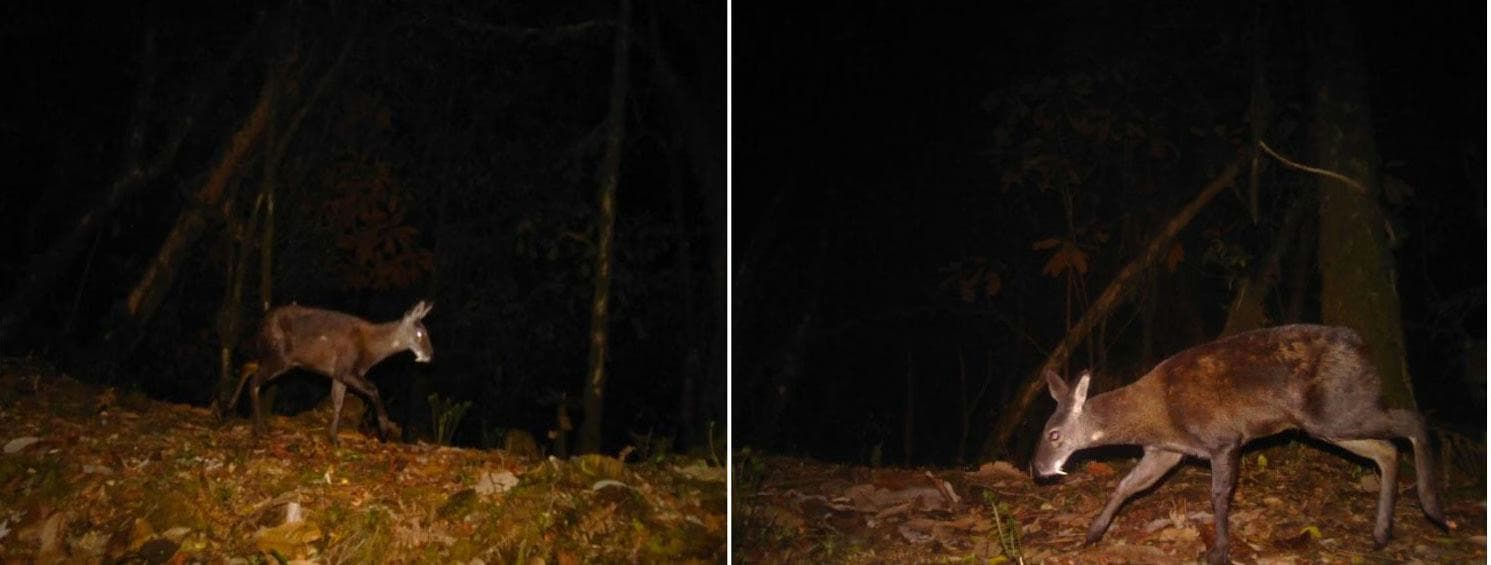
A Breakthrough Moment for Bhutan's Conservation Efforts 🎬
Bhutan's wildlife conservation landscape has just witnessed a remarkable milestone. For the first time, researchers have documented photographic evidence of the endangered Himalayan musk deer in Tsirang district, marking a significant expansion in our understanding of this elusive species' range. This discovery, emerging from rigorous camera-trap surveys conducted between April and June 2025, represents far more than just another wildlife sighting—it fundamentally reshapes conservation priorities across the kingdom.
The findings, published in the Journal of Animal Diversity, reveal that the Himalayan musk deer inhabits forest ecosystems previously unknown to harbor this threatened species. What makes this discovery particularly noteworthy is its implications for how we approach wildlife protection in areas outside traditional protected zones.
Redefining the Range: Lower Elevations Than Expected 🏔️
Previous scientific understanding suggested that Himalayan musk deer populations remained confined to elevations above 2,500 metres. The Tsirang discovery shatters this assumption entirely. Camera-trap footage from Harkatey, positioned at just 2,200 metres above sea level, confirms the species thrives at significantly lower elevations than previously documented.
This 300-metre elevation differential might seem modest, yet it opens entirely new geographic possibilities for the species' distribution across Bhutan. The implications extend beyond mere academic interest—lower elevation ranges suggest the musk deer possesses greater ecological flexibility than conservation models previously indicated.
Researchers identified the species at two specific locations: Harkatey and Thrulu Lisey Thumki in Phuentenchhu. During the comprehensive 90-day monitoring period, camera traps captured 154 images from Thrulu Lisey Thumki and 44 images from Harkatey, providing unprecedented visual documentation of the species in its natural habitat.
Understanding the Himalayan Musk Deer: Nature's Unique Survivor ✨
Unlike their antler-bearing cousins, musk deer represent a distinct evolutionary lineage among cervids. These small, solitary mammals possess elongated canine teeth and, in males, specialized musk glands that have unfortunately made them targets of poaching for centuries. The musk, used in traditional medicines and perfumery, commands premium prices on illegal wildlife markets worldwide.
Globally, seven recognized musk deer species exist across Asian mountainous regions. Bhutan hosts two of these: the Alpine musk deer (Moschus chrysogaster) and the Himalayan musk deer (Moschus leucogaster). Both species face critical conservation challenges that demand immediate attention.
The International Union for Conservation of Nature (IUCN) classifies both Bhutanese musk deer species as endangered. Primary threats include:
- Poaching pressure from illegal hunting for musk extraction
- Habitat degradation through forest fragmentation and land-use changes
- Climate change impacts affecting alpine and subalpine vegetation zones
- Human-wildlife conflict in interface zones between settlements and forests
Bhutan's legal framework provides robust protection through Schedule I designation under the Forest and Nature Conservation Act 2023, yet enforcement challenges persist across remote mountain regions.
The Tsirang Landscape: A Hidden Haven for Threatened Species 🌲
Tsirang district encompasses approximately 639 square kilometres with an impressive 81 percent forest coverage. This extensive woodland represents one of Bhutan's most biodiverse regions, yet remains comparatively understudied relative to formally protected areas.
The camera-trap surveys revealed that musk deer inhabit forest zones characterized by specific vegetation patterns. Dense rhododendron thickets, birch and maple stands interspersed with bamboo groves create the ideal microhabitat. Slopes ranging between 25 and 40 percent gradient provide the rugged terrain these deer prefer, offering both concealment and navigable pathways through mountainous terrain.
The Tsirang monitoring initiative employed an ambitious spatial framework. The district was divided into 42 biodiversity monitoring grid cells, each covering four square kilometres. From this extensive grid, researchers strategically selected 12 locations with high wildlife potential and deployed camera traps for continuous, baited-free monitoring.
This methodological rigor ensured that documented sightings reflected genuine species presence rather than artificial attraction to bait stations—a critical distinction for accurate distribution mapping.
A Thriving Ecosystem: Musk Deer Within the Broader Food Web 🔥
The photographic evidence reveals musk deer as integral components of Tsirang's complex forest ecosystem. Camera traps recorded the species alongside numerous other ungulates, including sambar deer, barking deer, serow, gaur, and wild pig. This species diversity indicates healthy, intact forest habitats capable of supporting multiple large herbivore populations.
Predator presence further demonstrates ecosystem completeness. Asiatic golden cats, marbled cats, and dholes—apex predators representing different ecological niches—appeared in the same camera-trap locations, confirming functional predator-prey relationships essential for ecosystem stability.
This ecological richness underscores why Tsirang warrants enhanced conservation attention. The district's position within Biological Corridor No. 3 amplifies its significance. This corridor connects critical conservation landscapes including Jigme Singye Wangchuck National Park, Royal Manas National Park, and Phibsoo Wildlife Sanctuary—creating a network of interconnected habitats essential for threatened species survival.
Why This Discovery Matters: Beyond Protected Area Boundaries 💫
Historically, Himalayan musk deer documentation in Bhutan concentrated within protected areas—Jigme Dorji National Park, Jigme Singye Wangchuck National Park, and portions of Zhemgang. The Tsirang findings fundamentally challenge the assumption that threatened species conservation depends exclusively on formal protected area designation.
This realization carries profound implications for Bhutan's conservation strategy. Extensive forest landscapes outside protected zones clearly provide critical habitat for endangered species. These unprotected forests, often managed through community-based systems or traditional land stewardship, deserve recognition as essential conservation infrastructure.
The discovery validates an important principle in modern conservation biology: species persistence depends on landscape-level connectivity and habitat quality across jurisdictional boundaries, not merely protected area coverage.
Research Methodology: Rigorous Science Confirms the Find 🔬
The identification process combined multiple verification approaches. Primary documentation came from direct photographic evidence captured by motion-triggered cameras operating continuously without supplemental bait or attractants. This methodology eliminates concerns about artificial concentration of animals around bait stations.
Additionally, researchers cross-referenced current camera-trap data with photographs collected during Bhutan's second nationwide tiger survey (2021-2022). The same camera locations that documented musk deer during 2025 surveys had previously captured 154 and 44 musk deer images respectively, providing temporal validation of species presence.
Wildlife experts confirmed species identification through detailed photographic examination, ensuring accurate taxonomic classification. However, researchers acknowledge that physical appearance alone cannot definitively distinguish between musk deer species, particularly in camera-trap imagery.
Future Research Directions: Gaps Requiring Investigation 📊
Despite this significant breakthrough, substantial knowledge gaps remain. The Tsirang discovery raises critical questions demanding future research attention:
- Population status and density - Current surveys provide presence data but not population size estimates
- Seasonal movement patterns - Whether musk deer migrate altitudinally or remain resident year-round
- Reproductive ecology - Birth timing, fawn survival rates, and population dynamics
- Genetic distinctiveness - Whether Tsirang populations represent unique genetic lineages
- Specific habitat requirements - Precise vegetation, slope, and microhabitat preferences
Researchers recommend expanded camera-trap surveys across Tsirang's remaining forest landscapes to establish comprehensive distribution maps. Genetic analysis emerges as particularly valuable, as DNA sequencing can definitively confirm species identity and reveal population structure invisible to photographic surveys alone.
Habitat characterization studies should quantify vegetation composition, soil properties, and microclimate conditions associated with musk deer presence, enabling predictive modeling of suitable habitat across the district and beyond.
Conservation Implications and Next Steps 🎯
This discovery demands immediate translation into conservation action. Tsirang's forest landscapes require enhanced protection mechanisms, potentially including:
- Expanded monitoring networks across undersampled grid cells
- Community engagement programs educating local residents about musk deer conservation
- Anti-poaching patrols targeting known hunting pressure zones
- Habitat restoration initiatives focusing on degraded forest patches
- Transboundary coordination with neighboring regions for landscape-level conservation
The Tsirang findings strengthen arguments for recognizing unprotected forest landscapes as critical conservation infrastructure deserving equivalent management investment as formal protected areas.
Conclusion: A New Chapter in Bhutan's Conservation Story ✨
The photographic documentation of Himalayan musk deer in Tsirang represents far more than a taxonomic curiosity or research publication milestone. This discovery fundamentally expands our understanding of an endangered species' ecological requirements and geographic potential, while simultaneously validating the conservation value of forest landscapes beyond protected area boundaries.
As Bhutan continues balancing development with environmental stewardship, findings like these underscore why maintaining intact forest cover across the entire landscape matters. The Himalayan musk deer, once thought confined to high-altitude protected zones, now inhabits the forests of Tsirang—a powerful reminder that conservation success depends on landscape-level thinking and sustained commitment to protecting forests everywhere.
Future research will undoubtedly reveal additional distribution records and ecological insights. Until then, this discovery stands as testament to rigorous field research, technological innovation in wildlife monitoring, and Bhutan's unwavering dedication to protecting its irreplaceable natural heritage.
You May Also Like
Environment
Climate Crisis in the Himalayas: Bhutan's Cold Reminder
August 29, 2026

Environment
WBH Conservation Project Delivers Clean Water to Rural Homes
August 29, 2026

Environment
HKH Climate Crisis: Why Regional Unity Matters Now
August 29, 2026
Environment
Bhutan's Solar Power Revolution: Energy Security Strategy
August 26, 2026