Category:
NewsTrust Issues Rise Despite Low Bribery in Bhutan
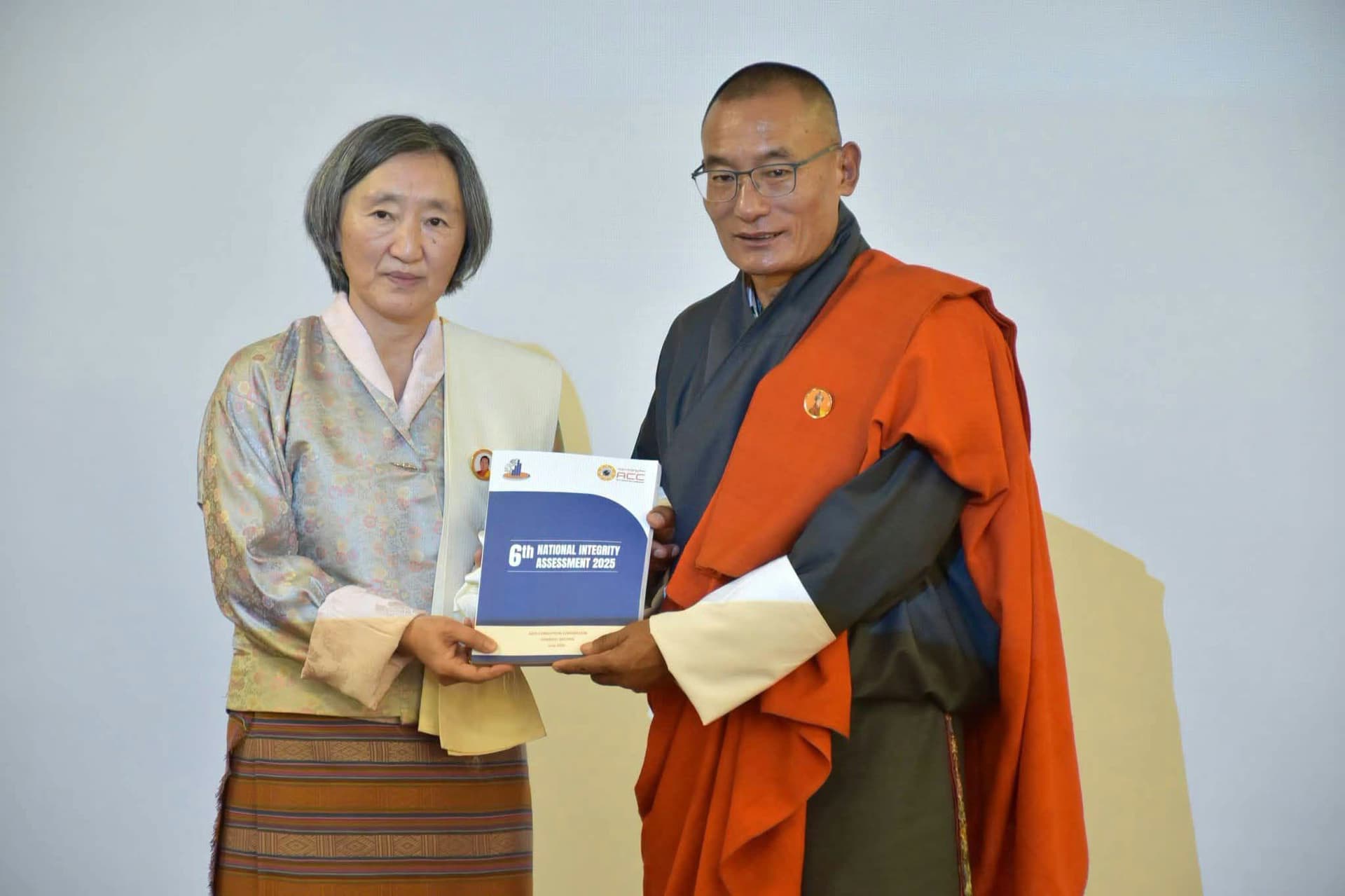
The kingdom of Bhutan, a nation known for its Gross National Happiness Index, is facing a growing challenge that threatens this unique metric: a rising trust deficit in institutional integrity. This paradoxical situation unfolds even as instances of direct bribery remain notably low. 🌟
A Paradox of Perception
According to the Sixth National Integrity Assessment (NIA 2025), released by the Anti-Corruption Commission (ACC), Bhutan's National Integrity Score stands at 8.16 out of 10, indicating a "good" level of integrity. However, a deeper dive into the report reveals a central paradox—while direct instances of corruption, such as bribery, score above 9.9 in both user and provider responses, public perception of corruption, particularly through favouritism and nepotism, is on the rise.
Understanding Bhutan's Integrity Landscape
The assessment, which evaluated 381 public services across 99 agencies, drew responses from nearly 18,000 participants, including service users and providers, parliamentarians, and voters. Despite a high Public Sector Integrity Score of 8.41, parliamentarians scored lower at 7.15, reflecting satisfactory yet weaker performance in terms of integrity. 🔍
The Role of Perception
This growing trust deficit, despite low bribery rates, suggests that concerns are increasingly driven by perceptions of favouritism, informal influence, and unequal treatment rather than actual experiences of bribery. The Public Sector Integrity Score's high rating contrasts sharply with the perceived integrity scores, highlighting a significant gap between institutional performance and public perception.
Governance Challenges
Internal governance indicators further illustrate areas of concern. Transparency within institutions was rated at 7.35 by service providers, a lower score compared to the external users' perception of 8.31. Whistleblower protection, crucial for maintaining transparency and accountability, scored the lowest at 5.44, indicating a critical area needing improvement. 📊
Ethical Leadership and Fairness
Ethical leadership, an essential component of integrity, was rated at 7.62, while fairness within organizations scored 7.25, the lowest among the assessed criteria. This points to a need for stronger ethical practices and fair treatment within Bhutanese institutions.
Parliamentary Integrity Under Scrutiny
Parliamentary integrity has also seen a decline, dropping from 8.11 in 2022 to 7.62 in 2025. Concerns regarding legislative oversight and representativeness highlight gaps in accountability and engagement with constituents.
Insights from Leadership
Speaking at the NIA 2025 launch, Prime Minister Tshering Tobgay emphasized that integrity extends beyond the absence of corruption. "It is about doing the right thing even when no one is watching," he stated, underscoring the importance of fairness, accountability, and professionalism in public service. Lyonchhen reiterated that the National Integrity Assessment serves as a mirror reflecting Bhutan's governance realities and a roadmap for strengthening public trust.
The Bigger Picture: Migration Concerns
The trust deficit has broader implications, particularly concerning outward migration. Prime Minister Tobgay warned that declining perceptions of integrity might discourage Bhutanese citizens from returning home, stressing the need to rebuild trust to retain and attract talent. 🌍
A Path Forward
ACC Chairperson Pema Choden highlighted that the next frontier of integrity goes beyond fighting corruption. It involves strengthening institutional culture, reinforcing ethical leadership, and bridging the gap between systems and citizens' experiences. She noted that Bhutan's integrity system remains externally strong but faces internal challenges from favouritism and weak controls.
Conclusion: Towards a Brighter Future
As Bhutan navigates these challenges, the focus must shift towards enhancing internal governance and rebuilding trust within institutions. Strengthening ethical leadership and transparency will be key in maintaining Bhutan's integrity and ensuring the continued happiness and prosperity of its people. 🔑
The NIA 2025 serves not only as a reflection of the current state but also as a guide for future reforms, aiming to close the gap between perception and reality and uphold the values that define Bhutan.
In the coming years, strategic efforts to address these issues could pave the way for a renewed sense of trust and integrity, crucial for the nation's development and global reputation.
You May Also Like
News
Women Entrepreneurs Master AI and Digital Tools in Phuentsholing
September 1, 2026
News
Can Samtse Keep Up With Its Growing Workforce?
August 29, 2026

News
Nepal Flood Exposes Critical Gaps in Bhutan's Early Warning Systems
August 29, 2026
News
High Court Overturns Acquittal: Doctor Sentenced to 10 Years for Child Sexual Abuse
August 29, 2026