Category:
NewsUNDP Deputy Regional Director Affirms Strong Partnership with Bhutan
Strengthening Global Development Collaboration in the Himalayan Kingdom 🌍
Bhutan's commitment to sustainable development has attracted renewed international attention as senior United Nations officials continue to recognize the nation's remarkable progress. A significant diplomatic engagement recently underscored the deepening partnership between the kingdom and the United Nations Development Programme, highlighting shared priorities in climate resilience, energy innovation, and social infrastructure.
The five-day engagement focused on critical development sectors that define Bhutan's trajectory toward prosperity. Justice sector modernization, renewable energy expansion, water security, and food security analysis formed the cornerstone of discussions between high-level government officials and international development partners. This comprehensive approach reflects how contemporary development work requires integrated solutions across multiple interconnected domains.
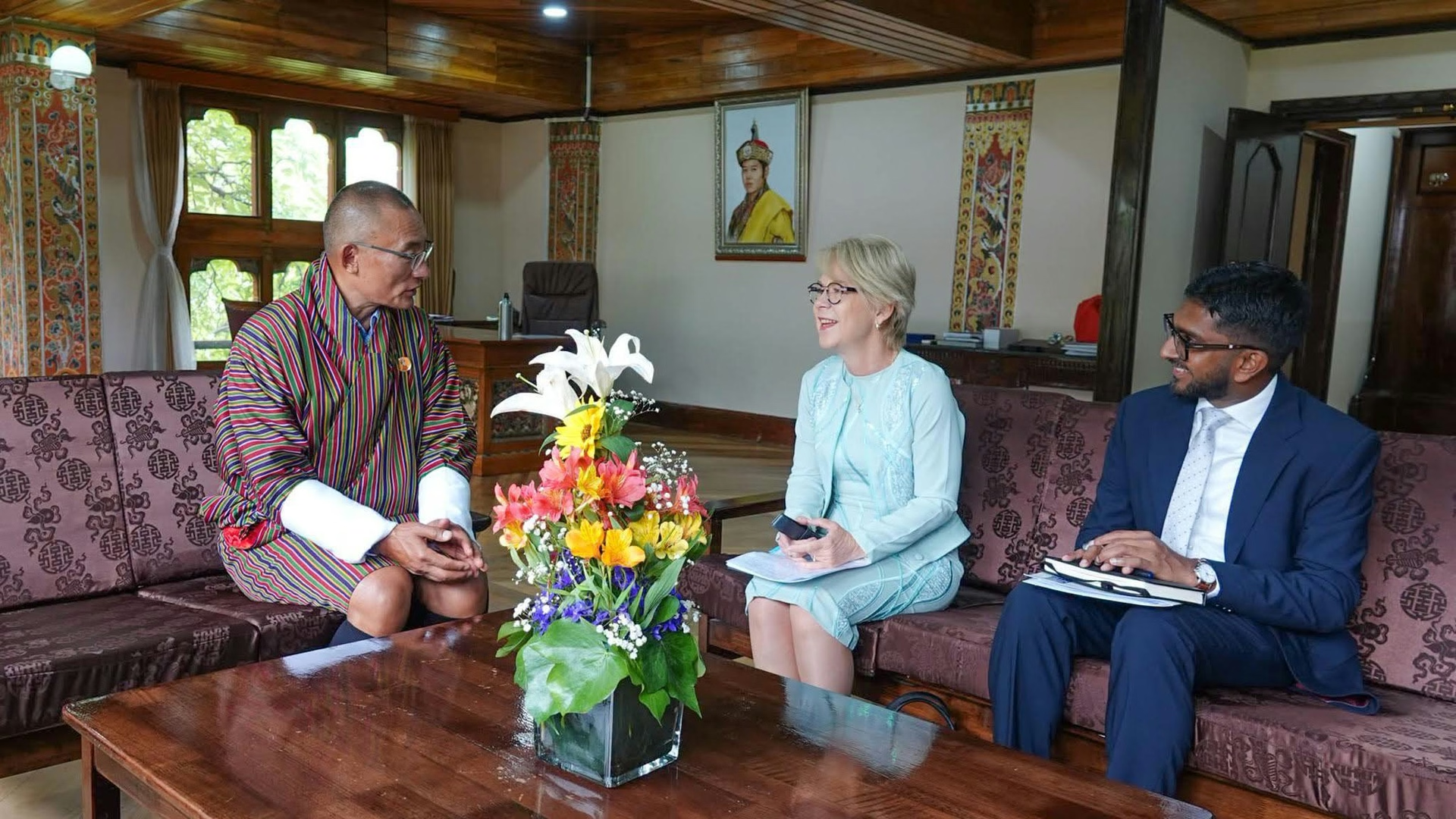
A Dialogue on Justice Sector Innovation ⚖️
One of the visit's most significant events was a high-level dialogue examining the future trajectory of Bhutan's justice system. This forum brought together an impressive assembly of stakeholders, including representatives from 11 justice sector agencies and development partners. The discussion transcended traditional legal frameworks, exploring emerging trends and opportunities that will shape the kingdom's judicial landscape for decades to come.
The participation of senior figures from Bhutan's legal institutions demonstrated the government's commitment to inclusive policy development. Perspectives from national experts, regional specialists, and international development practitioners created a rich intellectual exchange. Such collaborative dialogues increasingly characterize how modern nations approach complex governance challenges—moving beyond siloed decision-making toward comprehensive, multi-stakeholder approaches.
This justice-focused engagement reflects broader global trends in legal system reform. Countries worldwide are grappling with questions about how traditional legal frameworks can adapt to contemporary challenges including cybercrime, environmental protection, and digital rights. Bhutan's proactive stance positions the nation as a thoughtful participant in these international conversations.
Five Decades of Partnership and Future Vision 🤝
The bilateral relationship between Bhutan and the United Nations Development Programme represents one of the most enduring international collaborations in the region. Beginning in 1973, this partnership has evolved through multiple phases of development, adapting to changing national priorities while maintaining core commitments to human-centered progress.
Recent discussions with Bhutan's Prime Minister reflected on this historical foundation while charting ambitious future directions. The conversation encompassed several transformative initiatives that will define Bhutan's development pathway. The 21st Century Economic Roadmap represents a comprehensive reimagining of how the nation can achieve prosperity while maintaining its distinctive cultural values and environmental commitments.
The Gelephu Mindfulness City project emerged as a particularly exciting collaboration point. This innovative urban development initiative aims to create a model sustainable city that integrates principles of mindfulness, environmental stewardship, and economic dynamism. Such projects increasingly capture international attention as cities worldwide seek to balance growth with quality of life and ecological responsibility.
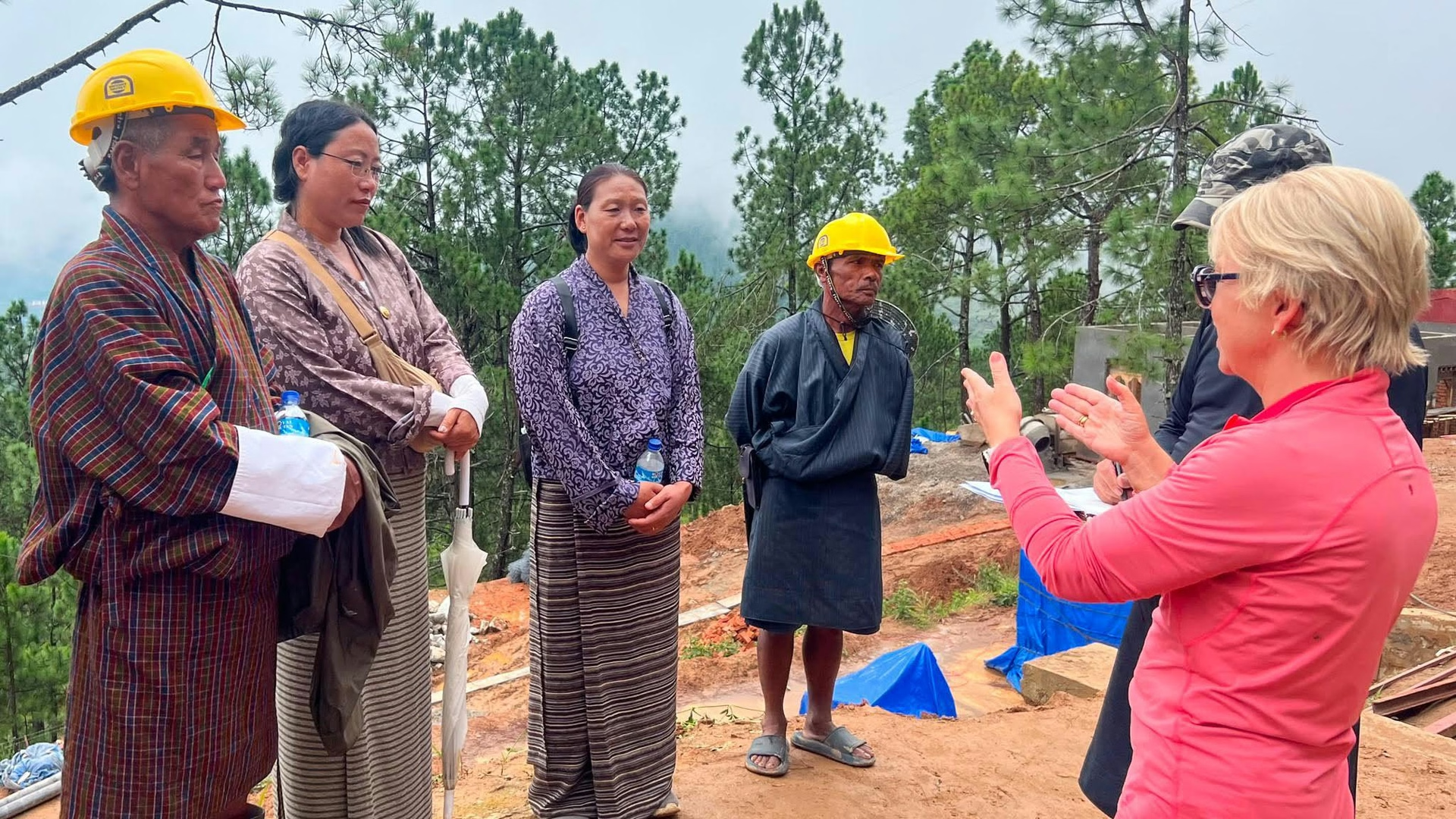
Renewable Energy: Powering Bhutan's Future 🔋
Field visits to Wangdue Phodrang revealed tangible progress in Bhutan's renewable energy expansion. A 180-kilowatt grid-tied solar power plant in Rubesa, operational since 2021, exemplifies how international partnerships translate into concrete infrastructure improvements. Installed through collaborative efforts involving the Department of Energy, UNDP, and the Government of Japan, this facility represents more than just energy generation—it symbolizes Bhutan's strategic approach to energy security.
The timing of renewable energy investment proves particularly significant given global energy market volatility and climate imperatives. Bhutan's mountainous terrain and seasonal precipitation patterns create unique energy challenges. Solar power expansion diversifies the kingdom's energy portfolio beyond its traditional hydroelectric resources, enhancing resilience against climate variability and meeting rising domestic demand.
This project contributes to broader regional energy security conversations. As Asian economies expand and energy demand intensifies, nations increasingly recognize renewable energy not merely as environmental necessity but as economic strategy. Bhutan's experience offers valuable lessons for neighboring countries pursuing similar transitions.
Water Security: Essential Infrastructure for Growing Communities 💧
Perhaps no development issue proves more fundamental than water security. The Lobesa water treatment plant in Punakha addresses this critical need directly, with capacity to process two million liters daily. This infrastructure will serve the Toeb and Barp communities, providing safe drinking water to more than 900 households encompassing over 10,000 residents.
Access to clean water remains a defining development indicator globally. Despite progress in recent decades, millions still lack reliable access to safe drinking water. Bhutan's investment in modern water treatment infrastructure demonstrates how development priorities must address essential human needs alongside economic modernization.
The project incorporates climate resilience principles, acknowledging that water security increasingly depends on adaptation to changing precipitation patterns and hydrological cycles. Supported through UNDP collaboration and the Global Environment Facility-Least Developed Countries Fund, this initiative integrates climate adaptation with immediate service delivery—a model gaining recognition across development practice.
Integrated Development Priorities 🎯
What distinguishes contemporary development work is the recognition that progress across sectors remains interconnected. Energy security enables economic activity. Water access supports public health and agricultural productivity. Justice sector effectiveness protects property rights and enables business confidence. These domains reinforce each other in creating enabling environments for sustainable human development.
Bhutan's approach exemplifies this integrated thinking. The nation's development strategy deliberately connects:
- Climate action and energy transition through renewable infrastructure
- Water security and health outcomes via treatment and distribution systems
- Justice reform and economic confidence through legal modernization
- Community empowerment and resilience across multiple dimensions
- International partnership and domestic ownership through collaborative governance
Regional Leadership in Sustainable Development 🌱
Bhutan occupies a distinctive position in global development conversations. The nation's commitment to measuring progress through Gross National Happiness rather than GDP alone has influenced international thinking about development metrics. This philosophical orientation shapes every policy domain, from energy planning to justice reform.
The kingdom's experience demonstrates that smaller nations can punch above their weight in development innovation. Bhutan's achievements attract study and emulation from countries across multiple continents. The nation increasingly serves as a living laboratory for sustainable development approaches, with international practitioners and policymakers regularly visiting to understand how the kingdom achieves progress while preserving cultural identity and environmental integrity.
This leadership position carries growing responsibility. As climate change accelerates and global challenges intensify, Bhutan's demonstrated commitment to integrated, values-based development becomes increasingly relevant to international dialogue about sustainable futures.
Looking Forward: Deepening Partnership 🚀
Discussions between Bhutanese government officials and international development partners identified opportunities for expanded collaboration. New engagement modalities and innovative financing mechanisms were explored to support Bhutan's ambitious development vision. These conversations recognize that traditional aid paradigms must evolve as countries graduate from least-developed status and pursue more sophisticated development challenges.
The Bhutan Innovation Lab represents another collaboration frontier, combining technological advancement with traditional wisdom. Such initiatives increasingly characterize how developing nations approach modernization—not through wholesale adoption of external models but through deliberate innovation that respects local context while embracing beneficial technologies and practices.
As Bhutan enters this new development phase, the depth of international partnership becomes increasingly significant. The nation's experience demonstrates that development success results from sustained, respectful collaboration between governments, development partners, civil society, and communities. This multi-stakeholder approach, while complex to coordinate, produces more resilient and locally-owned outcomes than top-down interventions.
Key Takeaways 📋
Bhutan's development trajectory offers valuable lessons for nations pursuing sustainable progress:
- Integration matters: Connecting energy, water, justice, and economic initiatives creates synergistic benefits
- Values-based development works: Grounding progress in cultural principles enhances legitimacy and sustainability
- Long-term partnerships prove essential: Five decades of collaboration between Bhutan and UNDP demonstrates commitment's power
- Concrete infrastructure matters: Solar plants and water treatment facilities translate policy into tangible improvements
- Climate adaptation is urgent: Incorporating resilience principles into all development work acknowledges contemporary realities
- Innovation emerges from collaboration: Multi-stakeholder engagement generates creative solutions to complex challenges
Bhutan's development story continues to evolve, shaped by the kingdom's distinctive values, international partnerships, and commitment to balanced progress. As the nation implements ambitious initiatives like the Gelephu Mindfulness City and pursues the 21st Century Economic Roadmap, the world watches with interest. The kingdom's experience suggests that prosperity and sustainability need not conflict—they can reinforce each other when guided by clear values and sustained international collaboration.
You May Also Like
News
Women Entrepreneurs Master AI and Digital Tools in Phuentsholing
September 1, 2026
News
Can Samtse Keep Up With Its Growing Workforce?
August 29, 2026
News
Nepal Flood Exposes Critical Gaps in Bhutan's Early Warning Systems
August 29, 2026
News
High Court Overturns Acquittal: Doctor Sentenced to 10 Years for Child Sexual Abuse
August 29, 2026