Category:
EducationTeachers' Dilemma: Distant Postings and Family Strains
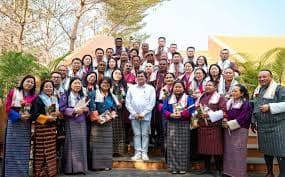
The Hidden Struggles of Bhutanese Teachers 🌏
In the scenic landscapes of Bhutan, where the mountains meet the sky, lies a pressing issue that often goes unnoticed. Teachers in Bhutan are facing a significant challenge: distant postings that separate them from their families. This issue not only affects their personal lives but also ripples through their professional commitments and, ultimately, the educational system. 📚
The Reality of Distant Postings 🚶♂️🚶♀️
Imagine being miles away from your loved ones, only able to see them during rare holidays or when teaching schedules permit. This is the reality for many Bhutanese teachers. For instance, a teacher in Trongsa can only visit his family in Phuentsholing during sporadic intervals, leaving his spouse to manage both family and professional responsibilities alone. This scenario is not isolated but rather emblematic of a broader systemic issue.
The Impact on Families and Education 🏠👩🏫
The separation due to distant postings doesn't just affect teachers; it impacts their families as well. Children grow up with one parent absent, often leading to emotional challenges and behavioral shifts. For the parent left behind, the dual burden of work and childcare can be overwhelming, leading to increased stress and a sense of detachment from family life.
Teachers themselves suffer from reduced motivation, emotional exhaustion, and even burnout, which inevitably affects their classroom performance and engagement with students. Over time, this can diminish job satisfaction, prompting some educators to consider leaving the profession altogether.
Ministry's Efforts and Challenges 🤔
In response to these challenges, the Ministry of Education and Skills Development has acknowledged the complexity of teacher transfers. With the majority of schools in rural areas, balancing professional deployment with personal circumstances is no easy feat. Last year, 129 transfers were approved, with marital reasons being a significant factor.
Despite these efforts, many teachers feel the process remains opaque and uneven, with some suspecting favoritism in transfer decisions. The ministry has emphasized that transfer decisions are made by a committee of educators to ensure fairness and alignment with the Bhutan Civil Service Rules 2023.
Limited Urban Mobility and Rural Challenges 🏫
A recurring issue is the limited mobility within urban postings, which restricts new opportunities for rural teachers. Teachers in urban areas often remain within their zones, leaving rural educators with fewer options for transfer. This has perpetuated a cycle where rural teachers remain in isolated postings for extended periods without relief or new opportunities.
Calls for Improvement and Incentives 🎯
The need for better support and incentives for teachers in remote areas has been a topic of discussion for years. With approximately 70% of schools in hard-to-reach locations, enhancing facilities and professional development opportunities has become crucial. The ministry has stated ongoing efforts to strengthen such incentives, although progress is slow.
Looking Forward: A Call to Action 📈
As Bhutan continues to evolve its educational landscape, addressing the challenges of distant postings is essential. Ensuring fair and transparent transfer processes, improving rural incentives, and supporting teachers holistically can enhance both educational outcomes and teacher well-being. The path forward requires collaboration and commitment to create a supportive environment for Bhutan's educators and their families.
In conclusion, while the scenic beauty of Bhutan is undeniable, the underlying struggles faced by its teachers need urgent attention. As the nation progresses, prioritizing the well-being of educators will be key to nurturing the next generation of Bhutanese citizens.
You May Also Like
Education
Bhutan-Australia Research Hub Launches to Strengthen Education
October 23, 2026

Education
Bumthang Schools Revive Theatrical Tradition Through Competition
October 21, 2026
Education
Mongar's Extended Classrooms Struggle with Declining Student Enrollment
October 21, 2026
Education
Bridging the Skills Gap: Training and Industry Alignment
October 19, 2026