Category:
EducationJSW Law's Mid-Term Review: Progress and Challenges
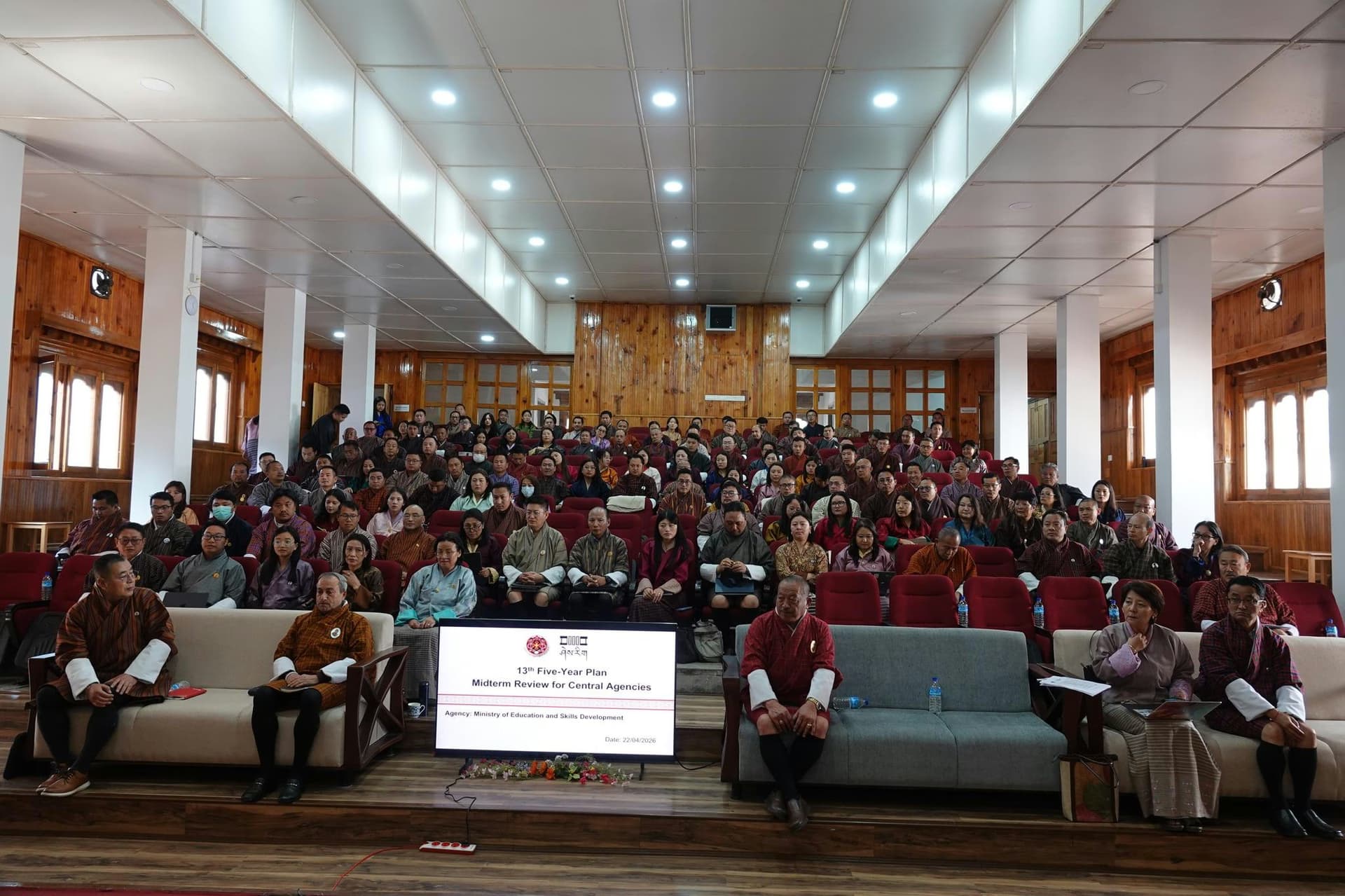
JSW Law, Bhutan's premier legal education institution, recently presented its mid-term review, highlighting significant achievements alongside notable challenges. The review, delivered to Prime Minister Tshering Tobgay, provided a comprehensive account of the school's progress against set key performance indicators.
Achievements in Legal Education 🌟
JSW Law has made remarkable strides in legal education. Notably, the institution achieved full employment for its graduates within a year, underscoring its effectiveness in preparing students for the legal profession. This accomplishment aligns with global trends emphasizing the importance of employability as a measure of educational success.
The adoption of blended learning approaches across all courses represents another milestone. This modern educational strategy, which combines online and face-to-face learning, caters to diverse learning needs and prepares students for a rapidly evolving legal landscape.
Curriculum and Global Engagement 📚
In a bid to meet the demands of the 21st-century economy, JSW Law introduced three new academic programs. These include a graduate program in International Climate Change and Environmental Law, reflecting the rising importance of environmental issues in legal discourse.
Furthermore, the institution strengthened its global engagement by establishing linkages with partner universities and international associations. This not only enhances the school's reputation but also provides students with valuable international exposure.
Challenges Identified During the Review ⚠️
Despite these successes, the review also flagged several challenges. Faculty qualifications reached 82% against a target of 100%, indicating a need for more qualified faculty members. Additionally, staff job satisfaction was recorded at 78%, below the intended 85% target.
Infrastructure and Financial Utilization 🏗️
Infrastructure development progressed to 70% completion. The construction of a major academic building is underway, which is expected to bolster teaching, research, and institutional capacity.
Financially, JSW Law reported an expenditure of Nu 332.927 million, representing 72.96% of the approved budget. Proposed revisions include reallocating funds from staff capacity development towards infrastructure to support ongoing construction works.
Recommendations for Improvement
The review highlighted key recommendations to overcome existing challenges. These include engaging international experts to address the shortage of specialized faculty and strengthening capacity-building initiatives. Enhancing recognition and incentives for high-performing staff was also emphasized as a means to boost job satisfaction.
Enhancing Educational Quality and Sustainability 🌱
The Prime Minister expressed support for further strengthening JSW Law, focusing on enhancing educational quality, expanding partnerships, and increasing funding. Improving the environmental sustainability of the campus is also a priority, aligning with global trends towards sustainable educational institutions.
Looking Forward: The Future of JSW Law 🔮
As JSW Law continues to navigate its journey, the focus remains on maintaining its upward trajectory while addressing the challenges identified in the review. The institution's commitment to improving educational quality and expanding its global reach bodes well for its future prospects.
In conclusion, JSW Law's mid-term review provides valuable insights into its progress and the hurdles ahead. By addressing these challenges head-on, the institution is poised to continue its role as a leader in legal education, both locally and internationally.
You May Also Like
Education
Bridging the Skills Gap: Training and Industry Alignment
October 19, 2026
Education
Team Bhutan Shines at FIRST Global Challenge 2026
October 15, 2026
Education
BFF Academy Achieves Historic Milestone with First Cambridge Checkpoint Exam
October 14, 2026
Education
Dzongkha Pronunciation and Spelling Challenges in Bhutanese Education
October 10, 2026