Category:
EducationMoESD Mid-term Review Shows Impressive Progress
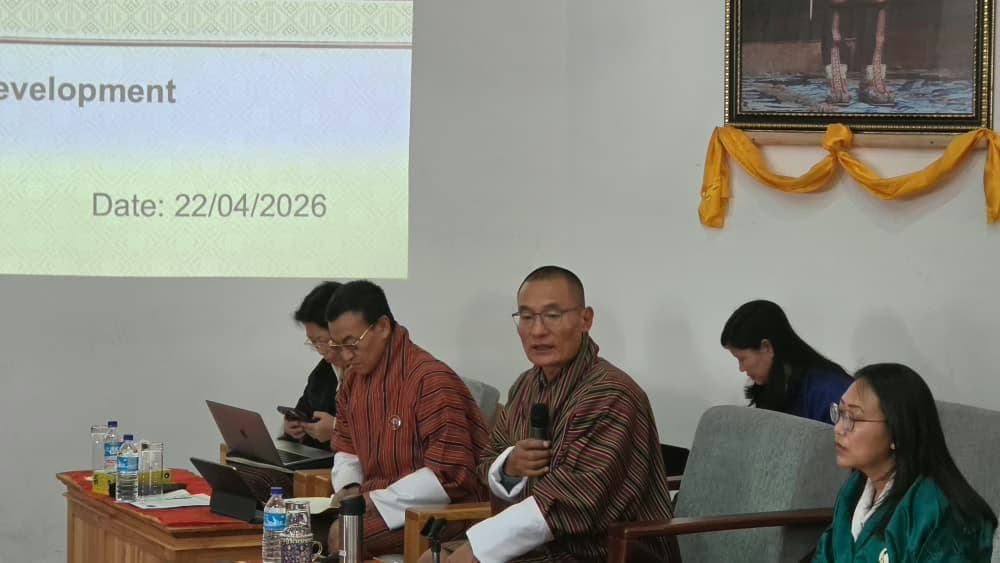
The Ministry of Education and Skills Development (MoESD) in Bhutan has showcased notable advancements in its mid-term review of the 13th Five-Year Plan (FYP). This review, chaired by the Prime Minister, highlights significant strides in educational reforms and skill development initiatives, underscoring Bhutan’s commitment to elevating its educational landscape. 🌟
Educational Initiatives and Infrastructure Enhancements
The review revealed that out of the 35 projects under the 13th FYP, two have been completed, with 29 ongoing and four yet to commence. Among these, eight projects are fully funded, 21 partially funded, and three lack committed resources. This strategic allocation reflects Bhutan's prioritization of education and skills development. 📚
One of the key achievements is the improvement in school facilities, where 97.1% of schools now meet safe drinking water standards—a significant leap towards ensuring a conducive learning environment. Moreover, the installation of water filters in 215 schools and completion of 15 water supply schemes underscore the commitment to achieving WHO WASH standards. 🚰
Additionally, student nutrition has seen positive changes, with stipends increasing from Nu 1,500 to Nu 3,100, and the One Child One Egg programme expanding to 345 schools, benefiting 31,579 students. Such initiatives are pivotal in enhancing student well-being and academic performance. 🍎
Skilling the Youth: A Growing Priority
Youth engagement in skills development is a focal point, with over 30,000 young individuals participating in structured skilling programmes by March 2024. This effort is part of a broader national target to skill 125,000 youths, aligning with global employment trends that emphasize practical skills over formal education alone. 👷♀️
The introduction of two new diploma programs in collaboration with ITE Education Services, Singapore, and the expansion of TVET capacity from 900 to 3,000 seats annually, further highlight Bhutan’s strategic focus on technical and vocational education. These steps are crucial for building a skilled workforce aligned with international standards. 🌍
Advancing Curriculum and Examination Standards
Curriculum reforms are underway with alignment to the Cambridge framework, ensuring that educational content meets international benchmarks. Revised textbooks are set for phased rollout by 2027, and national examinations are being aligned with these standards, promising a comprehensive overhaul of Bhutan’s educational framework. 📖
The introduction of international exposure programs, with student participation from 13 countries, enriches the learning experience and broadens the global perspective of Bhutanese students. 🌐
Inclusive Education and Support for Disadvantaged Students
Inclusivity remains a cornerstone of MoESD’s strategy. A 100% target for need-based support to disadvantaged students has been set, addressing the critical need to provide equitable educational opportunities. Currently, 8,608 students are identified for assistance covering essentials like uniforms and stationery. 💬
In line with the 10X Bhutan agenda, the ministry aims for 50% of TVET programs to achieve international accreditation and faculty certification, further enhancing educational quality and inclusivity. 🌱
Conclusion: A Promising Future
The MoESD’s mid-term review paints a promising picture of educational transformation in Bhutan. With a budget outlay of Nu 33.36 billion, and allocations for central and cluster schools, the ministry is poised to continue its path of reform and innovation. The focus on infrastructure, curriculum alignment, and skill development positions Bhutan well to meet future educational challenges and opportunities. 🎓
As Bhutan moves forward, these initiatives not only promise to uplift the educational standards but also equip the youth with skills necessary for the evolving job market, contributing to the nation’s socio-economic growth. 🚀
You May Also Like
Education
Bridging the Skills Gap: Training and Industry Alignment
October 19, 2026
Education
Team Bhutan Shines at FIRST Global Challenge 2026
October 15, 2026
Education
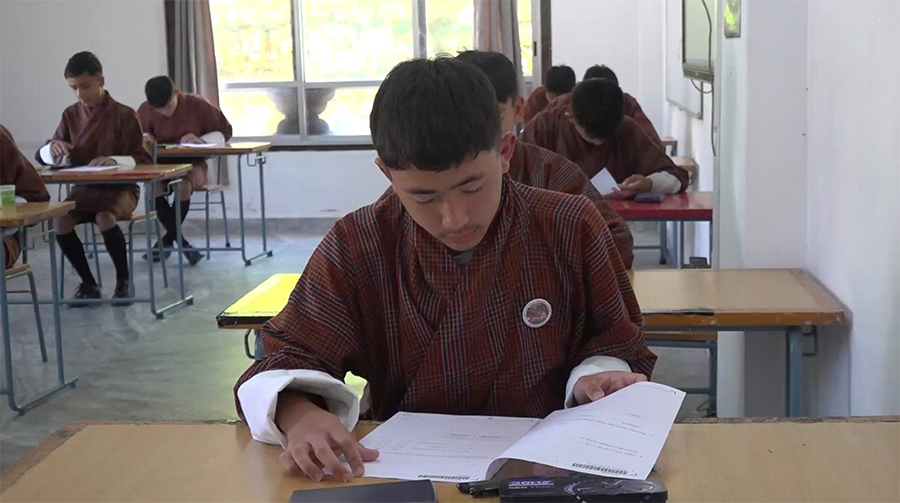
BFF Academy Achieves Historic Milestone with First Cambridge Checkpoint Exam
October 14, 2026
Education
Dzongkha Pronunciation and Spelling Challenges in Bhutanese Education
October 10, 2026