Category:
EconomyTaktse Businesses Revive as Students Return to College
A Village Economy Awakens 🌅
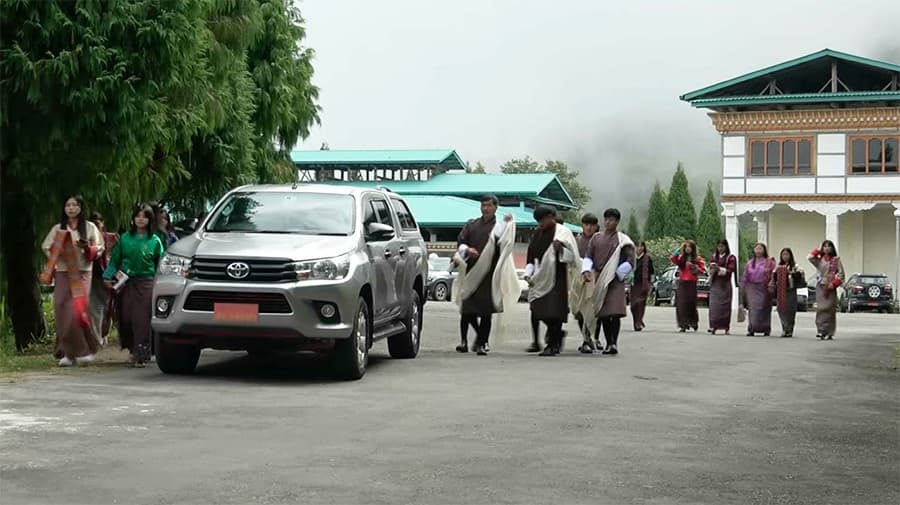
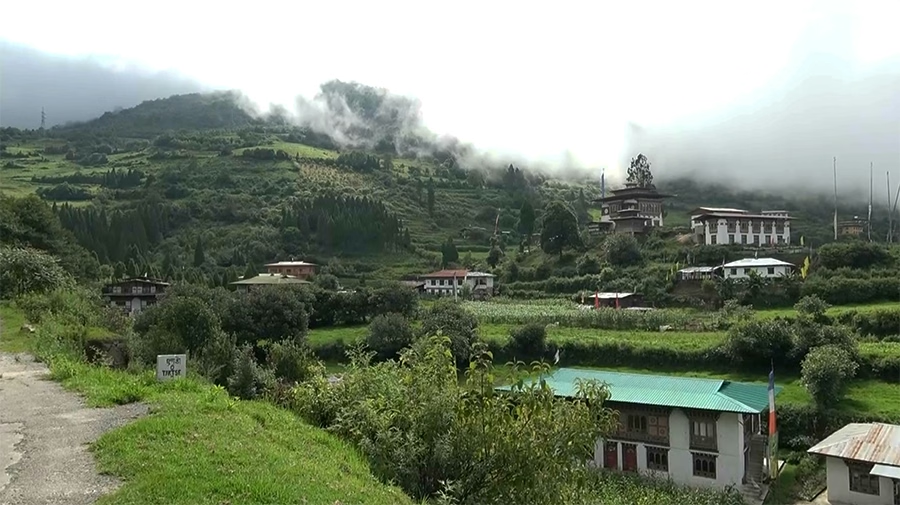
The quiet hillside village of Taktse in Trongsa is experiencing a remarkable transformation. After years of economic uncertainty, local businesses are celebrating the return of student life to their community. The resumption of full enrollment at the Trongsa College for Heritage and Contemporary Studies marks a turning point for shopkeepers, landlords, and service providers who have weathered a challenging period of declining demand.
This revival represents more than just increased foot traffic—it symbolizes the resilience of rural Bhutanese economies and their dependence on educational institutions as economic anchors. 🎓
The College's Economic Impact on Taktse 💼
When the Trongsa College for Heritage and Contemporary Studies first opened its doors in 2011, it transformed Taktse from a quiet rural settlement into a bustling educational hub. Over the course of more than a decade, the institution attracted over 1,000 students, creating unprecedented economic opportunities for the village.
The college's presence catalyzed the development of a thriving local economy. More than 10 shops sprouted up near the campus, and approximately 20 residential buildings were constructed specifically to accommodate the influx of students and staff. These ventures represented significant investments by local entrepreneurs who recognized the potential of serving the college community.
The economic ecosystem that developed included:
- Grocery stores and convenience shops
- Rental accommodations for students and visiting faculty
- Food and beverage establishments
- General merchandise retailers
- Service-oriented businesses catering to student needs
For nearly a decade, this arrangement proved mutually beneficial. Students gained access to essential services without traveling the 17 kilometers to Trongsa town, while local entrepreneurs built sustainable livelihoods.
Challenging Years: The Enrollment Decline 📉
Beginning in 2023, the college experienced a significant shift in its operational model. Student admissions declined substantially, and around 80 students from three courses graduated that year. This reduction created a ripple effect throughout Taktse's business community.
Shopkeepers found their shelves gathering dust. Rental properties sat vacant or partially occupied. The vibrant marketplace that had characterized the village for over a decade began to fade. Business owners faced difficult decisions about maintaining inventory and staff when customer volumes plummeted.
The impact extended beyond commercial concerns. The reduced student population meant less demand for local agricultural products, fewer customers for service providers, and diminished employment opportunities for villagers. The economic interdependence that had developed between the college and the community became painfully apparent during this downturn.
A New Chapter Begins: The 2024 Enrollment Surge 📚
This academic year brings transformative news for Taktse. The college has introduced five new four-year undergraduate programmes and enrolled 125 new students—a dramatic reversal from the previous year's decline. This expansion signals institutional confidence and represents a major catalyst for economic recovery in the village.
The introduction of new academic programs indicates the college's commitment to growth and relevance in Bhutan's higher education landscape. These programmes likely address emerging fields and professional needs within the country, positioning the college as a forward-thinking educational institution.
The significance of this enrollment surge includes:
- Immediate restoration of consumer demand in the local market
- Renewed viability for existing businesses and properties
- Opportunities for new entrepreneurs to establish ventures
- Employment generation through college operations and supporting businesses
- Increased economic activity flowing through the village
Voices from the Village: Local Perspectives 💬
The optimism among Taktse's business community is palpable and well-founded. Local shopkeepers have witnessed firsthand how student presence directly correlates with their commercial success.
"When there are no students in college, even villagers cannot sell a single bundle of spinach because there is no one to buy," explains one shopkeeper. This simple yet profound observation captures the fundamental challenge rural businesses face when their primary customer base disappears. The statement underscores how agricultural producers, retailers, and service providers all depend on the student population.
With students returning, the economic picture brightens considerably. The same shopkeeper notes that vegetables, cheese, and other locally-produced goods are now finding ready buyers. This represents not just retail sales but the viability of agricultural livelihoods in the region.
Another local entrepreneur shares the sentiment: "As college has restarted, all the house owners and shopkeepers are happy. We feel that things are returning to normal now that the students are back." This statement reflects both relief and hope—relief that the uncertain period appears to be ending, and hope for sustained economic activity.
The Broader Context: Rural Education and Economic Development 🌍
Taktse's experience reflects broader patterns in Bhutan's development strategy. The country has invested in establishing educational institutions in rural areas to promote regional development and reduce urban-rural disparities. These institutions serve dual purposes: providing accessible education to regional students while catalyzing local economic development.
The Trongsa College for Heritage and Contemporary Studies exemplifies this approach. By locating in Taktse rather than a larger urban center, the institution serves students from across the region while supporting rural economic activity. This model demonstrates how educational infrastructure can function as an economic development tool.
Practical Implications for Taktse's Economy 🏪
The return of 125 students and expanded staff creates immediate, tangible benefits for the community. Students require daily necessities—food, toiletries, stationery, and other supplies. They need accommodation, laundry services, and recreational facilities. These requirements translate into sustained business activity throughout the academic year.
The distance to Trongsa town—17 kilometers away—makes local shops essential rather than optional. Students cannot easily commute for daily purchases, ensuring that nearby businesses remain central to campus life. This geographic reality provides structural protection for Taktse's commercial sector.
Moreover, the college employs faculty, administrative staff, and support personnel. These employees also patronize local businesses, further multiplying the economic impact beyond student spending.
Looking Forward: Sustainability and Growth 🚀
The immediate challenge for Taktse's business community involves maintaining momentum and preparing for sustained growth. Several factors suggest positive prospects:
Growth indicators:
- The college's expansion to five new undergraduate programmes suggests institutional confidence in long-term viability
- The significant increase in enrollment (125 new students) indicates strong program demand
- Local entrepreneurs have existing infrastructure and experience serving the college community
- The geographic isolation of Taktse ensures continued dependence on local businesses
However, sustainability requires attention to service quality, product variety, and pricing competitiveness. As the business community grows, maintaining customer satisfaction becomes increasingly important.
Lessons for Rural Development 📖
Taktse's experience offers valuable insights for rural development policy. Educational institutions can serve as economic anchors, creating employment and business opportunities in remote areas. However, this dependence also creates vulnerability—when enrollment declines, entire communities suffer economically.
Policymakers might consider:
- Diversifying rural economies beyond single institutions
- Supporting business development initiatives in college towns
- Creating incentives for value-added agricultural production
- Developing complementary tourism and cultural industries
These approaches could reduce economic vulnerability while building more resilient rural communities.
Conclusion: Hope and Opportunity 🌟
Taktse village stands at an optimistic moment. The return of students to the Trongsa College for Heritage and Contemporary Studies represents far more than increased campus activity—it symbolizes the restoration of economic vitality to a community that experienced genuine hardship during the enrollment decline.
Local shopkeepers and property owners have legitimate reasons for optimism. The introduction of five new undergraduate programmes and the enrollment of 125 new students create immediate demand for goods and services. The geographic isolation that makes Taktse challenging in some respects becomes an advantage for local businesses—students must shop locally.
As the academic year progresses, Taktse's business community will likely experience gradual but meaningful economic recovery. For the entrepreneurs who maintained their ventures through difficult times, this period represents vindication of their perseverance. For the village itself, it signals that rural communities can thrive when anchored by quality educational institutions.
The story of Taktse reminds us that in Bhutan's development journey, educational expansion and economic opportunity are deeply intertwined. When colleges grow, villages prosper. When institutions invest in rural locations, entire communities benefit. This virtuous cycle, now underway in Taktse, offers hope not just for shopkeepers and landlords, but for rural Bhutan's economic future. ✨
You May Also Like
Economy
Fixed Deposit Tax Withholding: What You Need to Know
September 13, 2026
Economy
DRC's QR Payment Innovation: Tracking Business Income
September 2, 2026
Economy
Single Mother Transforms Life Through Beekeeping in Bhutan
August 31, 2026
Economy
Natural Resources: Turning Ore into National Opportunity
August 29, 2026