Category:
EconomyCoal Shortage Halts Cement Production in Gomtu, Threatens Jobs
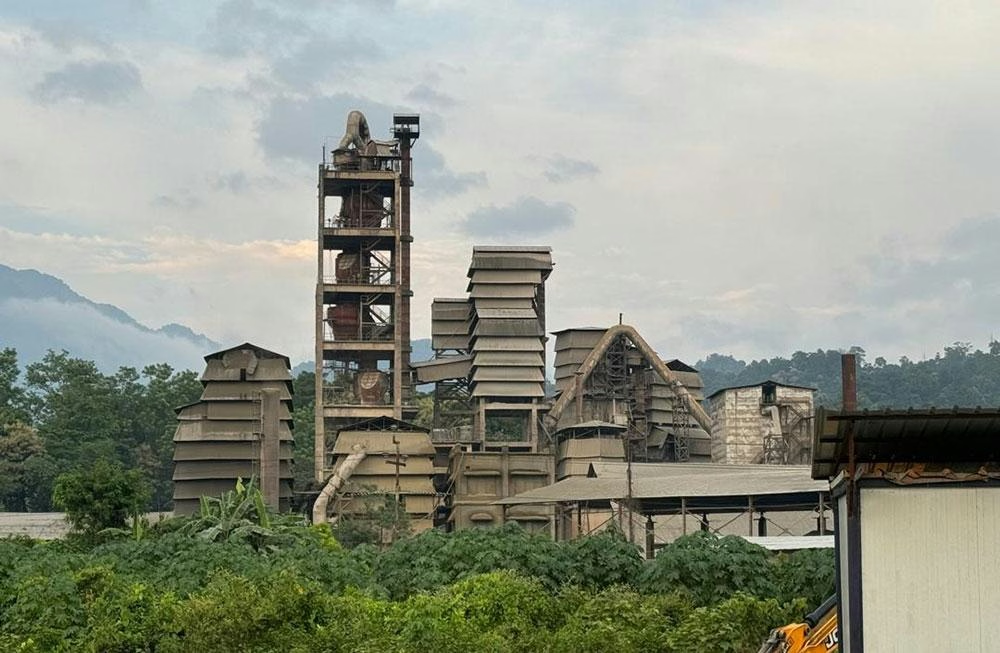
Industrial Crisis Unfolds in Bhutan's Cement Sector 🏭
Bhutan's cement manufacturing industry faces an unprecedented crisis as a prolonged coal shortage has forced major production facilities to halt operations entirely. The disruption, stemming from transport restrictions imposed by West Bengal authorities, has created a domino effect throughout the nation's industrial landscape, threatening thousands of jobs and disrupting critical infrastructure projects.
The situation has escalated rapidly over recent months, with two prominent cement factories in Gomtu—Lhaki Cement and Penden Cement Authority Limited (PCAL)—now operating at minimal capacity or complete standstill. This development represents one of the most significant industrial challenges Bhutan has faced in recent years, with implications extending far beyond the cement sector itself.
Understanding the Root Cause: West Bengal Transport Restrictions 🚛
The coal shortage crisis originated from transport restrictions implemented in West Bengal, India, which has effectively cut off Bhutan's primary supply route for this essential raw material. Bhutan's geographical position necessitates reliance on Indian transit routes for importing coal and other critical industrial inputs from Northeast India and beyond.
Lhaki Cement officials reported that their clinker production facility has remained completely idle since September 7, marking nearly two months without operational capacity. "We are almost two months without coal," stated a company representative. "The coal that we were getting from the Northeast is no longer coming because West Bengal is not allowing it to enter Bhutan."
This transit disruption affects not only imported coal but also domestically-produced coal managed by the State Mining Corporation Limited (SMCL). Even Bhutanese coal destined for industrial use has been blocked from passing through West Bengal, compounding the crisis significantly.
The Clinker Production Challenge ⚙️
Cement production depends critically on clinker manufacturing, the most energy-intensive stage of the entire process. During clinker production, limestone, clay, and other raw materials are heated in rotary kilns at extremely high temperatures—a process that demands enormous quantities of coal as fuel.
Lhaki Cement's facility can theoretically produce 450 tonnes of clinker daily under normal circumstances. However, before the complete supply disruption, production had already declined to merely 150-200 tonnes per day—representing a reduction of over 60 percent from full capacity. This dramatic decrease reflected the company's attempt to manage dwindling coal reserves while maintaining some operational capability.
Failed Alternative Sourcing Strategies 📍
Facing the West Bengal blockade, cement manufacturers have attempted to secure coal from alternative sources with disappointing results. Lhaki Cement explored coal supplies from Jharkhand and other Indian regions, importing several truckloads. Unfortunately, the quality of these alternative sources failed to meet the company's stringent production requirements.
The company successfully imported one emergency shipment of coal from Russia through Haldia Port, receiving approximately 510 tonnes. However, this consignment was exhausted quickly, with the next Russian shipment not expected until mid-December. This timeline creates a critical supply gap that threatens to extend operational shutdowns well into the final quarter of the year.
Rising Coal Costs Compound the Crisis 💰
Beyond supply disruptions, coal prices have experienced dramatic increases since February, making production exponentially more expensive for cement manufacturers. This inflationary pressure had already forced companies to reduce operations to approximately 50 percent capacity—the minimum threshold at which they could sustain any economic viability.
With the complete supply disruption, even this reduced operational model has become impossible. The combination of supply scarcity and price escalation has created a perfect storm for industrial operations dependent on coal as their primary energy source.
Broader Impact on Ferroalloy Industries 🏢
The coal shortage extends beyond cement manufacturing, affecting ferroalloy industries concentrated in Samtse and Pasakha. These facilities depend on Low Ash Metallurgical Coke (LAMC)—a specialized material also disrupted by West Bengal's transport restrictions.
Jigme Flux, a dolomite calcining operation, has reduced daily production from its 300-tonne capacity to just 190 tonnes. The company previously received coal at Nu 10,000 to Nu 12,000 per tonne delivered to its facility. Current pricing has nearly doubled, reaching approximately Nu 24,000 per tonne—an unsustainable increase that threatens the company's economic viability.
Despite strong market demand for their products, these industries struggle to fulfill existing supply commitments. Some clients have extended delivery deadlines by one to two months, but company officials acknowledge such extensions cannot continue indefinitely without risking permanent contract cancellations.
Employment Crisis and Worker Protection Concerns 👥
The most immediate human impact involves thousands of workers whose livelihoods depend on cement and related industrial operations. Lhaki Cement's management has initiated discussions about protecting employees through alternative assignments within sister companies—a temporary measure acknowledged as sustainable for only one to two months.
Cement production requires highly specialized technical workers with extensive training and expertise. Retraining or reassigning these skilled workers to unrelated positions presents significant practical and financial challenges. If the shortage persists beyond one to two months, companies may face difficult decisions regarding workforce reductions.
Penden Cement Authority Limited has suspended clinker operations, with management indicating the facility will remain closed through at least November 10. The company is actively exploring alternative coal sources, though suitable supplies remain elusive. Officials stated, "We will be able to tell clearly after that," regarding any potential resumption of operations.
Government Intervention and Transit Agreements 🤝
Industry representatives have appealed to the government to intervene diplomatically, emphasizing that the India-Bhutan Agreement on Trade, Commerce and Transit specifically provides for movement of goods from one part of Bhutan to another through Indian territory. This agreement, subject to prescribed transit procedures, should theoretically protect domestic coal supplies and legitimize their transit through West Bengal.
The current restrictions appear to violate the spirit and letter of this bilateral agreement, affecting even coal that has already entered Bhutanese territory but requires transit through Indian land to reach other parts of the country. Industry officials argue that resolving this transit issue could enable continued operations while alternative supply arrangements are finalized.
Domestic Coal Quality Questions ❓
Some industry promoters have questioned the quality of coal supplied by the State Mining Corporation Limited, suggesting it may not consistently meet production specifications. However, these allegations remain unverified through independent sources. Industries continue to depend on imported coal because domestically-supplied coal does not always satisfy their specific production requirements and quality standards.
This reliance on imported coal highlights Bhutan's vulnerability to supply chain disruptions and underscores the importance of developing more diverse and resilient energy sources for industrial operations.
Alternative Transportation Routes: Limited Options 🛣️
Some industry operators have explored transporting coal through alternative routes via Gelephu and Samdrupjongkhar. However, these routes incur significantly higher transportation costs, making them economically unviable for regular operations. The elevated expenses would further compress already-thin profit margins in an industry already struggling with rising input costs.
These alternative routes represent emergency solutions rather than sustainable long-term strategies for maintaining industrial competitiveness and production capacity.
Market Dynamics and Cement Pricing 📊
Despite the severe supply crisis, cement prices have remained relatively stable, not increasing despite widespread production disruptions. This suggests either adequate existing inventory in the market or reduced demand offsetting supply constraints. However, this price stability masks underlying vulnerabilities in the supply chain that could manifest as shortages intensify or inventory depletes.
The disconnect between production disruptions and market pricing indicates potential timing issues—current market supplies may reflect pre-crisis production levels, with true price pressures potentially emerging in subsequent months if production remains halted.
Looking Ahead: Critical Timeline and Future Outlook ⏰
The situation remains fluid and potentially volatile. The December arrival of Russian coal shipments could provide temporary relief, but long-term solutions require either resolution of West Bengal transit restrictions or development of alternative supply chains. Government intervention at the diplomatic level appears essential to address transit issues covered under existing bilateral agreements.
Industry officials emphasize that without immediate intervention, the current temporary workforce arrangements will become untenable within weeks. Permanent job losses and operational closures appear increasingly likely if supply disruptions extend beyond one to two months.
Key Takeaways for Stakeholders 🎯
The coal shortage crisis affecting Bhutan's cement and ferroalloy industries represents a critical test of the nation's industrial resilience and diplomatic relationships. Several critical points emerge:
- Supply chain vulnerability: Bhutan's industrial sector remains heavily dependent on Indian transit routes, creating significant vulnerability to policy changes or restrictions
- Employment implications: Thousands of specialized workers face potential job losses if production shutdowns continue
- Economic impact: The crisis threatens infrastructure projects and industrial output across multiple sectors
- Diplomatic imperative: Government intervention invoking existing bilateral agreements appears essential
- Long-term solutions: Developing alternative supply sources and transportation routes should become strategic priorities
The coming weeks will prove decisive in determining whether this crisis becomes temporary disruption or permanent industrial contraction. Industry stakeholders, government officials, and workers await developments with significant concern about Bhutan's industrial future.
You May Also Like
Economy
Fish Farming Empowers Women in Rukha: Economic Independence
November 7, 2026
Economy
Bhutan Sports Ventures: Building a Sustainable Sports Economy
November 7, 2026
Economy
Bhutan's Nu 33.5 Billion Bond Plan Faces Investor Base Challenges
November 7, 2026
Economy
Asia Visionary Summit Opens in Paro: Exploring Enlightened Prosperity
November 6, 2026