Category:
EconomyFish Farming Empowers Women in Rukha: Economic Independence
🌊 Breaking Barriers: How Aquaculture Is Transforming Rural Livelihoods in Bhutan
In the remote valleys of Rukha, a quiet revolution is unfolding. For generations, the Hara Chhu River has been the lifeblood of the community—but also a source of hardship, particularly for women. Now, fish farming is reshaping economic opportunities and challenging traditional gender roles in ways that extend far beyond simple food production.
The story of Rukha represents a broader shift in Bhutan's agricultural economy. As the nation grapples with food security, import dependency, and rural development, aquaculture has emerged as a strategic solution that addresses multiple challenges simultaneously: creating sustainable livelihoods, preserving cultural heritage, and empowering marginalized communities.
📍 Understanding Rukha: A Community at a Crossroads
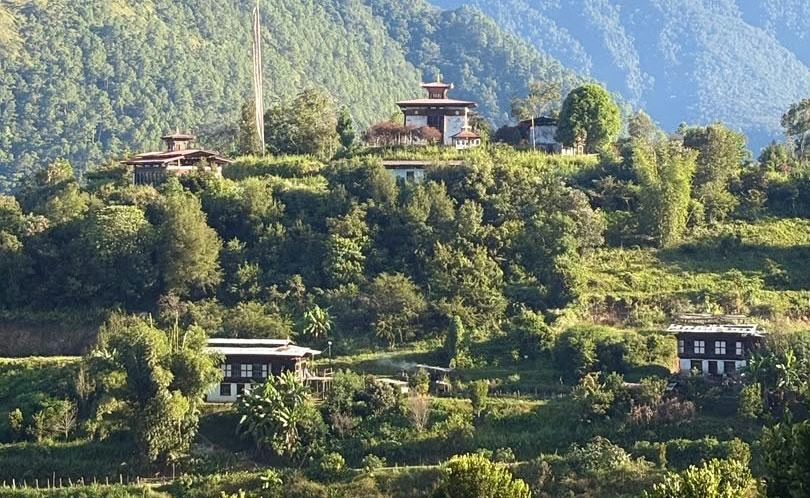
Athang Gewog, home to 26 villages and approximately 793 residents spread across 198 households, has historically depended on the Hara Chhu River for survival. This region's connection to the river runs deeper than economics—it's woven into the fabric of local identity and tradition.
The community's relationship with the river took a dramatic turn over the past two decades. In 2010, His Majesty granted formal fishing rights to the community along a designated stretch of the Hara Chhu, recognizing both the river's cultural significance and its economic importance. However, this recognition came too late to prevent environmental degradation and unsustainable fishing practices from taking their toll.
The numbers tell a sobering story. Fish harvests plummeted from 19.51 metric tonnes in 2009 to a mere 0.17 metric tonnes by 2022—a catastrophic 99% decline. This collapse wasn't simply an environmental concern; it represented an existential threat to community livelihoods and food security.
🎯 The Response: Structured Management and Strategic Innovation
Recognizing the urgency, the Harachhu Capture Fishery Management Group (HCFMG) was established in 2010. This 66-member organization—comprising 50 men and 16 women—represents an attempt to balance traditional practices with modern resource management principles.
By October 2023, the group had developed its third comprehensive management plan, officially handed over to the community to guide sustainable fishing practices. However, management of wild fisheries alone couldn't solve the deeper economic challenges facing residents, particularly women.
💡 The Aquaculture Solution: Warm-Water Fish Farming Takes Root
Entering the picture in 2024, with support from the UNDP's Small Grants Programme and the Wangdue Administration, warm-water fish farming emerged as a transformative intervention. The project became fully operational by April 2025, representing a fundamental shift in how the community approaches food production and economic development.
The infrastructure is modest but strategic: eight households now operate 11 ponds with a combined capacity of 6,500 cubic metres. These ponds are distributed across Rukha Olep village (eight households managing the majority of operations) and Samthang village (five additional ponds ranging from 900 to 3,000 fish each). Fingerlings are sourced from Gelephu, establishing supply chain connections that link Rukha to broader aquaculture networks across Bhutan.
Why Fish Farming Works for This Community
The genius of this approach lies in its alignment with local realities. Unlike river fishing, which demands physical prowess and carries genuine safety risks, pond-based aquaculture is accessible, manageable, and—crucially—located near homes.
Key advantages of the fish farming model:
- ✅ Eliminates dangerous river conditions and strong currents
- ✅ Requires only basic daily management (water flow monitoring and twice-daily feeding)
- ✅ Accessible to women, elderly residents, and people with physical limitations
- ✅ Provides year-round production capacity
- ✅ Reduces pressure on wild fish populations
- ✅ Creates opportunities for value-added processing and sales
👩🌾 Women's Empowerment: From Exclusion to Enterprise
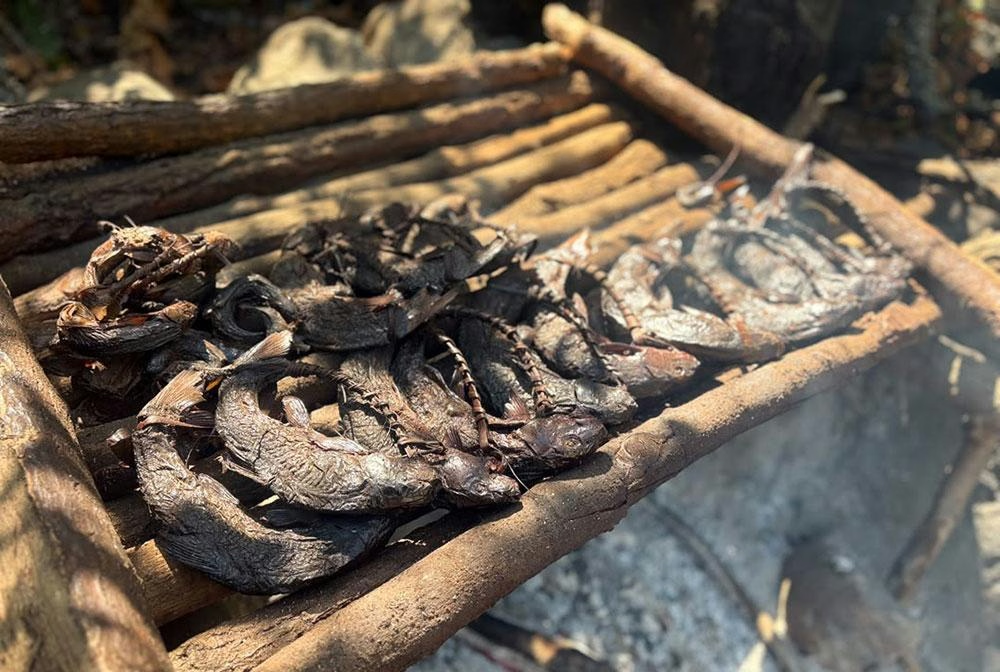
Perhaps the most significant impact of fish farming in Rukha is its effect on women's economic participation and social standing. Historically, women had minimal involvement in river fishing—a male-dominated activity that required strength and carried physical risks. The traditional processing of Nya-Dosem (smoked fish delicacy) remained largely under male control, limiting women's opportunities to participate in the full value chain.
This exclusion wasn't accidental; it reflected both practical constraints and deeply embedded cultural norms. The Hara Chhu's powerful currents posed genuine safety hazards, making river access prohibitive for women and older residents. As one 63-year-old community member observed, the strong currents made fishing unsuitable for anyone lacking the physical capability of younger, able-bodied men.
Real Stories of Economic Transformation
Dorji Dema's Journey: At 43 years old, Dorji Dema represents the new generation of women entrepreneurs in Rukha. She articulates the transformation clearly: "We cannot go near the river for fear of being swept away. With the ponds near our homes, we only have to monitor the continuous flow of water and feed the fish twice a day."
This simple shift—moving production from dangerous river environments to managed ponds—unlocked possibilities. Dorji Dema now participates in Nya-Dosem production, earning income that directly supports her family's needs, including college expenses for her two children. She estimates that the income stream has become essential to her household budget.
Nima Zam's Success: At just 23 years old, Nima Zam represents the younger generation benefiting from aquaculture opportunities. Last year, she earned Nu 40,000 from selling Nya-Dosem—a substantial income in rural Bhutan. With Nya-Dosem commanding Nu 1,000 per piece in local markets, even modest production volumes translate into meaningful earnings.
Nima's perspective reveals how economic opportunity intersects with personal autonomy: "With the money earned I am able to buy myself and my family what I want." This isn't merely about income; it's about agency, choice, and dignity.
🌾 Cultural Preservation Meets Economic Development
One of the most elegant aspects of the Rukha fish farming initiative is how it preserves cultural heritage while enabling economic progress. Nya-Dosem isn't simply a product; it's a cultural artifact—a traditional preparation method that embodies generations of knowledge and community identity.
As fish supplies from wild capture declined, the knowledge of Nya-Dosem production risked being lost along with the fish themselves. Younger generations had fewer opportunities to learn the craft, and fewer incentives to maintain traditional skills in an era of declining catches.
Aquaculture reverses this trajectory. With reliable fish supplies from managed ponds, the community can now:
- Restore production capacity: Increased fish availability enables higher volumes of Nya-Dosem production
- Transmit knowledge: Younger community members learn traditional processing techniques from experienced practitioners
- Generate income: The combination of reliable supply and market demand creates sustainable economic returns
- Strengthen identity: Cultural practices remain economically viable, reinforcing their importance in community life
Chokila, a former gup (village leader) of Athang Gewog, captures this vision: "With a steady supply of fish, we can produce more Nya-Dosem, increase our income and pass this traditional skill on to the younger generation."
🇧🇹 Broader Implications for Bhutan's Food Security
The Rukha initiative reflects a national priority. Bhutan has historically relied on fish imports to meet domestic consumption demands—a dependency that strains foreign exchange reserves and creates vulnerability to supply chain disruptions.
Aquaculture's role in Bhutan's development strategy:
- Reduces import dependence and improves trade balance
- Enhances rural food security and nutritional diversity
- Creates employment in underutilized sectors
- Supports gender equality and women's economic empowerment
- Enables sustainable resource management
- Builds climate-resilient livelihoods
The warm-water fish farming model pioneered in Rukha offers a replicable template for other rural communities facing similar challenges: declining wild fish stocks, limited economic opportunities, and the need to balance environmental sustainability with livelihood security.
🔮 Looking Forward: Scaling Impact and Sustaining Momentum
While the current project benefits eight households directly, the potential for expansion is substantial. Bhutan's diverse geography and water resources provide numerous sites suitable for aquaculture development. The success in Rukha demonstrates that with appropriate technical support, community organization, and modest financial investment, rural communities can transition from resource extraction to managed production systems.
Key factors for sustained success include:
- Continued technical support: Fingerling supply chains, disease management, and feed quality require ongoing expertise
- Market development: Expanding sales channels beyond local markets to regional and national buyers
- Knowledge sharing: Documenting and disseminating best practices to other communities
- Policy support: Ensuring favorable regulatory frameworks for small-scale aquaculture operations
- Women's organization: Strengthening women's groups to collectively market products and negotiate better prices
✨ Conclusion: A Model for Rural Transformation
The fish farming initiative in Rukha transcends simple agricultural development. It represents a holistic approach to rural transformation that simultaneously addresses food security, environmental sustainability, gender equality, and cultural preservation.
For women like Dorji Dema and Nima Zam, aquaculture has opened doors that river fishing could never provide. They now participate in the full value chain—from fish production to traditional processing to market sales—generating income while maintaining cultural practices and contributing to household food security.
As Bhutan continues navigating the complexities of rural development and climate adaptation, the Rukha model offers valuable lessons: sustainable livelihoods emerge not from imposing external solutions, but from supporting communities to innovate within their own cultural and environmental contexts. When women are empowered to participate fully in these opportunities, the benefits multiply across households and generations.
The ponds of Rukha may be modest in scale, but their significance extends far beyond their 6,500 cubic metres of water. They represent possibility, resilience, and the transformative power of inclusive economic development. 🌟
You May Also Like
Economy
Bhutan Sports Ventures: Building a Sustainable Sports Economy
November 7, 2026
Economy
Bhutan's Nu 33.5 Billion Bond Plan Faces Investor Base Challenges
November 7, 2026
Economy
Coal Shortage Halts Cement Production in Gomtu, Threatens Jobs
November 7, 2026
Economy
Asia Visionary Summit Opens in Paro: Exploring Enlightened Prosperity
November 6, 2026