Category:
EducationTackling Dzongkha Failure Rates: A Strategic Review
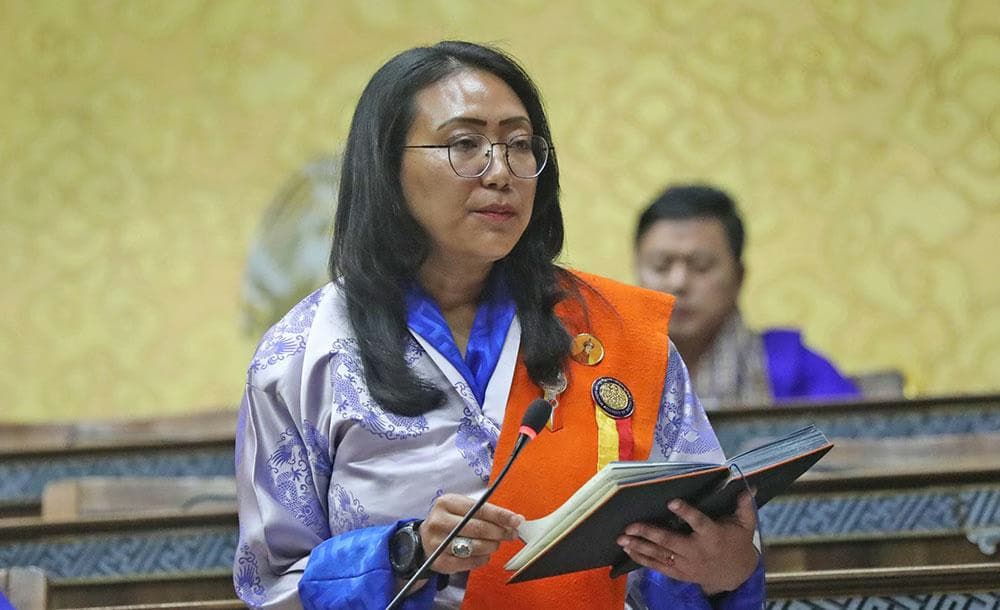
🎓 Education in Bhutan is at a pivotal juncture as the Ministry of Education and Skills Development (MoESD) intensifies efforts to address the persistent failure rates in Dzongkha among Classes VI and VIII. This initiative reflects a broader commitment to strengthening national identity through education.
The Importance of Dzongkha 🇧🇹
Dzongkha, the national language of Bhutan, is more than a subject in the curriculum; it is a cornerstone of cultural identity and heritage. The Ministry underscores its importance, maintaining that Dzongkha will remain a compulsory pass subject to preserve cultural values.
Current Challenges
Despite its significance, many students face challenges in achieving proficiency in Dzongkha. Recent data from the Bhutan Council for School Examinations and Assessment (BCSEA) highlights this issue, with notable failure rates in Classes VI and VIII over recent years.
- Class VIII Failure Rates: From 10.23% in 2023, these rates decreased to 6.89% in 2024 and further to 5.65% in 2025.
- Class VI Failure Rates: Starting at 8.29% in 2023, they dropped to 4.76% in 2024, before slightly rising to 5.84% in 2025.
These statistics illustrate a gradual improvement, yet the Ministry remains focused on reducing these figures further.
Strategic Measures 🌟
Competency-Based Learning
A shift towards competency-based learning is a central strategy in enhancing Dzongkha education. From 2026, the Dzongkha examination framework will incorporate both written exams and continuous assessments, requiring students to secure at least 40% in combined assessments.
Teacher Training Initiatives
Effective teaching is pivotal to student success. The Ministry is enhancing teacher training programs, aiming to equip educators with the skills needed to deliver competency-based education. These programs are in consultation with various agencies, ensuring they meet international standards.
Curriculum Revisions 📚
The Dzongkha curriculum is being realigned with global best practices, emphasizing speaking, reading, writing, and listening skills. This comprehensive approach aims to not only improve pass rates but also foster genuine language proficiency.
Broader Educational Context
Dzongkha's performance, when compared to other core subjects like Mathematics and Science, remains relatively strong. In 2025, the pass rates were 94.35% for Class VI and 94.16% for Class VIII, showcasing Dzongkha as one of the best-performing subjects.
National Reintegration Programme
The Ministry also emphasizes the National Reintegration Programme, which integrates returning students into the mainstream education system without separate Dzongkha instruction, fostering inclusivity and proficiency through a competency-based curriculum.
Looking Forward 🔮
The road ahead involves continuous assessment and adaptation. By focusing on competency, training, and curriculum development, Bhutan aims to boost Dzongkha proficiency, ensuring it remains a vibrant aspect of national identity.
Key Takeaways
- The Ministry is committed to reducing Dzongkha failure rates through strategic educational reforms.
- Emphasizing competency-based learning and enhanced teacher training are pivotal steps.
- Continuous curriculum improvements are essential for fostering language proficiency.
As Bhutan navigates these educational challenges, the commitment to preserving and enhancing Dzongkha remains steadfast, promising a future where language and culture thrive in harmony.
You May Also Like
Education
Team Bhutan Shines at FIRST Global Challenge 2026
October 15, 2026
Education
BFF Academy Achieves Historic Milestone with First Cambridge Checkpoint Exam
October 14, 2026
Education
Dzongkha Pronunciation and Spelling Challenges in Bhutanese Education
October 10, 2026

Education
Bhutanese Students Reconsider Australia Plans Amid New Visa Rules
October 7, 2026