Category:
EnvironmentSnow Leopard Population Surge in Bhutan Amid Mixed Asian Trends
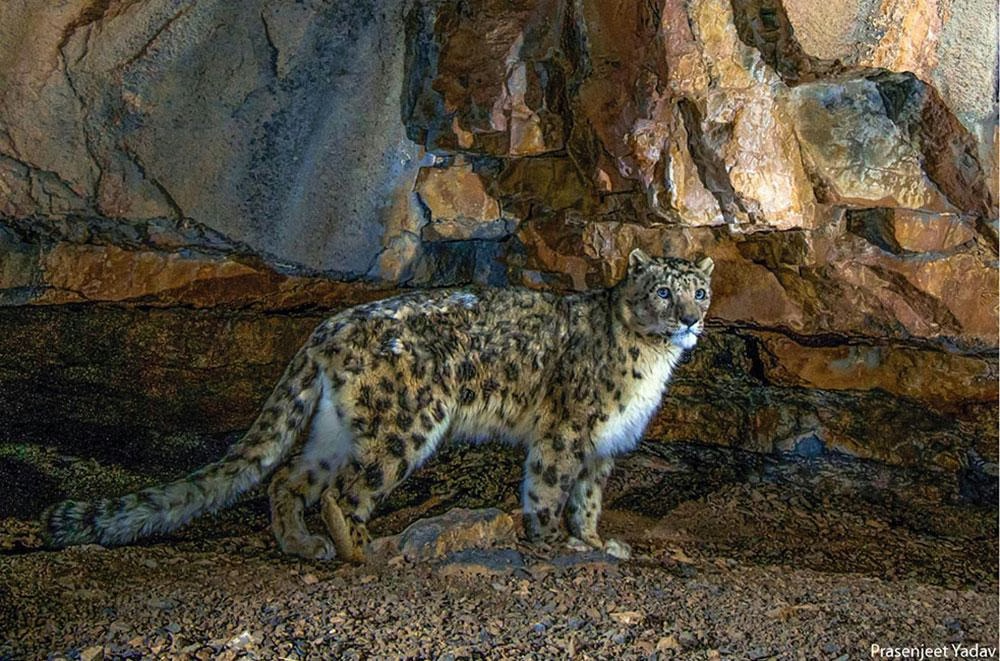
A Conservation Success Story Unfolds in the Himalayas 🏔️
In an era when many wildlife populations face unprecedented challenges, Bhutan emerges as a beacon of hope for one of the world's most elusive and endangered cats. Recent comprehensive assessments reveal that snow leopard numbers in Bhutan are not only stable but showing encouraging signs of growth, marking a significant achievement in high-altitude conservation efforts. This positive trajectory stands in stark contrast to the increasingly complex situation unfolding across the broader High Asia region, where conservation outcomes vary dramatically from country to country.
The dichotomy between Bhutan's success and the varied results across neighboring territories tells a compelling story about the importance of dedicated conservation strategies, community engagement, and protected area management. Understanding these dynamics provides valuable insights into what works—and what doesn't—when protecting one of nature's most magnificent creatures.
Understanding the Snow Leopard Population Assessment Landscape 📊
The most recent comprehensive evaluation of snow leopard populations across High Asia comes from the March 2026 Snow Leopard Reports, a landmark publication that synthesizes country-level data from all 12 nations where these elusive predators roam. This assessment represents a crucial update to conservation knowledge, building upon findings from the previous IUCN Red List evaluation conducted nearly a decade earlier in 2017.
The methodology behind these assessments varies considerably across countries, reflecting both the challenges of surveying remote mountain terrain and the differing capacities of nations to conduct standardized research. Six countries have completed the Population Assessment of the World's Snow Leopards using consistent protocols, while others blend established research with newer analytical techniques and national monitoring data. This patchwork approach, while sometimes complicating direct comparisons, ultimately provides the most realistic picture possible given the extreme difficulty of studying snow leopards in their natural habitat.
Bhutan's Remarkable Achievement: 134 Snow Leopards and Growing 🎯
Bhutan's snow leopard population assessment estimates approximately 134 adult individuals, with a confidence interval ranging from 121 to 148 animals. This figure, derived from rigorous 2023 camera-trap surveys, represents the culmination of systematic monitoring efforts across the kingdom's high-altitude regions. The assessment identified 96 individual adult snow leopards through camera traps—comprising 45 males and 51 females—along with documentation of 10 cubs, suggesting active breeding populations and reproductive success.
These snow leopards inhabit the mountainous northern reaches of Bhutan, distributed across both protected areas and unprotected territories. Key populations have been documented in several critical conservation zones: Jigme Khesar Strict Nature Reserve, Jigme Dorji National Park, Wangchuck Centennial National Park, and Bumdeling Wildlife Sanctuary. Additionally, smaller populations occupy the Paro and Thimphu forest divisions, with the entire range spanning elevations between 3,500 and 5,500 meters.
The presence of cubs in recent surveys particularly excites conservation scientists, as it indicates viable breeding populations and suggests that Bhutan's conservation framework is effectively protecting not just individual animals, but the reproductive success necessary for long-term population stability and growth.
The Broader High Asia Picture: A Mixed Conservation Landscape ⚠️
While Bhutan celebrates stable and growing populations, the wider High Asia region presents a far more complicated mosaic of conservation outcomes. China, which contains more than 60 percent of the snow leopard's total habitat range, hosts the largest population in absolute terms. Recent assessments estimate approximately 5,232 snow leopards across Chinese territory, though researchers characterize this figure as conservative since calculations focused exclusively on areas confirmed as currently inhabited and restricted to medium and high-quality habitat zones.
Mongolia supports an estimated 953 adult snow leopards, with repeated surveys indicating population stability similar to Bhutan's situation. This consistency across repeated monitoring efforts suggests that Mongolia's conservation and management strategies are also proving effective. However, not all nations report such encouraging news.
Several regions have experienced documented population declines. Some previously occupied areas in China have been reclassified from "possibly extant" to "possibly extinct," representing a concerning loss of range. Pakistan and Russia have both confirmed range contractions, with certain historical snow leopard territories no longer supporting viable populations. These losses highlight the vulnerability of fragmented populations and the challenges of maintaining connectivity across international borders in remote mountain regions.
Individual Country Assessments Reveal Complex Dynamics 🌏
India's updated evaluation estimates 718 snow leopards, with approximately 34 percent of their distribution occurring within protected areas. The nation faces multifaceted challenges including retaliatory killing by herders protecting livestock, competition for prey species, habitat degradation from livestock grazing, infrastructure development, tourism impacts, agricultural expansion, green-energy projects, and predation by free-ranging dogs.
Kyrgyzstan's nationwide assessment, employing sophisticated spatial capture-recapture analysis, estimates 300 adult snow leopards. The country confronts threats including illegal hunting of prey species, retaliatory killing, wildlife trafficking, overgrazing, enforcement gaps, infrastructure expansion, and climate change pressures.
Kazakhstan hosts an estimated 152 to 189 snow leopards, with major concentrations in the Tien Shan and Dzungar-Alatau mountain ranges. Annual human-caused mortality reaches five to ten individuals, a significant loss for such a small population. Uzbekistan maintains an estimated 96 to 107 adults divided between the Western Tien Shan and Western Pamir-Alay, with populations spanning international boundaries requiring transnational cooperation.
Russia's population remains precarious, with only 70 to 90 adults surviving. While some protected populations show stability or recovery, others remain dangerously small. Pakistan estimates 150 to 200 individuals, though researchers note that older estimates likely inflated actual numbers through double-counting and unsupported extrapolations.
Afghanistan presents perhaps the most uncertain situation, with rough estimates of 213 to 253 snow leopards but no systematic national survey and therefore no reliable trend data. Tajikistan's population remains contested, with scientific estimates ranging from 130 to 374 (mean of 217) while the country's official 2025 Red Book claims approximately 500. Nepal's 2025 assessment estimates 397 snow leopards with a 95 percent confidence interval of 331 to 476.
Why Bhutan Succeeds: Key Conservation Factors 💚
Bhutan's success in maintaining and growing its snow leopard population stems from several interconnected factors. The nation's constitutional commitment to maintaining 60 percent forest coverage and its extensive protected area network provide secure habitat for these elusive predators. Bhutan's relatively small human population and limited infrastructure development in high-altitude regions mean less direct conflict with snow leopard territories.
Community-based conservation approaches have proven particularly effective in Bhutan. Local communities receive education about snow leopard ecology and conservation importance, transforming potential adversaries into allies. Predator-resistant livestock corrals reduce livestock depredation incidents that typically trigger retaliatory killing. Livestock insurance programs compensate herders for losses, removing economic incentives for killing snow leopards.
The kingdom's commitment to systematic monitoring through camera-trap networks provides the data necessary for adaptive management. Regular surveys allow conservation officials to track population trends, identify emerging threats, and adjust strategies accordingly. This science-based approach contrasts with nations lacking resources for consistent monitoring.
The Broader Significance of Snow Leopard Conservation 🌟
Snow leopards serve as umbrella species—their conservation automatically protects countless other species sharing their high-altitude ecosystems. These mountains harbor unique flora and fauna found nowhere else on Earth. The conservation success in Bhutan demonstrates that protecting snow leopards simultaneously safeguards entire mountain ecosystems and the critical water resources they provide to billions of people downstream.
Snow leopards also hold profound cultural significance across High Asia. In Bhutan specifically, these elusive cats feature prominently in traditional beliefs and national identity. The kingdom's conservation commitment reflects not merely pragmatic wildlife management but a deep cultural values alignment with environmental stewardship.
Threats Persist Despite Progress 🚨
Despite encouraging trends in Bhutan and Mongolia, significant threats continue imperiling snow leopards across High Asia. Climate change alters high-altitude ecosystems, shifting prey distribution and reducing suitable habitat. Illegal hunting and wildlife trafficking remain persistent problems in regions with weak enforcement capabilities. Habitat fragmentation from infrastructure development isolates populations, reducing genetic diversity and breeding opportunities.
Livestock depredation remains perhaps the most immediate threat. When snow leopards kill herds protecting livelihoods, local communities often respond with retaliatory killing—a rational economic response that undermines conservation efforts. Addressing this conflict requires sustained investment in coexistence programs.
Looking Forward: Sustaining Momentum and Expanding Success 🔮
Bhutan's snow leopard conservation achievements provide a replicable model for neighboring nations. The combination of protected areas, community engagement, systematic monitoring, and economic incentive programs has proven effective. Scaling these approaches across High Asia could potentially reverse declines observed in other regions.
International cooperation remains essential, particularly for transboundary populations. Snow leopards recognize no political boundaries, moving freely across national frontiers. Coordinated conservation strategies between nations—sharing monitoring data, harmonizing protection policies, and jointly addressing trafficking networks—will prove increasingly important.
The upcoming formal IUCN Red List assessment, not yet published at the time of these country-level reports, will provide additional guidance for conservation prioritization. This global evaluation will help identify which regions require urgent intervention and which conservation approaches merit expansion.
Conclusion: Hope in the High Mountains 🏔️✨
Bhutan's growing snow leopard population offers genuine hope for species conservation in the age of climate change and human expansion. The kingdom demonstrates that with commitment, resources, and community engagement, endangered species can recover even in challenging circumstances. While High Asia presents a mixed conservation landscape with some regions experiencing declines, Bhutan's success proves that positive outcomes remain possible.
The path forward requires sustained investment in protected areas, continued community-based conservation programs, strengthened enforcement against poaching and trafficking, and international cooperation across the twelve snow leopard range countries. As these magnificent predators face mounting pressures from climate change and human activities, the lessons from Bhutan become increasingly valuable. The snow leopards of High Asia's mountains—and the ecosystems they inhabit—depend on the world's willingness to learn from successes and apply those lessons broadly across this critical region.
You May Also Like
Environment
Climate Crisis in the Himalayas: Bhutan's Cold Reminder
August 29, 2026
Environment
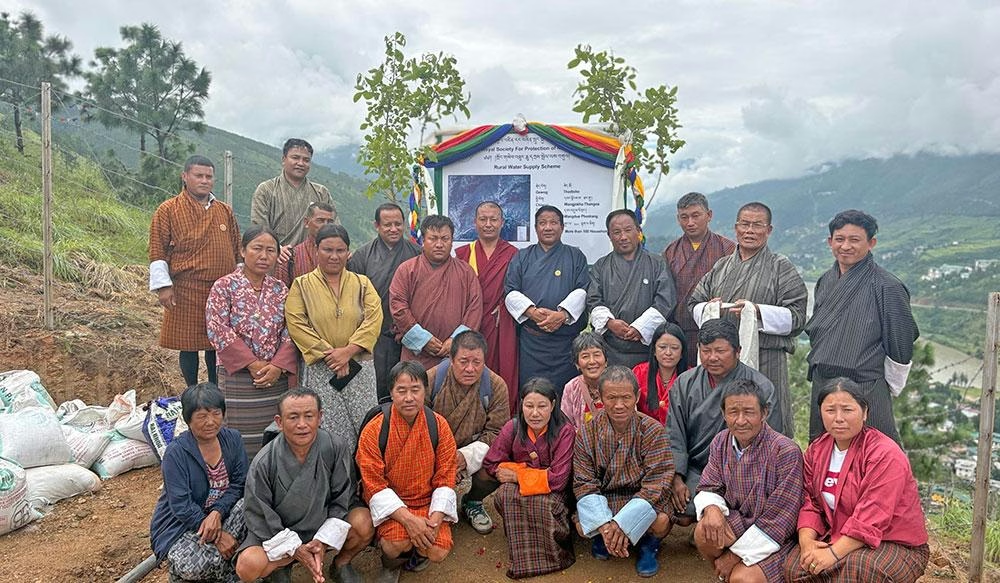
WBH Conservation Project Delivers Clean Water to Rural Homes
August 29, 2026
Environment
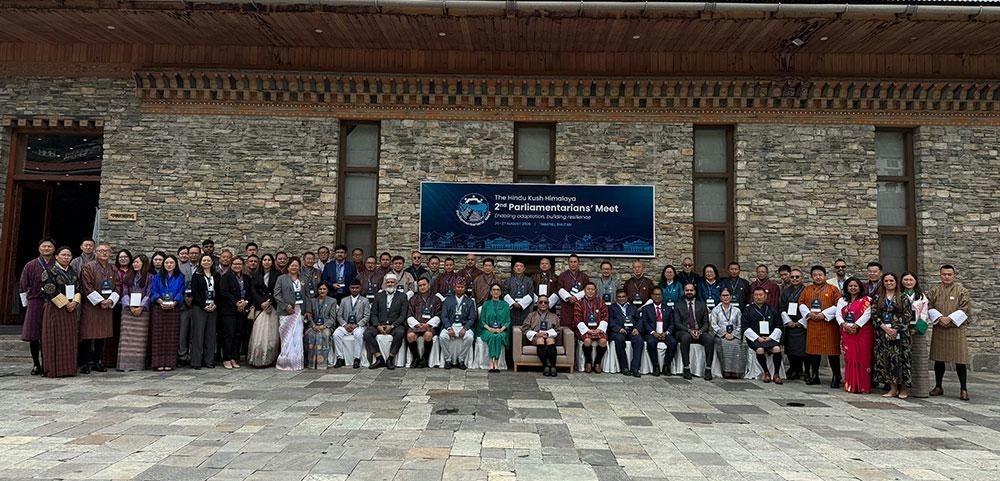
HKH Climate Crisis: Why Regional Unity Matters Now
August 29, 2026
Environment
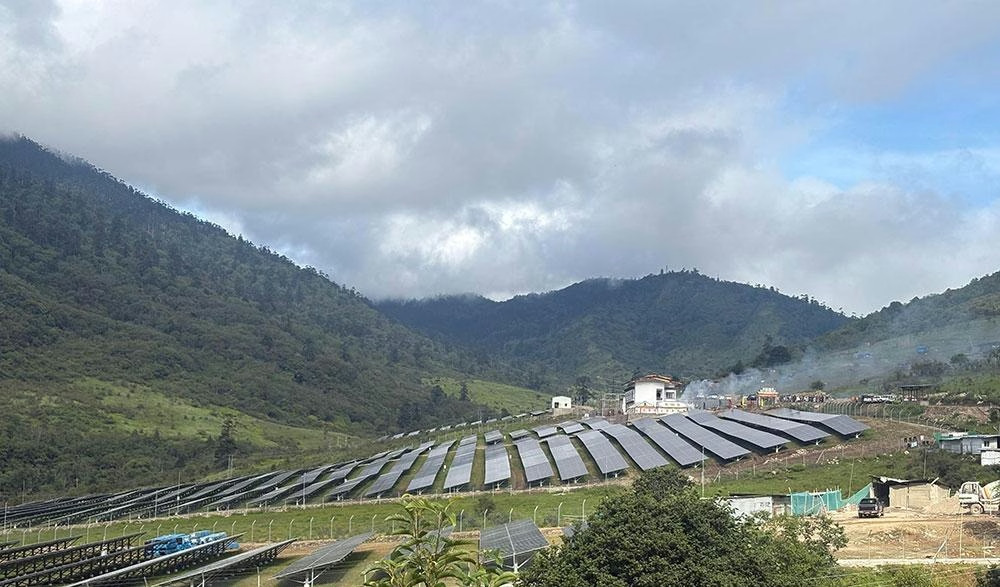
Bhutan's Solar Power Revolution: Energy Security Strategy
August 26, 2026