Category:
EconomySingle Mother Transforms Life Through Beekeeping in Bhutan
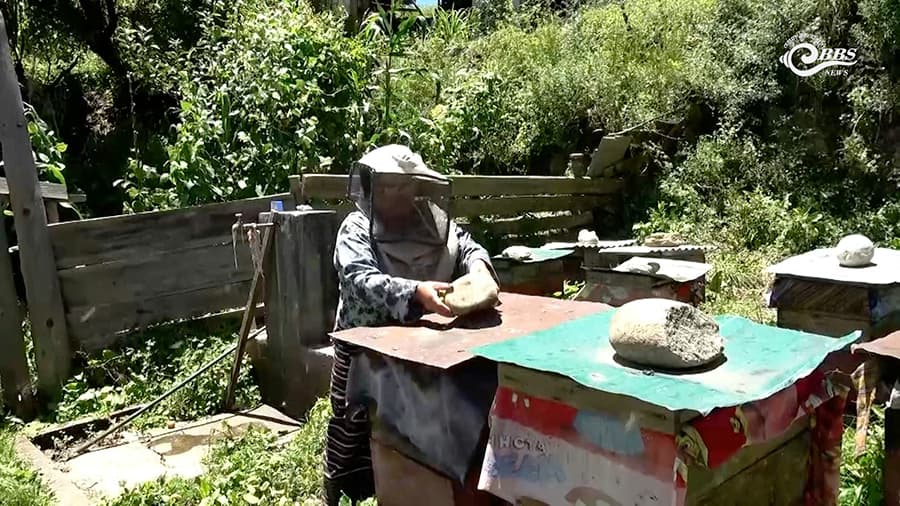
From Struggle to Success: A Beekeeping Journey in Bumthang 🐝
In the serene village of Dhur, nestled in Choekhor Gewog within Bumthang district, a remarkable transformation is taking place. A 34-year-old single mother has discovered that the smallest creatures can create the most profound opportunities. Through dedication, patience, and an unwavering commitment to her family's future, she has built a thriving beekeeping enterprise that now sustains her household and educates her three sons.
This story represents far more than just honey production. It embodies the resilience of rural entrepreneurs and the untapped potential of sustainable livelihoods in Bhutan's agricultural sector.
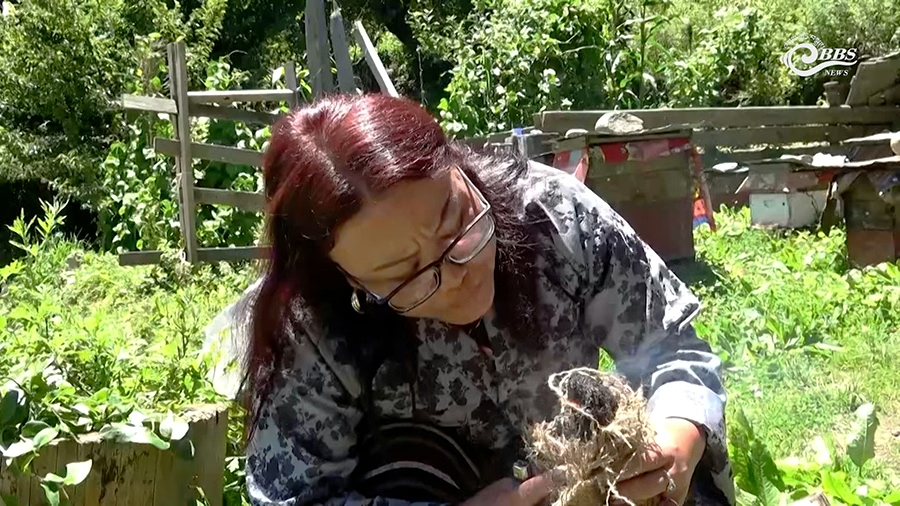
The Beginning: A Mother's Determination 💪
When Dawa made the decision to start beekeeping in 2021, she was searching for more than just an income source. As a single mother with limited employment options in her remote village, she needed a solution that would allow her to work from home while caring for her three school-going children. Traditional employment simply wasn't feasible given her family responsibilities.
She began modestly with just three hives—a small investment that required significant courage and faith in an uncertain venture. Within her first year, her determination paid off as she expanded to eight hives. Today, just a few years later, her apiary has grown to 28 thriving colonies.
"I started beekeeping with just three hives. By the following year, I had increased the number to eight, and today, I have 28 hives," she reflects on her journey with quiet pride.
Understanding the Challenges of Beekeeping 🎯
Beekeeping is not for the faint of heart. It demands exceptional patience, a calm temperament, and an almost meditative approach to working with these delicate creatures. Even experienced beekeepers acknowledge that protective gear cannot always prevent the occasional sting. The work requires consistent attention, careful observation, and an understanding of bee behavior and colony dynamics.
For Dawa, the challenges have been considerable. Managing multiple hives means regular inspections of bee combs, monitoring colony growth, and ensuring that each hive remains healthy and productive. The physical demands are compounded by the need to balance this work with her responsibilities as a single parent.
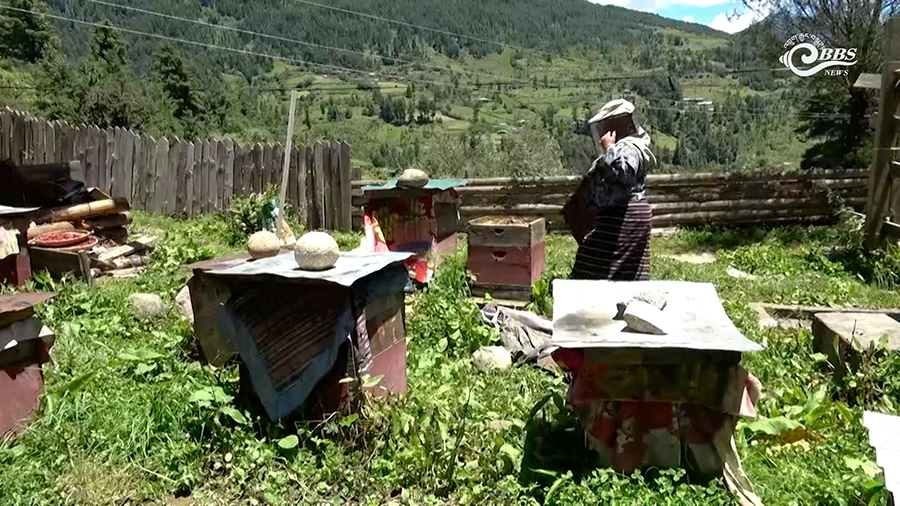
Yet despite these obstacles, she persists. The rewards—both financial and personal—have proven worth every challenge. Beekeeping has given her something increasingly rare in rural areas: genuine economic independence and a sustainable income stream she controls entirely.
Building a Sustainable Income 💰
The financial trajectory of Dawa's beekeeping venture demonstrates its viability as a livelihood strategy. In her first full year of operations, she earned Nu 175,000 from honey sales and related apiculture products. This income, while modest by urban standards, represents a life-changing amount for a single mother in a rural village.
Looking ahead, her projections are even more encouraging. She anticipates earning more than Nu 300,000 in the current year—a significant increase that reflects both her expanding hive count and growing market confidence in her products. These earnings translate directly into school fees, nutrition, and basic necessities for her family.
But Dawa's ambitions don't stop there. She has strategically planned to multiply her hives in the coming years, aiming to generate sufficient income to cover all her children's educational expenses and establish a more secure financial foundation for her family's future.
The Daily Work: More Than Just Honey 🍯
Many people romanticize beekeeping, imagining it as a simple process of collecting honey. The reality is far more nuanced and labor-intensive. Dawa's daily routine involves feeding her bees sugar supplements to sustain the colonies, particularly during seasons when natural nectar sources are limited. She carefully monitors each hive's condition, checking for signs of disease, ensuring adequate space for the growing population, and maintaining the delicate balance that keeps colonies productive.
This hands-on management is what separates successful beekeepers from those who fail. Dawa's meticulous attention to detail has resulted in consistently healthy colonies and reliable honey production—the foundation of her economic success.
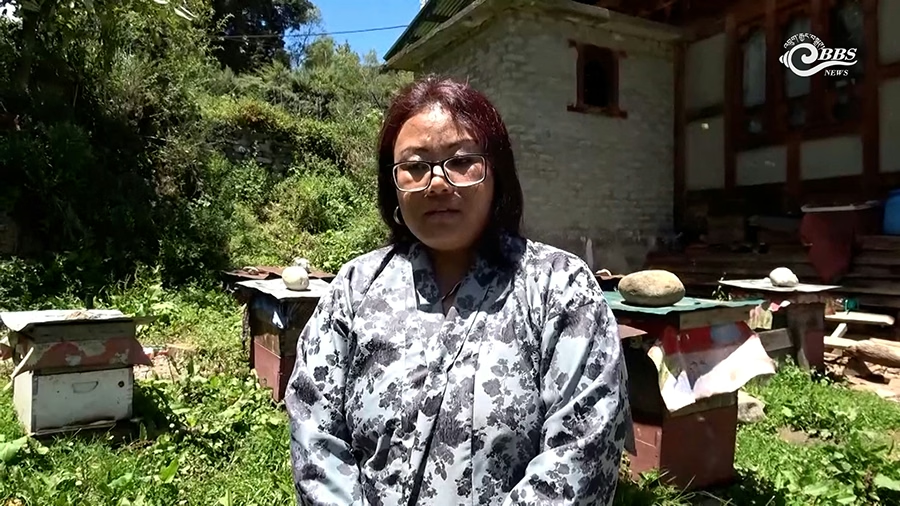
Beekeeping in Bhutan's Economic Landscape 📊
Dawa's success story arrives at a particularly significant moment for Bhutan's agricultural sector. The country has increasingly recognized apiculture as a valuable component of rural economic development. Beekeeping offers several advantages that align with Bhutan's sustainability goals: it requires minimal land, generates income from non-timber forest products, supports biodiversity through pollination services, and can be practiced alongside other agricultural activities.
Across Bhutan, numerous households now depend on beekeeping as their primary or supplementary income source. The sector has grown steadily, supported by government initiatives, cooperative structures, and increasing market demand for pure, organic honey. However, individual success stories like Dawa's remain relatively uncommon, particularly among single mothers in remote communities.
Her achievement highlights both the potential and the barriers within Bhutan's beekeeping industry. While the opportunity exists, it requires exceptional dedication, access to initial capital, and the resilience to overcome early setbacks.
A Message of Hope for Rural Entrepreneurs 🌟
When asked about her experience, Dawa becomes an advocate for other single mothers facing similar circumstances. "It is not an easy task, and I have faced many challenges along the way. But with my hard work and effort, I am now able to earn something from it," she explains. "I would encourage other single mothers who are looking for a source of income to consider beekeeping."
This message carries particular weight because it comes from lived experience. Dawa hasn't simply survived through beekeeping—she has thrived. More importantly, she has maintained her dignity and independence while doing so. She works on her own terms, from her own home, and builds her enterprise at her own pace.
The Path Forward: Expansion and Growth 📈
Dawa's vision for the future is both ambitious and grounded in practical reality. Rather than attempting rapid expansion that might compromise quality, she plans to gradually increase her hive count in the coming years. This measured approach reflects her understanding that sustainable growth requires maintaining colony health and honey quality.
Her long-term goal centers on ensuring her children's education and establishing a financial cushion that provides genuine security. Each new hive represents not just additional honey production, but another step toward that objective.
For Dawa, the bees have become partners in her journey toward stability. They work tirelessly, asking nothing but basic care and attention. In return, they provide honey, beeswax, and the economic foundation that allows her to build the future she envisions for her family.
Key Takeaways: Lessons from Dhur Village ✨
Dawa's beekeeping journey offers several important insights for rural economic development:
- Beekeeping provides viable income for homebound caregivers who cannot pursue traditional employment
- Starting small with gradual expansion creates sustainable growth without overwhelming the operator
- Consistent, attentive management directly correlates with colony health and productivity
- Rural women entrepreneurs can achieve significant financial independence through agricultural innovation
- Patience and persistence matter more than initial capital in building successful ventures
- Market demand exists for quality honey and apiculture products in Bhutan and beyond
Looking Ahead 🚀
As Dawa continues to expand her beekeeping operations, her story will undoubtedly inspire other single mothers and rural entrepreneurs throughout Bhutan. She demonstrates that economic opportunity exists not in distant cities or corporate structures, but in patient work with nature, dedication to craft, and unwavering commitment to family.
The bees of Dhur village, tended by a determined mother of three, are building more than just honeycomb. They are constructing a future—one hive, one season, one achievement at a time. In doing so, they offer a powerful reminder that transformation often begins with the smallest creatures and the greatest determination.
You May Also Like

Economy
Indian Banks Slow to Adopt Bhutanese UPI Payments
October 12, 2026
Economy
Government Addresses 400+ Business Issues to Boost Economy
October 10, 2026
Economy
Bhutan's Bold Vision: Two USD 50M Enterprises by 2030
September 27, 2026
Economy
Mega Dry Port in Pasakha: Bhutan's Trade Revolution
September 25, 2026