Category:
EconomyMega Dry Port in Pasakha: Bhutan's Trade Revolution
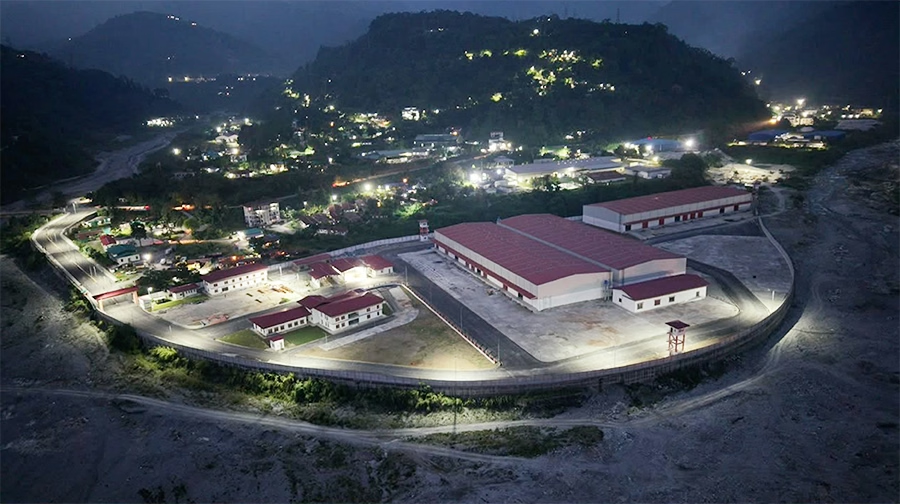
Bhutan's Trade Infrastructure Gets a Major Upgrade 🚀
Bhutan is on the cusp of a significant transformation in its logistics and cargo management landscape. The country's most ambitious dry port project has officially reached completion, marking a pivotal moment for the nation's trade infrastructure. Located in Pasakha, this state-of-the-art facility represents a Nu 1.2 billion investment designed to revolutionize how goods enter and are processed within Bhutan's borders.
The completion of this mega dry port signals a major shift in the country's approach to managing international trade. With stakeholder meetings currently underway to finalize operational protocols, the facility stands ready to reshape cargo clearance procedures that have remained relatively unchanged for years. This development comes at a critical time when Bhutan's economy continues to diversify and cross-border commerce plays an increasingly important role.
Understanding the Scale and Scope 📊
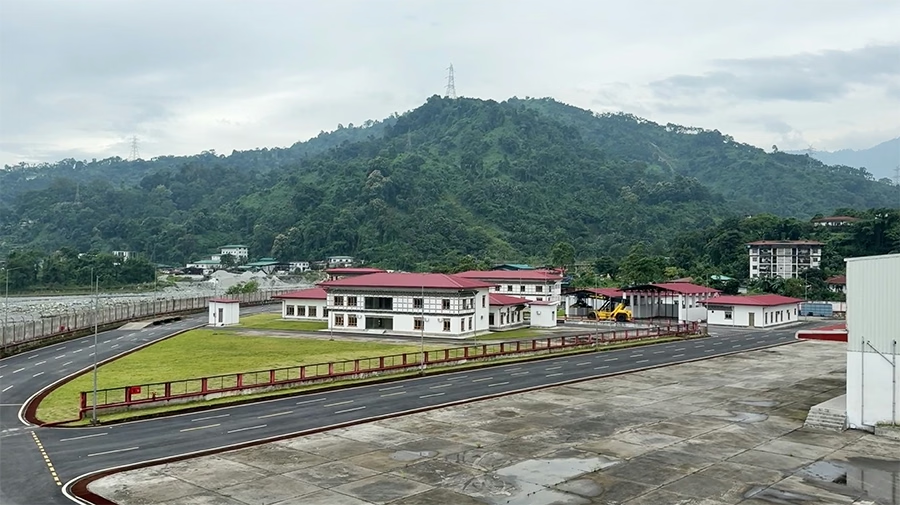
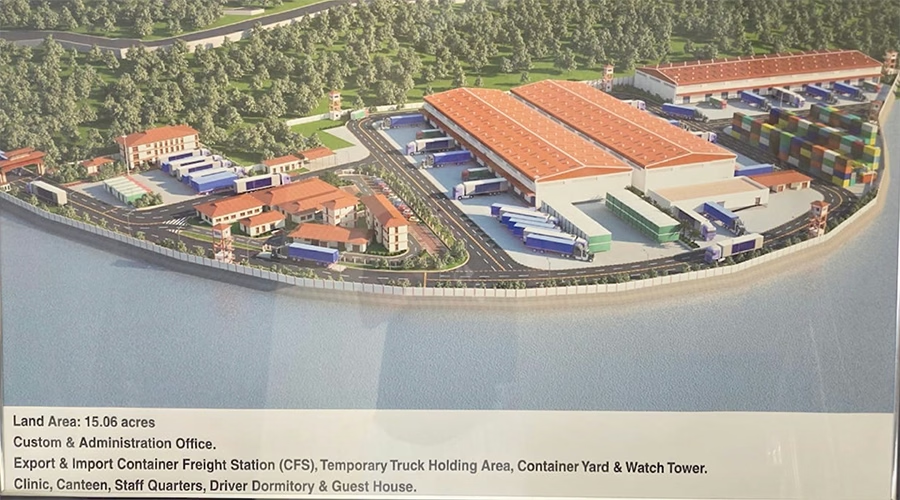
Spanning across more than 15 acres, the Pasakha dry port represents one of the largest single infrastructure investments in Bhutan's logistics sector. This expansive facility consolidates multiple government agencies and private sector players under a unified operational framework, creating unprecedented efficiency in cargo processing.
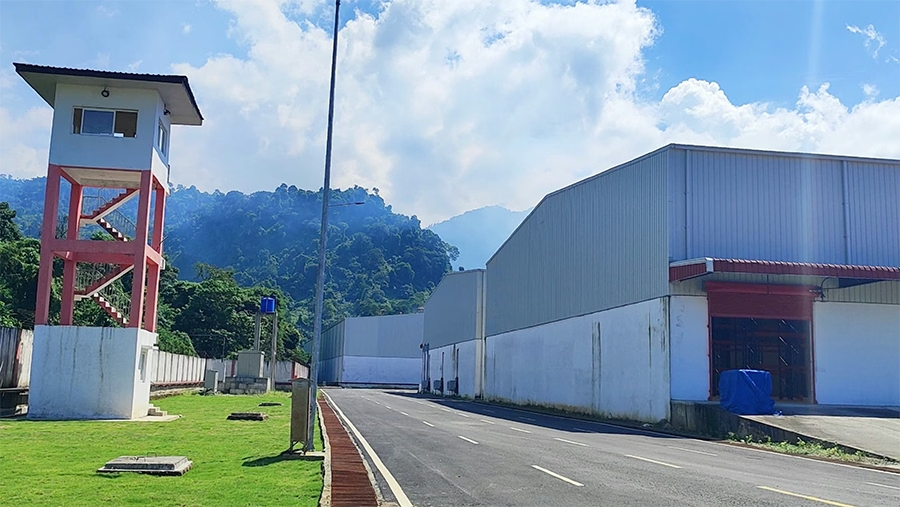
The project's scale becomes apparent when examining its comprehensive infrastructure. The facility houses three massive container freight stations, each exceeding 4,800 square metres in area. This configuration enables the port to process approximately 100 truckloads daily, a capacity that far exceeds current handling volumes at traditional entry points. The facility's design reflects careful planning to accommodate Bhutan's growing trade volumes while maintaining operational efficiency.
Beyond the warehouses, the complex includes:
- Container yard for temporary storage and organization of shipments
- Cold storage facility for perishable goods and temperature-sensitive cargo
- Driver dormitory to support logistics personnel
- Canteen and support services for operational staff
- Dedicated office spaces for government and private agencies
Consolidating Key Trade Agencies Under One Roof 🏢
One of the most significant advantages of the Pasakha dry port lies in its integrated approach to cargo clearance. Rather than forcing traders and transporters to navigate multiple locations, the facility brings together all essential agencies responsible for goods inspection and clearance.
The consolidated offices include:
- Department of Revenue and Customs
- Bhutan Food and Drug Authority
- Royal Bhutan Police
- Licensed clearing agents and private logistics operators
This co-location eliminates the fragmentation that has historically characterized Bhutan's cargo clearance process. Traders no longer need to shuttle between different government offices scattered across various locations. Instead, they can complete all necessary documentation, inspections, and approvals at a single, purpose-built facility. This streamlining promises to reduce processing times significantly and decrease administrative burdens on the business community.
Relieving Pressure on Phuentshogling 🚚
Phuentshogling has long served as Bhutan's primary land entry point for international trade. As the country's main gateway for goods arriving from India and beyond, this border town has borne the brunt of cargo handling responsibilities. The concentration of trade activity in Phuentshogling has created significant congestion, particularly during peak trading periods, affecting both commercial efficiency and urban infrastructure.
The new Pasakha facility addresses this bottleneck by distributing cargo processing responsibilities across the country. By handling a substantial portion of incoming goods at the Pasakha location, the project reduces the volume of heavy vehicles transiting through Phuentshogling's congested corridors. This decentralization approach offers multiple benefits:
- Reduced urban congestion in Phuentshogling
- Decreased wear and tear on existing road infrastructure
- Improved air quality from fewer heavy vehicle movements
- Enhanced business efficiency through distributed processing capacity
- Better cargo security with dedicated facilities designed for modern logistics standards
A Journey of Persistence and Challenges 💪
The development of the Pasakha dry port represents a remarkable achievement in project execution. Construction commenced in October 2019, with the project subsequently divided into six major implementation packages. Over the following years, the developer successfully navigated numerous obstacles that could have derailed the initiative.
According to project leadership, the construction phase coincided with unprecedented global disruptions. The COVID-19 pandemic created supply chain challenges, labor availability constraints, and material cost fluctuations. Additionally, geopolitical tensions and international conflicts created secondary market disruptions that affected construction timelines and material procurement. Despite these formidable headwinds, all six major project packages reached successful completion, demonstrating the commitment of stakeholders to bringing this facility online.
The Path to Operations: What Comes Next? 🔄
While construction is complete, the facility has not yet commenced commercial operations. Currently, stakeholder meetings are underway to finalize management structures, operational protocols, and procedural frameworks. These discussions are critical to ensure smooth functionality once the facility begins handling live cargo.
The operational framework being developed will address several key considerations:
- Management structure - Clarifying roles between government agencies and private operators
- Tariff and fee structures - Establishing transparent pricing for services
- Operating hours and procedures - Defining daily operations and emergency protocols
- Technology integration - Implementing tracking and documentation systems
- Staff training and capacity building - Preparing personnel for efficient operations
- Quality assurance standards - Establishing service level expectations
Transforming Bhutan's Trade Ecosystem 🌐
The implications of the Pasakha dry port extend far beyond simple cargo handling. This facility represents a fundamental modernization of Bhutan's trade infrastructure, positioning the nation for increased commercial activity and economic growth. The facility's capacity and design reflect confidence in Bhutan's expanding trade volumes and evolving commercial relationships.
For traders and transporters, the facility promises tangible improvements in operational efficiency. Reduced clearance times translate directly to lower logistics costs and faster inventory turnover. For the government, the consolidated approach enables better regulatory oversight and improved tax collection. For citizens, the reduction in heavy vehicle traffic through populated areas offers quality-of-life improvements.
Looking Forward: Economic Implications 📈
The operational launch of the Pasakha dry port will mark a watershed moment in Bhutan's economic development. The facility positions the country to handle increased trade volumes from India and other regional partners. As South Asian trade corridors continue evolving, Bhutan's role as a transit nation becomes increasingly important.
The facility's cold storage capabilities are particularly significant for Bhutan's agricultural sector. Local producers can now access better storage and processing facilities, potentially enabling value-added agricultural exports. This infrastructure investment could catalyze agricultural commercialization and create new economic opportunities in rural areas.
Key Takeaways for Stakeholders 🎯
The completion of the Pasakha dry port represents a milestone in Bhutan's infrastructure development journey. Several critical outcomes should be anticipated:
- Operational commencement expected once stakeholder consultations conclude
- Significant reduction in cargo clearance processing times
- Improved logistics efficiency for traders and transporters
- Enhanced regulatory oversight through consolidated government presence
- Economic growth potential from improved trade facilitation
- Quality-of-life improvements from reduced heavy vehicle traffic in populated areas
The business community now awaits the facility's launch with considerable anticipation. The speed at which this modern infrastructure begins delivering on its promise will significantly influence Bhutan's trade competitiveness and economic trajectory in the coming years. As the nation positions itself for greater regional integration, facilities like the Pasakha dry port serve as essential enablers of economic transformation.
You May Also Like

Economy
Fixed Deposit Tax Withholding: What You Need to Know
September 13, 2026
Economy
DRC's QR Payment Innovation: Tracking Business Income
September 2, 2026

Economy
Single Mother Transforms Life Through Beekeeping in Bhutan
August 31, 2026
Economy
Natural Resources: Turning Ore into National Opportunity
August 29, 2026