Category:
NewsShingtaphu Lake Outburst: Devastating Impact on Bhutan's Livestock
A Natural Disaster Strikes Bhutan's High-Altitude Pasturelands 🌍
Bhutan faced a significant environmental crisis when the Shingtaphu lake experienced a catastrophic outburst on October 29, resulting in substantial losses to the nation's pastoral communities. The incident left preliminary reports indicating at least 128 yaks and 12 horses dead, with an estimated economic damage of Nu 6.8 million. This disaster underscores the vulnerability of Bhutan's high-altitude livestock farming communities to sudden natural phenomena, particularly in the remote Gasa Dzongkhag region.
The Shingtaphu lake outburst represents one of the more serious livestock-related disasters in recent Bhutanese history. Beyond the immediate animal casualties, the event exposed critical challenges in disaster response coordination, terrain accessibility, and emergency preparedness in mountainous regions. Understanding the full scope of this catastrophe requires examining both the immediate impacts and the broader implications for Bhutan's pastoral economy.
Understanding the Scale of Livestock Losses 📊
The Department of Livestock's initial assessment revealed a tragic loss that continues to evolve as field teams conduct comprehensive evaluations. The confirmed figures include:
- 128 yaks confirmed dead
- 12 horses confirmed dead
- 10 yaks reported missing
- 1 yak injured
- Approximately 12 acres of Tsamdro (high-altitude pastureland) affected
However, officials cautioned that these numbers represent preliminary estimates. The actual death toll may increase significantly as assessment teams complete their field investigations across the affected areas. The inaccessibility of certain regions due to terrain challenges and weather conditions has made comprehensive counting difficult, meaning the final figures could substantially exceed current estimates.
The economic implications are equally concerning. The preliminary damage assessment of Nu 6.8 million affects not only individual herders but also impacts Bhutan's broader agricultural economy. For pastoral families in Gasa, who depend almost entirely on yak herding for their livelihoods, these losses represent catastrophic economic setbacks that could take years to recover from.
The Rescue and Assessment Operations 🚁
The Department of Livestock mobilized a coordinated response involving multiple agencies and specialized teams. The Gasa Dzongkhag Livestock Sector deployed assessment teams to evaluate livestock losses, identify affected households, and determine immediate assistance requirements. The Chief Dzongkhag Livestock Officer in Gasa took charge of coordinating these efforts, working to verify reported deaths and quantify damage across the affected region.
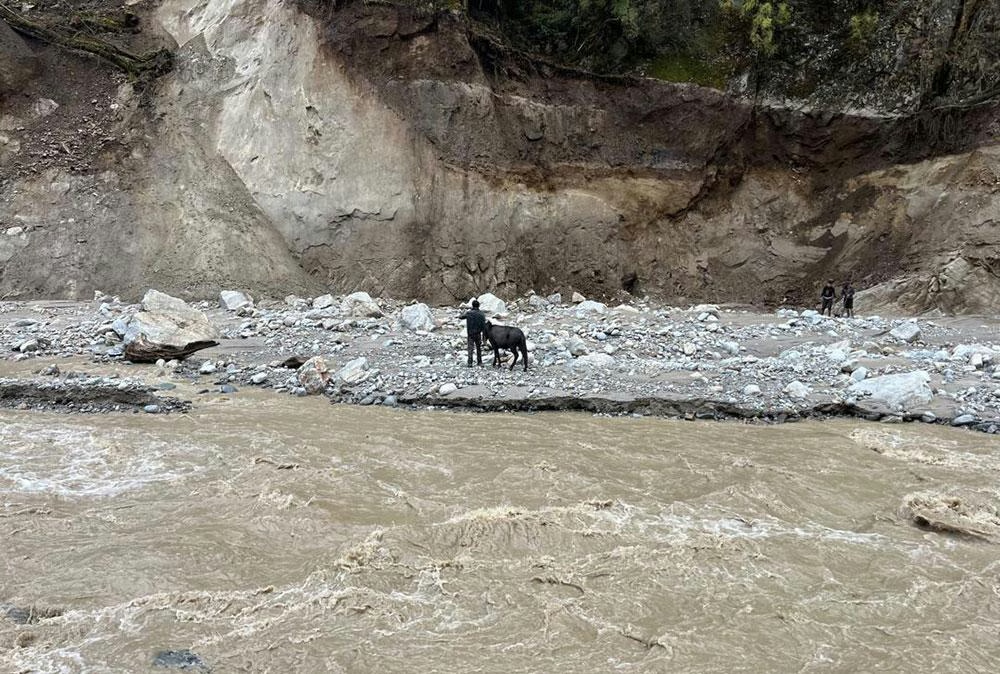
One particularly challenging aspect of the rescue operations involved a stranded horse trapped between a cliff and the river near the Tongchudra Labour Camp. The precarious location made conventional rescue attempts extremely difficult. Officials evaluated multiple rescue scenarios, including the possibility of deploying a helicopter if land-based access proved impossible. The National Veterinary Hospital in Motithang maintained standby status, prepared to provide emergency medical intervention if the animal could be safely extracted.
In a successful rescue operation on October 31, a specialized team successfully retrieved a mule stranded at Tongchudra. The rescue mission, led by veterinary officer Dr Jigme Tshewang and Laya livestock in-charge Sonam Wangda, navigated treacherous terrain including steep cliffs and dense vegetation. Local residents and the animal's owner participated in the operation, while SL Construction Pvt Ltd provided crucial excavator support. Post-rescue medical assessment revealed the mule had sustained no apparent injuries, offering at least one positive outcome amid the broader disaster.
Environmental and Logistical Challenges 🌧️
Rescue and assessment operations faced formidable obstacles that significantly hampered response efforts. The Shingtaphu lake outburst occurred during a period of continuous rainfall, exacerbating already unstable soil conditions and creating additional hazards for rescue teams. The formation of an artificial lake upstream of Taktsemakhang raised serious safety concerns, as the water body could potentially destabilize further or create additional flooding risks.
Access difficulties severely limited operational capacity:
- Road blockages between Koina and Tongchudra prevented vehicle access
- Difficult terrain required teams to travel on foot through dangerous mountain passes
- River crossings posed significant safety risks with swollen water levels
- Electricity and mobile connectivity disruptions hampered communication and coordination
- Unstable soil conditions created ongoing hazards for personnel
These environmental factors transformed what might otherwise be a containable disaster response into a complex, dangerous operation requiring extraordinary measures. Personnel safety emerged as the paramount concern, with officials prioritizing the protection of rescue workers over speed of operations.
Public Health and Disease Prevention Measures 🏥
Beyond the immediate rescue operations, the Department of Livestock implemented critical public health protocols to prevent disease outbreaks following the disaster. Officials issued explicit directives to livestock owners against consuming animals that died during the Shingtaphu lake outburst. This preventive measure aimed to minimize the risk of foodborne illness transmission and protect community health.
The department coordinated safe disposal procedures for animal carcasses, recognizing that improper handling could create significant public health hazards. In regions where veterinary infrastructure remains limited, such preventive measures become especially critical. The involvement of the National Veterinary Hospital demonstrated the seriousness with which authorities approached potential disease risks.
Relief and Recovery Planning 💚
The Department of Livestock outlined a comprehensive relief framework addressing both immediate needs and longer-term recovery requirements. Immediate assistance priorities included:
- Animal feed provisioning for surviving livestock whose grazing areas were damaged
- Veterinary care coordination for injured animals and disease prevention
- Food assistance for affected households facing economic hardship
- Livelihood support planning for herding families
The Gasa Dzongkhag Livestock Sector took responsibility for identifying all affected households and assessing their specific needs. This household-level assessment approach ensured that relief efforts would be appropriately targeted to those most severely impacted by the disaster.
Broader Context: Climate and Natural Disasters in Bhutan 🏔️
The Shingtaphu lake outburst reflects broader environmental challenges facing Bhutan's high-altitude regions. Climate change has intensified weather patterns, increased glacial melt, and altered hydrological systems across the Himalayan landscape. Bhutan's pastoral communities, already operating in marginal environments, face increasing vulnerability to such natural phenomena.
Glacial lakes and similar water bodies in Bhutan's mountainous terrain present ongoing risks. The formation of unstable water bodies during monsoon seasons and rapid snowmelt periods creates conditions for potential outburst events. Scientists and environmental officials have increasingly recognized these risks, though comprehensive monitoring and early warning systems remain under development.
The incident also highlights the importance of disaster preparedness in remote regions. Bhutan's commitment to maintaining environmental stewardship while protecting its communities requires balanced approaches to infrastructure development, early warning systems, and emergency response capacity in mountainous areas.
Recovery Timeline and Future Outlook 📈
The recovery process from the Shingtaphu lake outburst will likely extend over several months. The immediate assessment phase focuses on establishing accurate damage figures and identifying priority relief needs. Subsequent phases will address livestock restocking, pastureland rehabilitation, and household economic recovery.
For herding families in Gasa, the path forward requires both immediate assistance and long-term support. Rebuilding yak herds takes considerable time, as breeding cycles span multiple years. The psychological impact on communities that have lost significant portions of their livestock assets should not be underestimated.
Government coordination across multiple departments—including the Department of Livestock, Gasa Dzongkhag administration, and the National Veterinary Hospital—demonstrates institutional commitment to comprehensive disaster response. However, the complexity of operations in such remote, difficult terrain suggests that future preparedness investments may be warranted.
Key Takeaways and Moving Forward 🎯
The Shingtaphu lake outburst represents a significant challenge to Bhutan's pastoral communities and a sobering reminder of natural disaster risks in mountainous regions. The preliminary assessment of 128 yaks and 12 horses dead, with potential for higher final figures, underscores the scale of the tragedy.
Successful rescue operations, including the recovery of the stranded mule, demonstrated the capability and dedication of response teams despite extraordinary operational challenges. The Department of Livestock's comprehensive approach to assessment, relief planning, and disease prevention reflects institutional preparedness, though resource constraints and terrain difficulties remain limiting factors.
As Bhutan continues developing its disaster response infrastructure and climate adaptation strategies, incidents like the Shingtaphu lake outburst provide valuable lessons. Investment in early warning systems, improved accessibility to remote regions, and enhanced veterinary and emergency response capacity could help mitigate future disasters. Meanwhile, affected communities await comprehensive relief assistance and the long process of rebuilding their pastoral livelihoods.