Category:
EducationRIM Courses Open to Global Students
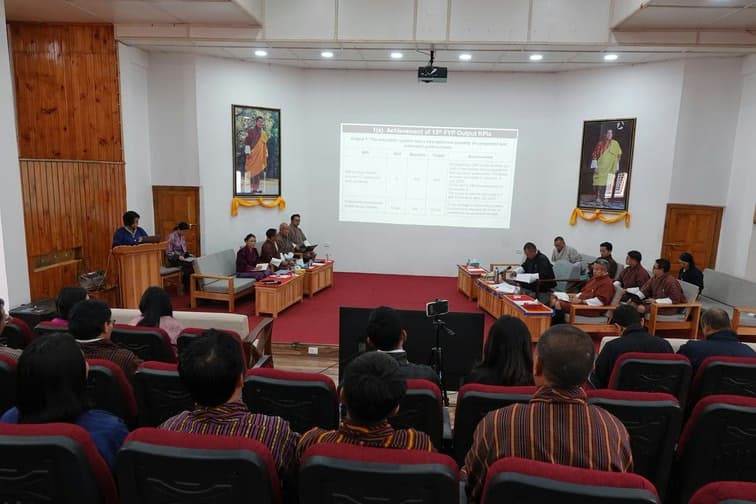
The Royal Institute of Management (RIM) is poised to make a strategic leap into the international education market. For the first time, the premier management training institute in Bhutan plans to welcome fee-paying international students. This initiative is a part of RIM's broader strategy to enhance its profile and ensure financial sustainability. 🌍
A New Era of Education at RIM
RIM's decision to open its doors to international students aligns with its goals under the 13th Five-Year Plan. Currently, the institute accommodates only exchange students. By enrolling fee-paying students, RIM aims to attract between 10 and 15 international participants over the next few years, particularly from the South Asian region. This move not only promises revenue generation but also aims to foster academic diversity and strengthen RIM's reputation as a professional training center.
Starting with Short Courses 📚
RIM plans to initiate this transition by offering short-term courses specifically designed for international students. These courses will focus on leadership development, integrating unique elements like mindfulness sessions and cultural immersion. Such offerings are tailored to attract global participants, providing them with a distinctive educational experience rooted in Bhutanese culture.
Infrastructure and Accreditation
With approximately 80% of its academic facilities and infrastructure upgraded to meet modern standards, RIM is well-prepared to welcome international students. These developments, supported by the Indian government, highlight RIM's commitment to providing a world-class educational environment. However, the institute acknowledges the need for international accreditation to expand its offerings to long-term programs. This accreditation will be pivotal in RIM's strategy to attract regular international students in the near future.
The Strategic Importance of International Students
Welcoming international students is more than a revenue-generating initiative for RIM. It is a strategic move to position Bhutan as a hub for educational excellence in South Asia. By offering unique courses that blend traditional Bhutanese practices with modern management principles, RIM seeks to differentiate itself in the competitive regional education market.
Broader Industry Trends and Opportunities
Globally, the demand for international education continues to rise. According to the UNESCO Institute for Statistics, the number of students pursuing higher education abroad has more than doubled since 2000. This trend presents a significant opportunity for institutions like RIM to attract a diverse student body and enrich their academic environment.
Challenges and Future Outlook
Despite the promising prospects, RIM faces challenges in gaining the necessary international accreditation for its longer programs. The institute's phased approach—beginning with short-term courses—demonstrates a strategic response to these challenges. By focusing on accreditation and further infrastructure development, RIM is setting a foundation for sustainable growth and increased international engagement.
Conclusion: A Step Towards Global Recognition 🌐
RIM's initiative to open courses to fee-paying international students marks a significant milestone in its journey towards global recognition. By leveraging its upgraded facilities and unique educational offerings, RIM is poised to establish itself as a leader in the regional education market. As the institute works towards full international accreditation, the future looks promising for both RIM and its prospective international students.
This strategic move not only enhances RIM's financial sustainability but also enriches the educational landscape of Bhutan, paving the way for future collaborations and academic exchanges on a global scale.
You May Also Like

Education
Local Produce Connects Gongthung Farms and School
September 21, 2026

Education
Two Students Transform Library System Into Digital Solution
September 16, 2026
Education
Strengthening School Support for Students Unable to Afford Tuition
September 13, 2026
Education
Student Citizen Journalism: Breaking Silence on Bullying
September 12, 2026