Category:
NewsRICBL Disburses Over Nu 11M for Earthquake Damage Claims
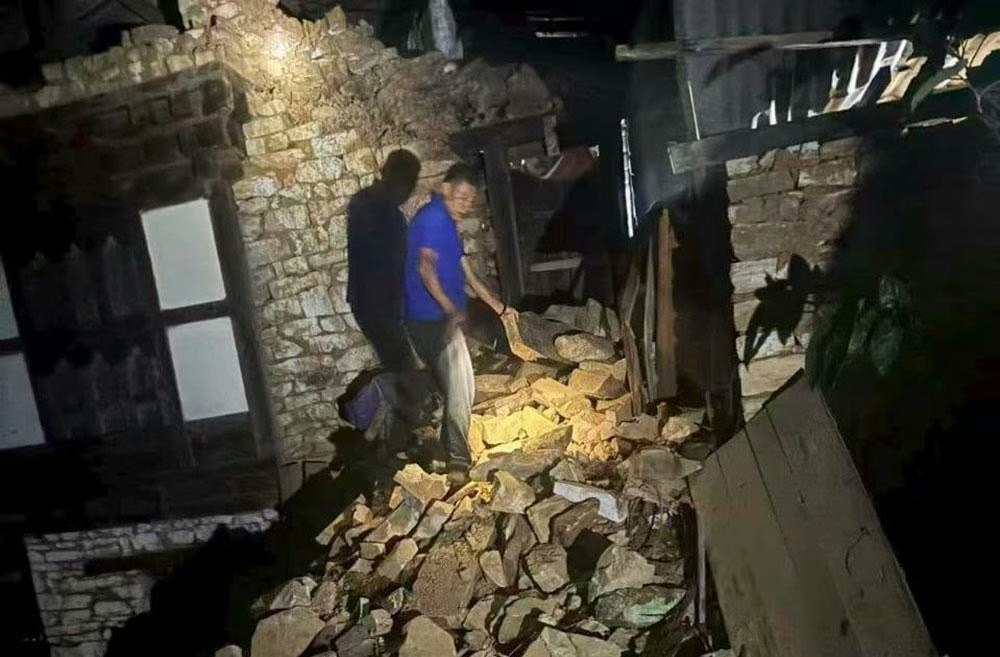
Bhutan's Insurance Response to Major Earthquake Damage 🏘️
When a powerful 5.5 magnitude earthquake rattled Bhutan near Punakha, it left a trail of destruction across the nation. However, what emerged from this natural disaster was a swift and comprehensive insurance response that demonstrates the country's commitment to supporting affected communities. The Royal Insurance Corporation of Bhutan Limited (RICBL) has successfully processed and distributed over Nu 11.8 million in insurance payouts to 865 affected households nationwide, showcasing the critical role of disaster insurance in national resilience.
This significant financial intervention represents more than just numbers—it reflects Bhutan's proactive approach to disaster management and financial protection for its citizens. The speed and scale of these disbursements highlight how insurance mechanisms serve as a vital safety net during natural calamities.
Understanding the Earthquake's Geographic Impact 🗺️
The tremor's effects were remarkably widespread, touching all 20 dzongkhags across Bhutan. This comprehensive geographic reach underscores the earthquake's substantial magnitude and the interconnected vulnerability of the nation's infrastructure and communities. Rather than concentrating damage in a single region, the earthquake demonstrated how seismic events can affect even the most distant corners of the country simultaneously.
The insurance claims data reveals a telling pattern about damage distribution. Western and eastern regions emerged as the most severely impacted zones, with central areas experiencing moderate effects. This geographic variation in damage severity reflects differences in building construction, terrain vulnerability, and proximity to the epicenter.
Western Region Bears Heaviest Burden 💔
Punakha and Gasa dzongkhags, operating under the Khuruthang branch, recorded the highest concentration of insurance claims in the entire country. These two districts alone accounted for 243 claims with an aggregate payout of Nu 2.62 million. The significance of these figures cannot be overstated—nearly 28% of all national claims originated from this single region.
The concentration of damage in Punakha is particularly noteworthy given its status as Bhutan's administrative center and cultural heart. The earthquake's impact on this strategically important region necessitated rapid response mechanisms to ensure continuity of governmental functions and community stability.
Mongar district in the east also experienced substantial damage, with 138 claims totaling Nu 2.23 million processed by RICBL. This eastern region's vulnerability reflects the earthquake's far-reaching consequences and the need for robust insurance coverage across all districts.
Eastern Districts Face Significant Recovery Challenges 🏗️
The eastern regions demonstrated considerable exposure to earthquake damage, with multiple districts requiring substantial insurance support. Wangdue recorded 131 claims amounting to Nu 1.45 million in payouts, placing it among the top affected areas nationwide.
What makes the eastern region's situation particularly interesting is the variation in per-claim averages. Trashigang, despite reporting only 12 claims, recorded the highest average payout per claim at Nu 43,230, totaling Nu 518,769. This suggests that while fewer households filed claims in Trashigang, those who did experienced more severe structural damage requiring higher compensation.
Similarly, Chukha district averaged Nu 40,061 per claim across 40 claims, totaling Nu 1.6 million. These higher per-claim averages in specific eastern districts indicate concentrated zones of structural vulnerability or more expensive property damage patterns.
Variation in Claim Patterns Reveals Important Insights 📊
The insurance data tells a nuanced story about damage distribution that goes beyond simple geographic patterns. While Punakha recorded the highest total number of claims, the per-claim averages varied significantly across different districts. This variation suggests that damage severity differed based on local construction standards, building materials, and structural resilience.
Districts with lower claim volumes but higher average payouts experienced more catastrophic damage to fewer properties. Conversely, areas with higher claim volumes but lower average payouts saw widespread but less severe damage patterns. Understanding these distinctions is crucial for future disaster preparedness planning and building code improvements.
Southern Regions Show Minimal Exposure ✅
The southern dzongkhags demonstrated remarkable resilience or distance-related protection from the earthquake's primary impact zone. Sarpang recorded only three claims, while Samdrupjongkhar logged four claims. Trashiyangtse, Samtse, and Pemagatshel reported minimal claim counts with per-claim payouts consistent with minor structural damage.
This geographic pattern suggests that the earthquake's intensity diminished significantly as distance from the epicenter increased. The southern regions' minimal exposure contrasts sharply with western and eastern districts, reinforcing the importance of understanding seismic risk distribution across Bhutan's diverse topography.
The Broader Significance of Rapid Insurance Disbursement 💰
The speed at which RICBL processed and distributed over Nu 11 million in claims demonstrates institutional capacity and preparedness. In disaster situations, rapid financial support is essential for preventing secondary crises—homelessness, economic collapse, and prolonged displacement.
This insurance response mechanism represents a modern approach to disaster management that complements traditional community support systems. By providing immediate financial resources, insurance enables households to begin repairs and reconstruction without waiting for government relief programs to mobilize.
Building Resilience Through Insurance Coverage 🛡️
The earthquake damage claims processed by RICBL highlight the critical importance of comprehensive insurance penetration across all communities. The fact that 865 households could file successful claims indicates reasonable coverage levels, though gaps likely remain in more remote or economically disadvantaged areas.
Future disaster preparedness should focus on expanding insurance coverage to underserved populations and ensuring that insurance products remain affordable and accessible. The earthquake response demonstrates that insurance is not merely a financial product but a essential component of national disaster resilience.
Lessons for Future Earthquake Preparedness 🎯
This disbursement experience provides valuable lessons for Bhutan's ongoing disaster management evolution. Key takeaways include:
- Geographic variation matters: Different regions require tailored preparedness strategies based on their specific vulnerability profiles
- Insurance infrastructure is vital: Institutional capacity to process claims rapidly is as important as coverage availability
- Data-driven planning: The geographic distribution of claims provides crucial information for identifying high-risk zones requiring enhanced building codes
- Community communication: Clear insurance information helps maximize claim filing rates among eligible households
Looking Forward: Strengthening National Resilience 🌟
As Bhutan continues developing its disaster management capabilities, the RICBL earthquake response serves as both validation of existing systems and a blueprint for improvement. The successful disbursement of over Nu 11 million demonstrates that institutional mechanisms are functioning effectively during crises.
However, the geographic concentration of claims in western and eastern regions suggests that targeted infrastructure improvements and building code enhancements should prioritize these vulnerable areas. Additionally, expanding insurance coverage to currently underinsured populations would strengthen overall national resilience.
The earthquake and RICBL's response underscore an important reality: natural disasters are inevitable in a mountainous, seismically active nation like Bhutan. What remains controllable is how well communities prepare, how effectively insurance mechanisms function, and how quickly affected populations receive support. By continuing to strengthen these systems, Bhutan builds a more resilient future for all its citizens.
You May Also Like
News
Women Entrepreneurs Master AI and Digital Tools in Phuentsholing
September 1, 2026
News
Can Samtse Keep Up With Its Growing Workforce?
August 29, 2026
News
Nepal Flood Exposes Critical Gaps in Bhutan's Early Warning Systems
August 29, 2026
News
High Court Overturns Acquittal: Doctor Sentenced to 10 Years for Child Sexual Abuse
August 29, 2026