Category:
NewsRBP Arrests 17 in Major Religious Site Vandalism Syndicate
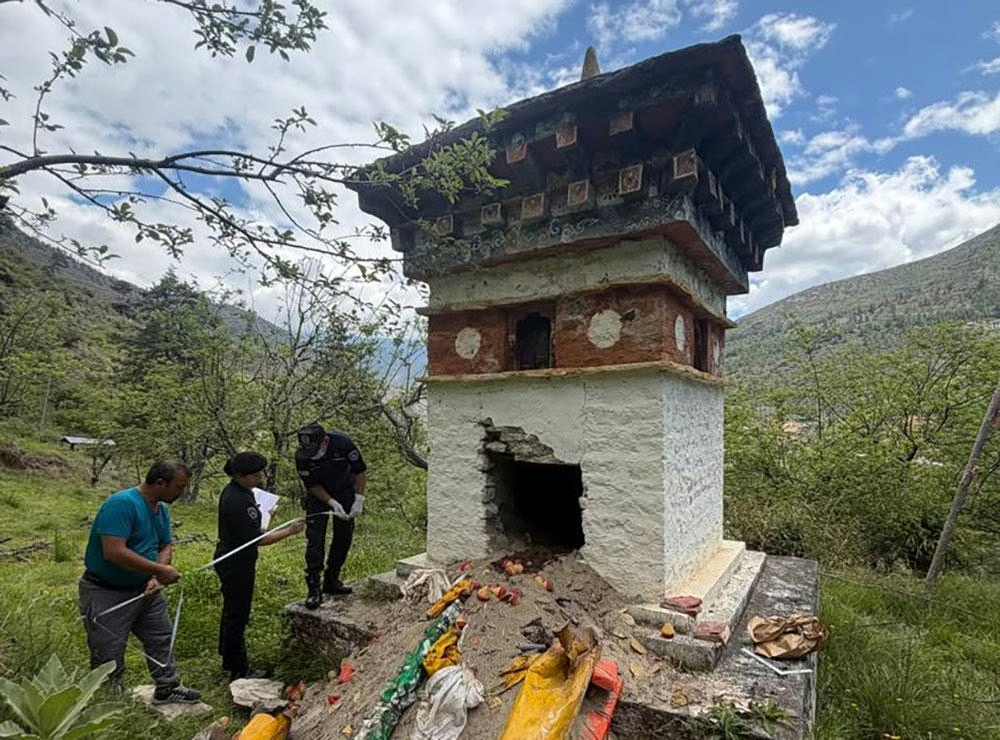
A Coordinated Crackdown on Sacred Site Desecration 🚨
Bhutan's law enforcement has dismantled a sophisticated criminal network targeting the nation's most revered religious institutions. The Royal Bhutan Police (RBP) announced the arrest of 17 individuals implicated in an expansive vandalism and theft operation spanning multiple years and geographic regions. This coordinated law enforcement operation represents one of the most significant investigations into crimes against sacred Buddhist sites in recent Bhutanese history.
The investigation unveiled a troubling pattern: what initially appeared as isolated incidents of vandalism across lhakhangs and chortens was actually part of a meticulously orchestrated criminal enterprise. Between 2017 and 2026, perpetrators targeted 36 distinct locations—13 lhakhangs and 23 chortens—systematically stealing and vandalizing sacred religious artifacts known as Nangten.
The Investigation: From Initial Arrests to Full Syndicate Exposure 🔍
The breakthrough came on May 15 when police apprehended four suspects during a routine vehicle checkpoint. The individuals attempted to flee, raising immediate red flags for officers conducting the inspection. This initial arrest proved pivotal, as subsequent interrogation and intelligence gathering over the following three months revealed the true scope of the criminal operation.
Following intensive investigative work, authorities arrested an additional 13 individuals, bringing the total to 17 suspects. The coordinated nature of the crimes became unmistakably clear: this wasn't a collection of opportunistic thieves but rather a well-organized syndicate with defined roles, established networks, and international connections.
Geographic Reach and Targeted Sites 🗺️
The vandalism syndicate operated across multiple dzongkhags, demonstrating the organized and systematic nature of their operations. Primary areas of activity included:
- Wangdue Dzongkhag: Multiple chortens targeted
- Paro Dzongkhag: Lhading Lhakhang, Tamcho Lhakhang, Jana Goenpa, Tashidhing Lhakhang, Chikhar Goenpa, and several chortens
- Thimphu Dzongkhag: Thadra Goenpa, meditation house above Thadra Goenpa, Dorjibee Lhakhang, Pumola Lhakhang, Phajoding Lhakhang (including Zimchu Lhakhang), and Chokhortse Lhakhang
- Punakha Dzongkhag: Numerous chortens
- Bumthang Dzongkhag: Additional targeted locations
This geographic distribution indicates careful planning and knowledge of security vulnerabilities across different regions. The perpetrators demonstrated familiarity with access routes and timing of visitors to these sacred sites.
The Suspects: Profile and Background 👥
Investigators identified the primary suspects as individuals predominantly from Wangdue, Paro, and Haa regions, ranging in age from 30 to 40 years old. A concerning demographic detail emerged during the investigation: most suspects were reportedly unemployed at the time of their criminal activities.
This economic backdrop raises important questions about the intersection of poverty, opportunity, and criminal motivation in Bhutan. The transition from unemployment to organized religious site vandalism suggests either coercion, financial desperation, or deliberate recruitment by higher-level operatives within the syndicate.
International Trafficking: The Hidden Market 🌍
One of the most alarming aspects of this investigation involved the discovery of an international market for stolen Bhutanese religious artifacts. Police successfully traced and recovered several stolen sacred items from third countries after identifying and locating international buyers who had purchased these items outside Bhutan's borders.
This international trafficking component reveals a disturbing reality: stolen Bhutanese religious artifacts have value in underground antiquities markets globally. The syndicate wasn't merely vandalizing sacred sites—they were systematically harvesting artifacts for sale to collectors and dealers operating in international markets.
The recovery of items from multiple countries demonstrates sophisticated criminal networks spanning borders and continents. This raises urgent questions about international cooperation in combating cultural heritage theft and the need for enhanced border monitoring of artifact trafficking.
Connected House Burglaries: Expanding the Scope 🏠
As investigations deepened, authorities discovered connections between the lhakhang and chorten vandalism cases and multiple residential burglaries. This revelation suggested the syndicate's criminal activities extended beyond religious site desecration into broader property crimes.
The connection between these seemingly disparate crime categories indicates a comprehensive criminal operation with multiple revenue streams. Members of the syndicate may have diversified their activities to maximize profit and reduce detection risk.
Legal Framework and Penalties ⚖️
Bhutan's legal system treats crimes against sacred Buddhist sites with appropriate severity. Under the Penal Code of Bhutan, offenses involving Ku, Sung, Thuk-Ten, or Zung—sacred Buddhist artifacts and religious items—constitute first-degree felonies.
Specific provisions include:
- Removal of Zung from chortens or religious statues: First-degree felony
- Theft of antique Ku, Sung, Thuk-Ten, or Zung from religious sites: First-degree felony
- Vandalism of Ten Sum: First-degree felony
Convictions for these offenses carry potential sentences of life imprisonment, reflecting the gravity with which Bhutanese law treats desecration of sacred sites.
Additionally, those convicted of illegally purchasing these sacred items face penalties ranging from three to five years imprisonment under fourth-degree felony provisions. This dual approach—prosecuting both thieves and buyers—aims to eliminate market demand for stolen religious artifacts.
Scale of the Problem: 2026 Statistics 📊
The vandalism syndicate case illuminates a broader crisis affecting Bhutan's religious heritage. From January to June 2026 alone, authorities reported 21 separate incidents of lhakhang and chorten vandalism. This frequency suggests either increased criminal activity or improved detection and reporting mechanisms.
The 36 incidents attributed to the now-dismantled syndicate represent only a portion of total vandalism cases occurring during the investigation period. The true scope of religious site desecration in Bhutan may be substantially larger than previously recognized.
Asset Recovery and Ongoing Investigations 🔐
Investigators are currently assessing the value of stolen and recovered religious artifacts. This valuation process involves consulting with religious authorities, art experts, and cultural heritage specialists to determine both monetary worth and spiritual significance of recovered items.
The South Thimphu Police Station has forwarded chorten-related cases to the Office of the Attorney General for prosecution. Investigations into lhakhang cases remain ongoing, suggesting additional charges or expanded scope may emerge as the investigation continues.
Public Safety Warnings and Expert Guidance ⚠️
In response to this investigation, the Royal Bhutan Police issued important guidance for the public. Citizens and collectors are urged to exercise extreme caution when purchasing antiques, particularly religious objects. The prevalence of stolen sacred artifacts in antiquities markets means that well-intentioned collectors may inadvertently purchase items obtained through criminal activity.
Authentication of religious artifacts should involve:
- Verification of provenance and ownership history
- Consultation with religious authorities
- Documentation from reputable dealers
- Awareness of recent theft reports
This guidance protects both individual buyers from legal liability and contributes to broader efforts against cultural heritage trafficking.
Broader Implications for Cultural Heritage Protection 🏛️
The lhakhang and chorten vandalism syndicate case reflects global challenges in protecting cultural and religious heritage. Bhutan, with its deeply rooted Buddhist traditions and countless sacred sites, faces particular vulnerability to organized artifact theft and vandalism.
The investigation demonstrates the importance of:
- Coordinated law enforcement efforts across jurisdictions
- International cooperation in tracing and recovering stolen items
- Enhanced security at vulnerable religious sites
- Public awareness campaigns about cultural heritage protection
- Supply-side intervention through prosecution of buyers and dealers
Moving Forward: Strengthening Protection Measures 🛡️
The successful dismantling of this vandalism syndicate represents a significant victory for Bhutanese law enforcement and cultural preservation efforts. However, the case also highlights vulnerabilities in how sacred sites are protected and monitored.
Future protective measures may include:
- Enhanced security systems at high-risk lhakhangs and chortens
- Increased patrols in areas with historical vandalism incidents
- Community-based monitoring programs involving local residents
- International information-sharing protocols for artifact trafficking
- Stricter penalties for buyers of stolen religious items
As Bhutan continues developing economically, maintaining the integrity of its spiritual and cultural heritage becomes increasingly important. The vandalism syndicate case serves as a reminder that protecting sacred sites requires sustained vigilance, coordinated action, and community engagement.
Conclusion: Justice and Cultural Preservation 🙏
The arrest of 17 individuals in connection with the lhakhang and chorten vandalism syndicate represents a major breakthrough in protecting Bhutan's religious heritage. The investigation revealed not merely criminal activity but a sophisticated operation with international dimensions and multiple revenue streams.
The case underscores the vulnerability of sacred sites to organized crime and the importance of robust legal frameworks, effective law enforcement, and international cooperation. As investigations continue and prosecutions proceed, Bhutan's commitment to preserving its spiritual and cultural legacy remains unwavering.
For citizens and visitors alike, this case serves as a reminder of the sacred significance of lhakhangs and chortens and the collective responsibility to protect these irreplaceable cultural treasures for future generations.
You May Also Like
News
Women Entrepreneurs Master AI and Digital Tools in Phuentsholing
September 1, 2026
News
Can Samtse Keep Up With Its Growing Workforce?
August 29, 2026
News
Nepal Flood Exposes Critical Gaps in Bhutan's Early Warning Systems
August 29, 2026
News
High Court Overturns Acquittal: Doctor Sentenced to 10 Years for Child Sexual Abuse
August 29, 2026