Category:
EconomyRefund Refusals, Undelivered Goods: Top Gripes
In recent years, consumer complaints have become a focal point for regulatory bodies worldwide. Bhutan is no exception, where the Competition and Consumer Affairs Authority (CCAA) has been at the forefront, addressing a surge in complaints primarily about refund refusals and undelivered goods. 📈🌐
Understanding Consumer Complaints in Bhutan
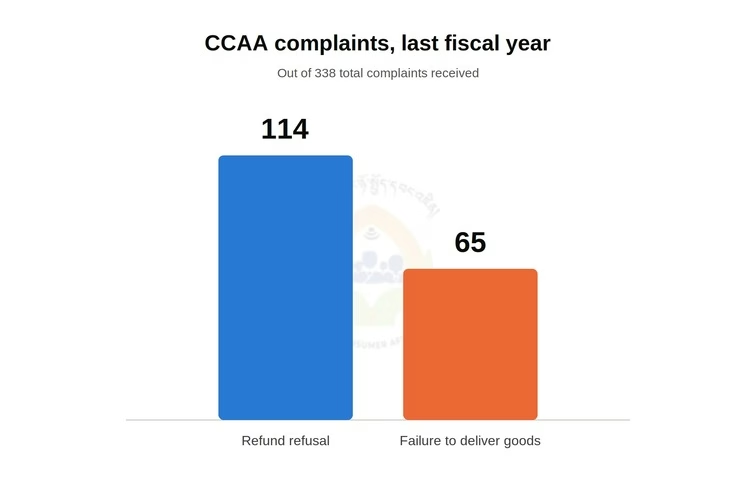
Consumer dissatisfaction often stems from unmet expectations, whether it's a delayed product, a defective item, or a refund that's denied. In Bhutan, of the 338 complaints filed last fiscal year, a significant 114 involved refund refusals, while 65 related to undelivered goods. These issues comprised over half of all consumer grievances.
Key Statistics and Trends
- Total Complaints: 338
- Refund Refusals: 114
- Undelivered Goods: 65
- Resolved Cases: All but four
The grievances were channeled through the CCAA’s complaint management systems, which include digital platforms, walk-ins, and toll-free services. This accessibility highlights the CCAA's commitment to consumer rights and reflects a broader trend of increasing consumer advocacy in the region. 📱🗣️
Industry-wide Implications 🔍
The rise in complaints is not merely a reflection of consumer discontent but also indicative of the broader shifts in Bhutan’s economic landscape. As consumer markets expand, the need for stringent regulatory frameworks becomes essential.
Historical Context and Legal Framework
The Consumer Protection Act 2012 serves as the backbone for addressing these issues. It empowers the Dispute Settlement Committee to manage complex cases, such as those involving vehicle defects, which have notably increased. For instance, a case involving a recurring defect in a vehicle model led to mandatory repairs, showcasing the Act's efficacy in safeguarding consumer interests. 🚗⚖️
Financial Impact: Refunds and Penalties 💰
Through effective mediation and intervention, the CCAA facilitated refunds totaling Nu 2.78 million last year. However, this figure marked a 50% decrease from the previous year, hinting at improved compliance among businesses. Additionally, non-compliant companies paid penalties amounting to just over Nu 70,000, underscoring the authority's preference for mediation over punishment.
Broader Economic Implications
While the financial repercussions for businesses may seem minor, they serve as a critical warning against non-compliance. By prioritizing restitution, Bhutan promotes a business environment that values ethical practices and consumer satisfaction. 🏦🔍
Looking Forward: Strengthening Consumer Rights 🔮
To fortify consumer protection, the CCAA plans to enhance its enforcement strategies. This includes bolstering coordination with other agencies and leveraging technology for better market surveillance. As Bhutan transitions towards a more comprehensive consumer protection framework, these steps are vital for fostering a fair and competitive market.
Key Takeaways
- Consumer Education: Increasing awareness remains crucial for empowering consumers.
- Business Compliance: Continuous improvement in compliance will reduce complaints and enhance trust.
- Technological Integration: Adopting tech-based solutions will streamline complaint management and resolution.
In conclusion, the dynamics of consumer complaints in Bhutan reflect both challenges and opportunities. As Bhutan strengthens its regulatory frameworks, it sets a precedent for balancing consumer rights with business interests—a model that other emerging markets can emulate. 🌟🌍
You May Also Like

Economy
BCCI Elects New Leadership Team to Drive Business Growth
October 15, 2026

Economy
Indian Banks Slow to Adopt Bhutanese UPI Payments
October 12, 2026
Economy
Government Addresses 400+ Business Issues to Boost Economy
October 10, 2026

Economy
Bhutan's Bold Vision: Two USD 50M Enterprises by 2030
September 27, 2026