Category:
EconomyBCCI Elects New Leadership Team to Drive Business Growth
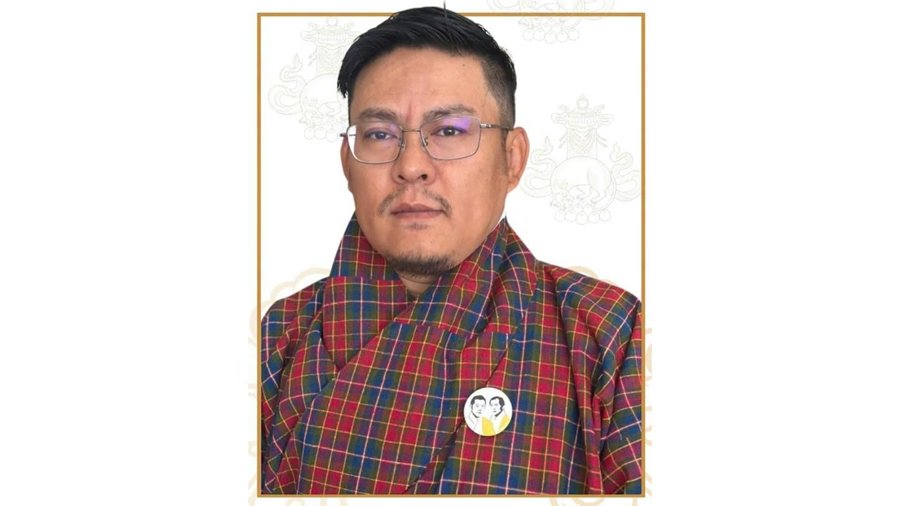
A New Era for Bhutan's Business Community 🌟
The Bhutan Chamber of Commerce and Industry (BCCI) has entered a transformative chapter with the election of a dynamic new leadership team. This significant development marks a pivotal moment for Bhutan's private sector, as fresh voices and experienced business minds take the helm to navigate the evolving economic landscape. The election results reflect a competitive and engaged business community eager to shape the future of commerce in the nation.
Dr Trashi Wangyel Emerges as BCCI President 🏆
Dr Trashi Wangyel has been elected as the new President of the Bhutan Chamber of Commerce and Industry, securing a decisive victory in a closely contested election process. As the Chairman and Chief Executive Officer of Rirab-Ugyen Tshenden Private Limited, Dr Wangyel brings substantial private sector experience and proven leadership credentials to this influential position.
The presidential race proved to be highly competitive, with four candidates vying for the top role. In the initial round of voting, Dr Wangyel and his primary challenger, Phub Zam, each garnered 14 votes, creating a tie that necessitated a second round of balloting. Sonam Chophel secured five votes, while Phuntsho Wangdi received two votes in the first round.
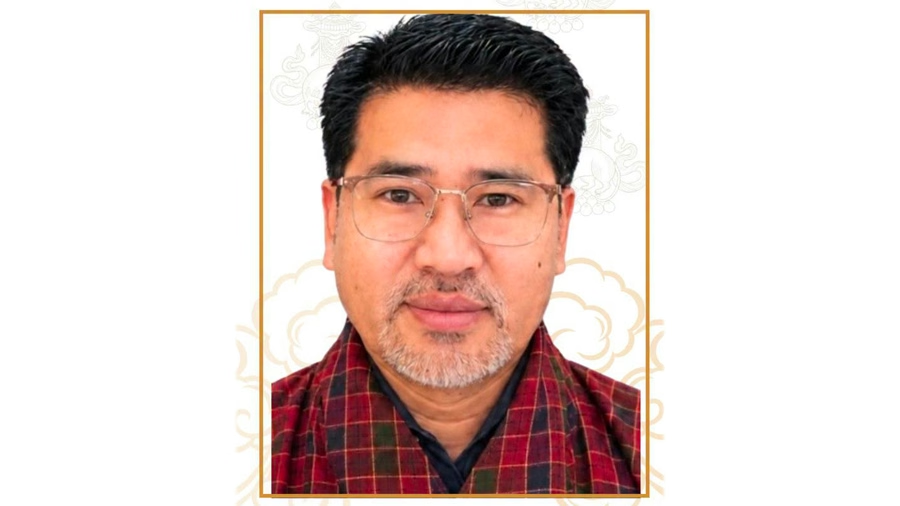
The second round proved decisive, with Dr Wangyel pulling ahead to secure 19 votes compared to Phub Zam's 15 votes. This victory demonstrates strong support from the BCCI membership for his vision and leadership approach. Notably, Dr Wangyel also serves as President of the Construction Association of Bhutan, giving him dual leadership responsibilities in critical sectors of the Bhutanese economy.
Understanding Dr Wangyel's Leadership Background 💼
Dr Trashi Wangyel's appointment as BCCI President represents a convergence of business acumen and sector expertise. His role at Rirab-Ugyen Tshenden Private Limited has positioned him at the forefront of Bhutan's private enterprise sector. Additionally, his presidency of the Construction Association of Bhutan demonstrates his commitment to infrastructure and development initiatives that drive economic growth.
His dual leadership positions suggest a comprehensive understanding of how various business sectors interconnect and influence overall economic performance. This perspective will be invaluable as he guides BCCI through its mission to represent and advocate for the interests of Bhutan's diverse business community.
Vice Presidents Bring Diverse Expertise 🎯
Two Vice Presidents have been elected to support the new BCCI President and strengthen the organization's leadership structure. These positions are crucial for distributing responsibilities and ensuring comprehensive representation of various business interests across the nation.
Jamtsho secured his position as Vice President with 15 votes, defeating other candidates in a competitive field. His election reflects confidence in his ability to contribute meaningfully to BCCI's strategic direction and operational excellence.
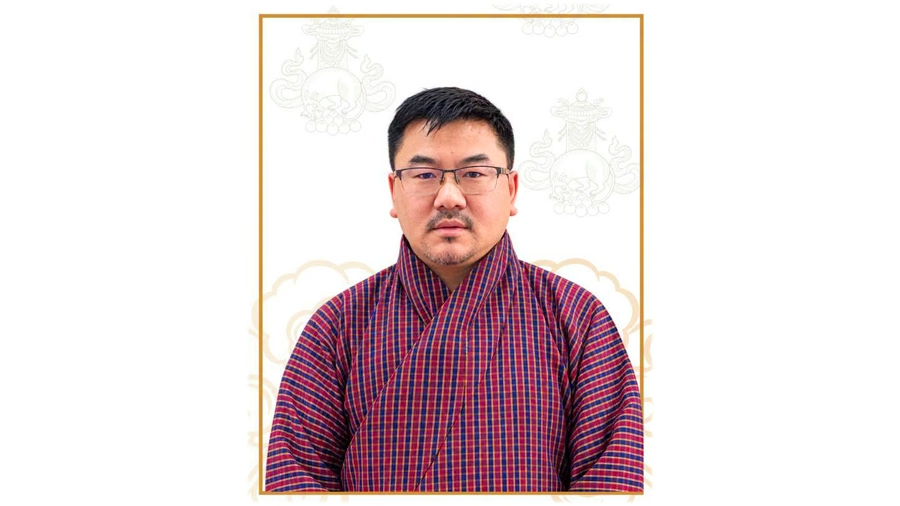
Tenzin Jamtsho emerged victorious in the second Vice President race after a runoff election. The contest initially involved three candidates: Tenzin Jamtsho, Ugyen Tenzin, and another competitor. In the preliminary voting, Tenzin Jamtsho received 14 votes while Ugyen Tenzin secured four votes. The close margin prompted a runoff between the top two candidates, where Tenzin Jamtsho decisively won with 26 votes to Ugyen Tenzin's seven votes.
The Executive Committee: Broader Representation 🤝
Beyond the three top positions, the BCCI election process included the selection of ten executive committee members. These individuals represent affiliated business sector associations and were chosen from among eleven candidates, ensuring competitive selection based on merit and business community support.
The executive committee structure reflects BCCI's commitment to inclusive representation across various business sectors. Each committee member brings specialized knowledge from their respective industries, creating a well-rounded leadership body capable of addressing diverse business challenges and opportunities.
Regional Representation and Future Elections 📍
The election process also established provisions for regional representation through Dzongkhag Business Development Committees. Four regional representatives will be elected at a future Annual General Meeting, but only after chairpersons have been elected in all 20 districts.
This phased approach ensures:
- Comprehensive district coverage across all Bhutanese regions
- Grassroots business participation from local communities
- Balanced representation between national and regional interests
- Systematic organizational development at the district level
This structure demonstrates BCCI's commitment to building a truly representative organization that captures the voice of businesses throughout the nation, not just in central urban areas.
The Cooling-Off Period: A Unique Tradition ⏸️
Following their election, the newly elected officials will observe a ten-day cooling period during which they are prohibited from celebrating their election victories. This tradition reflects Bhutanese cultural values emphasizing humility, restraint, and thoughtful preparation before assuming leadership responsibilities.
The cooling period serves several important purposes:
- Allows time for transition planning before taking office
- Encourages reflection on the responsibilities ahead
- Maintains organizational focus on business matters rather than celebrations
- Demonstrates respect for the election process and democratic principles
- Provides space for the outgoing leadership to facilitate a smooth handover
What This Leadership Change Means for Bhutan's Private Sector 💡
The election of this new BCCI leadership team carries significant implications for Bhutan's business environment. The organization serves as the primary voice for private sector interests, making these leadership positions critical for shaping business policy and advocating for favorable conditions for economic growth.
The new team faces several important challenges and opportunities:
Economic Development: Representing diverse business sectors in advocating for policies that promote sustainable economic growth and private enterprise expansion.
Regulatory Advocacy: Engaging with government bodies to ensure business-friendly regulations and policies that encourage entrepreneurship and investment.
Sector Coordination: Facilitating collaboration between different business associations and sectors to address common challenges and identify synergies.
International Engagement: Representing Bhutanese business interests in regional and international forums to facilitate trade and investment opportunities.
The Competitive Election Process Reflects Engagement 🗳️
The competitive nature of the BCCI elections demonstrates a healthy, engaged business community. Multiple qualified candidates contesting for leadership positions indicates that Bhutan's private sector is vibrant and populated with individuals passionate about advancing business interests.
This level of competition for BCCI leadership roles suggests:
- Strong commitment to organizational governance and accountability
- Diverse perspectives within the business community
- High stakes and significant influence associated with these positions
- Confidence in the election process and democratic principles
- Investment by business leaders in shaping the sector's future direction
Looking Ahead: Priorities for the New Leadership 🚀
As Dr Trashi Wangyel, Jamtsho, and Tenzin Jamtsho assume their roles, several key areas will likely demand their attention and strategic focus. The new BCCI leadership will inherit an organization responsible for representing the interests and addressing the concerns of Bhutan's diverse business community.
Key priorities for the incoming leadership may include:
- Strengthening relationships with government bodies and policymakers
- Addressing current challenges facing specific business sectors
- Promoting private sector development and entrepreneurship
- Facilitating knowledge sharing and collaboration among member businesses
- Enhancing BCCI's visibility and influence in national economic discussions
- Supporting small and medium enterprises (SMEs) in Bhutan's economy
Conclusion: A Pivotal Moment for Bhutanese Business 🌍
The election of new BCCI leadership represents more than just a change of faces at the top—it signals the private sector's commitment to active engagement in shaping Bhutan's economic future. Dr Trashi Wangyel's election as President, alongside Vice Presidents Jamtsho and Tenzin Jamtsho, brings fresh perspectives and diverse expertise to the organization's helm.
The competitive election process and the selection of a capable executive committee demonstrate that Bhutan's business community is actively invested in organizational governance and sector representation. As the new leadership prepares to take office following the customary cooling period, the business community watches with anticipation to see how these experienced leaders will navigate the challenges and opportunities ahead.
This transition marks an important moment for the BCCI and the broader Bhutanese economy, with the potential to significantly influence business policy, private sector growth, and economic development initiatives in the coming years. The new leadership team's ability to effectively represent diverse business interests while advocating for favorable economic conditions will be crucial in determining the success of their tenure.
You May Also Like

Economy
Indian Banks Slow to Adopt Bhutanese UPI Payments
October 12, 2026
Economy
Government Addresses 400+ Business Issues to Boost Economy
October 10, 2026
Economy
Bhutan's Bold Vision: Two USD 50M Enterprises by 2030
September 27, 2026
Economy
Mega Dry Port in Pasakha: Bhutan's Trade Revolution
September 25, 2026