Category:
EconomyAI Ideas vs. Business Reality: Why Entrepreneurs Struggle
The Promise and the Challenge of AI-Driven Entrepreneurship 🚀
Artificial intelligence has fundamentally transformed how businesses generate ideas and solve problems. Yet despite this technological revolution, a significant gap persists between conceptualizing AI-powered solutions and successfully building scalable ventures. This paradox has become increasingly evident in emerging markets like Bhutan, where entrepreneurs possess innovative ideas but face substantial obstacles in translating them into profitable, sustainable enterprises.
The challenge isn't about lacking creativity or technological capability—it's about the complex ecosystem required to nurture business growth beyond the initial spark of innovation.
Understanding the AI Entrepreneurship Landscape 💡
Artificial intelligence has democratized problem-solving. Entrepreneurs can now leverage machine learning algorithms, automation tools, and data analytics to identify market opportunities and prototype solutions faster than ever before. What once required months of manual analysis can now be accomplished in days or hours.
However, this accessibility to AI tools masks a deeper reality: turning AI-powered ideas into thriving businesses requires far more than technological prowess. It demands capital, talent, market understanding, and operational excellence—resources that many aspiring entrepreneurs struggle to secure.
The Critical Gap: From Concept to Commercial Viability 🔍
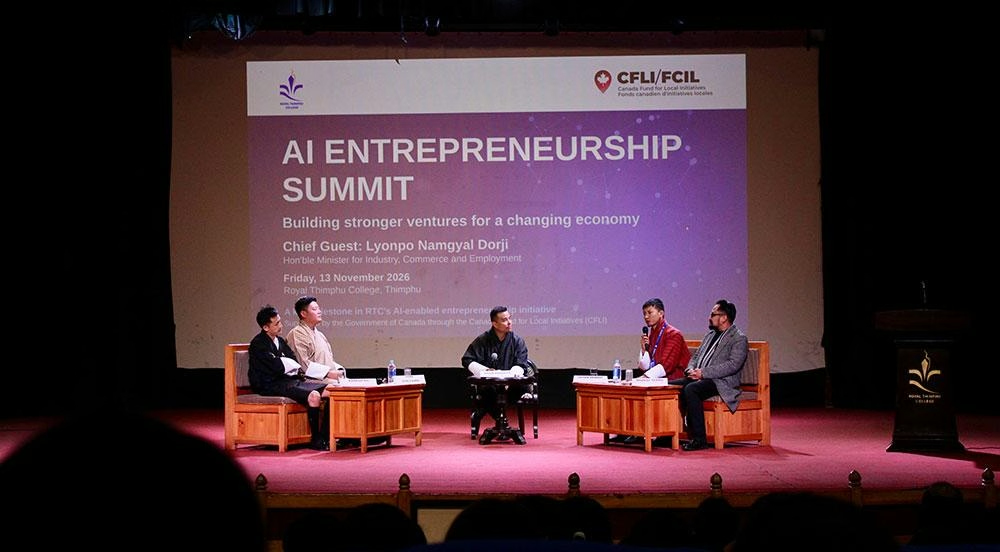
During recent industry discussions, entrepreneurs and technology professionals highlighted a fundamental truth: identifying problems and developing AI solutions represents only the beginning of the entrepreneurial journey. The real challenge emerges when founders must navigate the complex path from prototype to market-ready product.
Consider the distinction between these two scenarios:
- Scenario A: An entrepreneur develops an AI system that theoretically solves a problem
- Scenario B: An entrepreneur develops an AI system that solves a genuine problem AND attracts paying customers
The difference between these scenarios determines success or failure. Many founders excel at Scenario A but struggle considerably with Scenario B.
The Problem-First Approach 🎯
Successful AI entrepreneurs recognize that technology should follow problems, not precede them. This represents a fundamental mindset shift from traditional startup culture, where founders often become enamored with technology for its own sake.
Instead, the most viable ventures emerge from identifying real challenges faced by:
- Households struggling with daily inefficiencies
- Communities grappling with resource management
- Farmers dealing with unpredictable yields and market access
- Businesses still relying on manual data collection and spreadsheet-based operations
Many organizations continue operating with outdated systems, manually processing information through spreadsheets and legacy tools. These represent genuine opportunities for AI-enabled automation and process improvement—but only if entrepreneurs can execute solutions effectively and convince organizations to adopt them.
Barriers Blocking the Path to Success 🚧
Capital Constraints
Access to funding remains one of the most significant obstacles for aspiring entrepreneurs. While AI tools have become more affordable, building a complete business infrastructure requires substantial investment. Early-stage founders often struggle to secure initial capital, particularly in markets where venture capital ecosystems remain underdeveloped.
Talent and Skills Gaps
Developing and deploying AI solutions requires diverse skill sets: machine learning expertise, software engineering, domain knowledge, business acumen, and customer understanding. Finding individuals with these capabilities—and retaining them—presents a formidable challenge for emerging ventures competing against established tech companies.
Market Access and Customer Acquisition
Even exceptional solutions fail without customers willing to pay for them. Entrepreneurs must navigate complex sales processes, build distribution channels, and establish market credibility—tasks that require experience many first-time founders lack.
Execution and Sustainability
The ability to execute consistently and adapt to market feedback separates successful ventures from failures. Many entrepreneurs underestimate the operational complexity of scaling a business, from managing cash flow to maintaining product quality to building sustainable organizational culture.
A Real-World Success Model: The ANPR System 📱
One compelling example demonstrates how locally-developed AI solutions can outperform imported alternatives when properly executed. An indigenous Automatic Number Plate Recognition (ANPR) system developed for traffic management and smart policing illustrates several success principles.
The system's developers achieved remarkable outcomes:
- Cost efficiency: Developed at approximately 10 percent of foreign system costs
- Contextual adaptation: Built with AI models and data specifically adapted to local conditions
- Superior performance: Overcame the 50 percent detection accuracy limitations of previously imported systems
- Scalability potential: Accuracy continues improving as the system processes more data
- Ecosystem creation: Developers are exploring partnerships with private businesses for installation, operation, and maintenance—creating entrepreneurial opportunities throughout the value chain
This example reveals an essential principle: successful AI ventures often emerge when entrepreneurs deeply understand their specific market context and develop solutions tailored to local needs rather than attempting to replicate global solutions.
Building the Entrepreneurial Ecosystem 🌐
Multi-Stakeholder Collaboration
Transforming AI ideas into sustainable businesses requires coordinated effort across multiple sectors. Government institutions, private enterprises, educational organizations, and development partners must work together to create enabling conditions for entrepreneurship.
This ecosystem approach addresses several critical needs:
Government Support: Policy frameworks, regulatory clarity, and strategic investment in infrastructure
Business Participation: Mentorship, market access, and partnership opportunities with established enterprises
Educational Institutions: Practical training, skill development, and entrepreneurial mindset cultivation
Development Partners: Technical assistance, capacity building, and knowledge transfer
Comprehensive Training and Development
Programs combining theoretical knowledge with practical application have demonstrated effectiveness. A recent initiative brought together aspiring entrepreneurs for intensive training covering:
- Practical AI applications in business contexts
- Customer and market understanding
- Idea validation and testing methodologies
- Business process optimization using AI tools
- Strategic planning with 30-, 60-, and 90-day progression frameworks
Participants who completed such structured programs reported significantly improved ability to develop viable business plans and secure mentorship from international partners.
The Human-Centered Approach to AI Entrepreneurship ❤️
As AI technology advances, maintaining focus on human wellbeing and broader development values becomes increasingly important. Technological progress should serve genuine human needs rather than creating solutions searching for problems.
This principle proves particularly relevant in developing economies, where entrepreneurship can drive meaningful social and economic progress. AI-enabled ventures should address real challenges faced by communities, improve quality of life, and contribute to sustainable development objectives.
Key Takeaways for Aspiring Entrepreneurs 📋
For entrepreneurs considering AI-powered business ventures, several lessons emerge:
-
Start with problems, not technology – Identify genuine challenges worth solving before selecting AI tools
-
Build comprehensive skills – Combine technical knowledge with business acumen, sales ability, and operational discipline
-
Seek ecosystem support – Engage with government programs, mentorship initiatives, and development partners
-
Validate market demand – Test ideas with potential customers before scaling investment
-
Adapt to local context – Develop solutions tailored to specific regional conditions and needs
-
Build partnerships – Create collaborative relationships with established businesses and organizations
-
Focus on sustainability – Design ventures with long-term viability, not just short-term innovation
Looking Forward: The Future of AI Entrepreneurship 🌟
The entrepreneurial landscape continues evolving as AI capabilities expand and become more accessible. However, the fundamental challenge remains unchanged: transforming ideas into viable, sustainable businesses requires far more than technological innovation.
Successful entrepreneurs will be those who combine AI capabilities with deep market understanding, operational excellence, and persistence through inevitable challenges. The next generation of ventures will likely emerge from those who view AI as a tool for solving specific problems rather than as an end in itself.
As ecosystems continue developing and support structures strengthen, we can expect increased success rates for AI-powered ventures. However, this progress will depend on entrepreneurs, institutions, and policymakers maintaining focus on genuine value creation and human-centered development. The promise of AI entrepreneurship will ultimately be realized not through technological breakthroughs alone, but through the disciplined execution and market validation that separate successful ventures from promising ideas.
You May Also Like

Economy
Cassava Farm Group Diversifies Income with Cookies and Cakes
November 11, 2026

Economy
BYD Opens First EV Showroom in Mongar
November 11, 2026
Economy
BNB Launches Digital Lending Platform: Transforming Bhutan's Banking
November 11, 2026
Economy
GMC's Trust Economy: Attracting Global Investors to Bhutan
November 11, 2026