Category:
NewsPre-monsoon Weather Brings Diverse Conditions
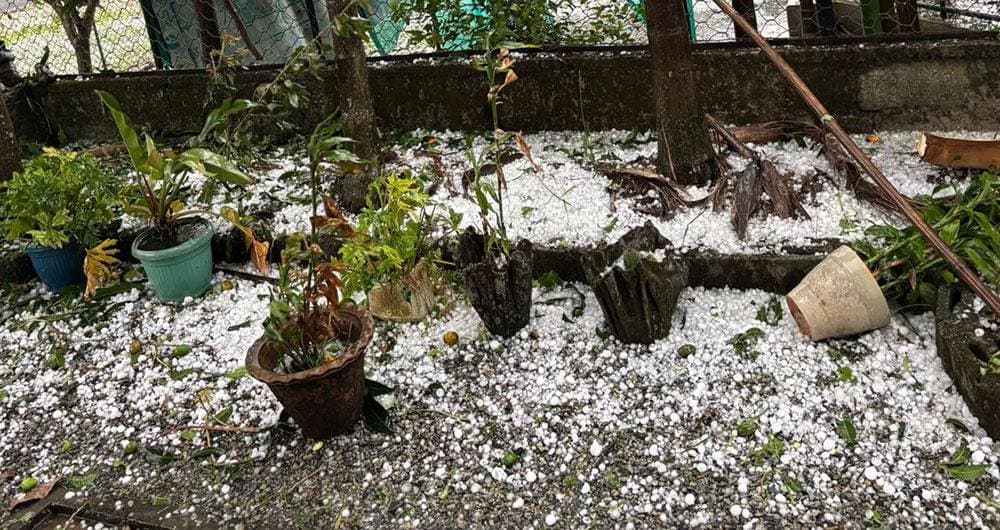
Unpredictable Weather Patterns Across Bhutan 🌧️❄️
As Bhutan navigates its pre-monsoon season, the nation is currently witnessing a remarkable contrast in weather conditions. From the southern regions experiencing intense rain and hail to the northern highlands blanketed in snow, the atmospheric dynamics are truly captivating. This phenomenon is a result of several atmospheric systems interplaying across Bhutan, a country famed for its diverse climate.
Understanding the Meteorological Dynamics 🔍
The pre-monsoon period, spanning from March to May, is characterized by fluctuations in weather patterns due to a convergence of moist air from the Bay of Bengal and dry continental air masses. According to the National Centre for Hydrology and Meteorology (NCHM), these interactions are responsible for the current weather conditions.
Key atmospheric features influencing Bhutan's weather include:
- Upper Air Circulation: An upper air circulation, coupled with a westerly trough over central Assam, is heavily impacting the weather.
- Jet Stream Influence: A fast-moving subtropical westerly jet stream is steering weather systems across the region, intensifying storms and wind gusts.
- Cyclonic Circulations: Various upper-air cyclonic circulations over the Bay of Bengal and Northeast India are drawing in moist air, contributing to precipitation.
Regional Weather Impacts 🌧️❄️
- Southern Regions: Areas such as Samtse, Phuentsholing, and Gelephu are experiencing heavy rainfall and hail, driven by low-pressure systems and moist air.
- Northern Highlands: Regions like Gasa and Laya are seeing snowfall due to the elevation and cooler temperatures.
The NCHM forecasts that from April 8 to April 10, Bhutan will continue to experience cloudy skies with light to moderate rain. Southern and eastern areas are expected to receive heavier rainfall, while light snow will persist in the northern highlands.
Meteorological Insights and Global Trends 🌐
Globally, the El Niño–Southern Oscillation (ENSO) and the Indian Ocean Dipole (IOD) remain neutral, indicating that oceanic temperatures are not exerting extreme influences on the weather. The Madden-Julian Oscillation is also playing a part, affecting cloud formation and rainfall patterns across the region.
Historical Context and Future Outlook 📅
Historically, Bhutan's pre-monsoon season is notorious for sudden weather changes. Thunderstorms, accompanied by gusty winds and hail, are common, particularly in the late afternoons and evenings.
The NCHM advises residents to remain vigilant during this season. Precautions include seeking shelter during thunderstorms, avoiding isolated trees, securing loose objects, and not using electrical appliances during lightning storms.
Preparing for What's Next 🔄
As Bhutan progresses through April, the NCHM projects that rainfall will remain mostly below normal. However, southern borders might experience slightly higher precipitation by the month's end. Temperature ranges are expected to stay consistent, with maximums between 0–35°C and minimums from –5°C in high-altitude areas to 20°C in southern valleys.
Conclusion: Staying Vigilant and Prepared 🛡️
The diverse climatic conditions in Bhutan during the pre-monsoon season highlight the complexity of the nation's weather systems. Residents are encouraged to stay informed and cautious as the NCHM continues to monitor the situation and provide updates. The intersection of various atmospheric phenomena not only impacts daily life but also offers a fascinating insight into the intricate workings of the environment.
In the coming weeks, Bhutanese residents should prepare for continued variability in weather conditions and heed the advice of meteorological experts to stay safe during potentially hazardous weather events. 🌧️❄️
You May Also Like
News
Women Entrepreneurs Master AI and Digital Tools in Phuentsholing
September 1, 2026
News
Can Samtse Keep Up With Its Growing Workforce?
August 29, 2026

News
Nepal Flood Exposes Critical Gaps in Bhutan's Early Warning Systems
August 29, 2026
News
High Court Overturns Acquittal: Doctor Sentenced to 10 Years for Child Sexual Abuse
August 29, 2026