Category:
PoliticsOpposition MP Elected as National Assembly Speaker
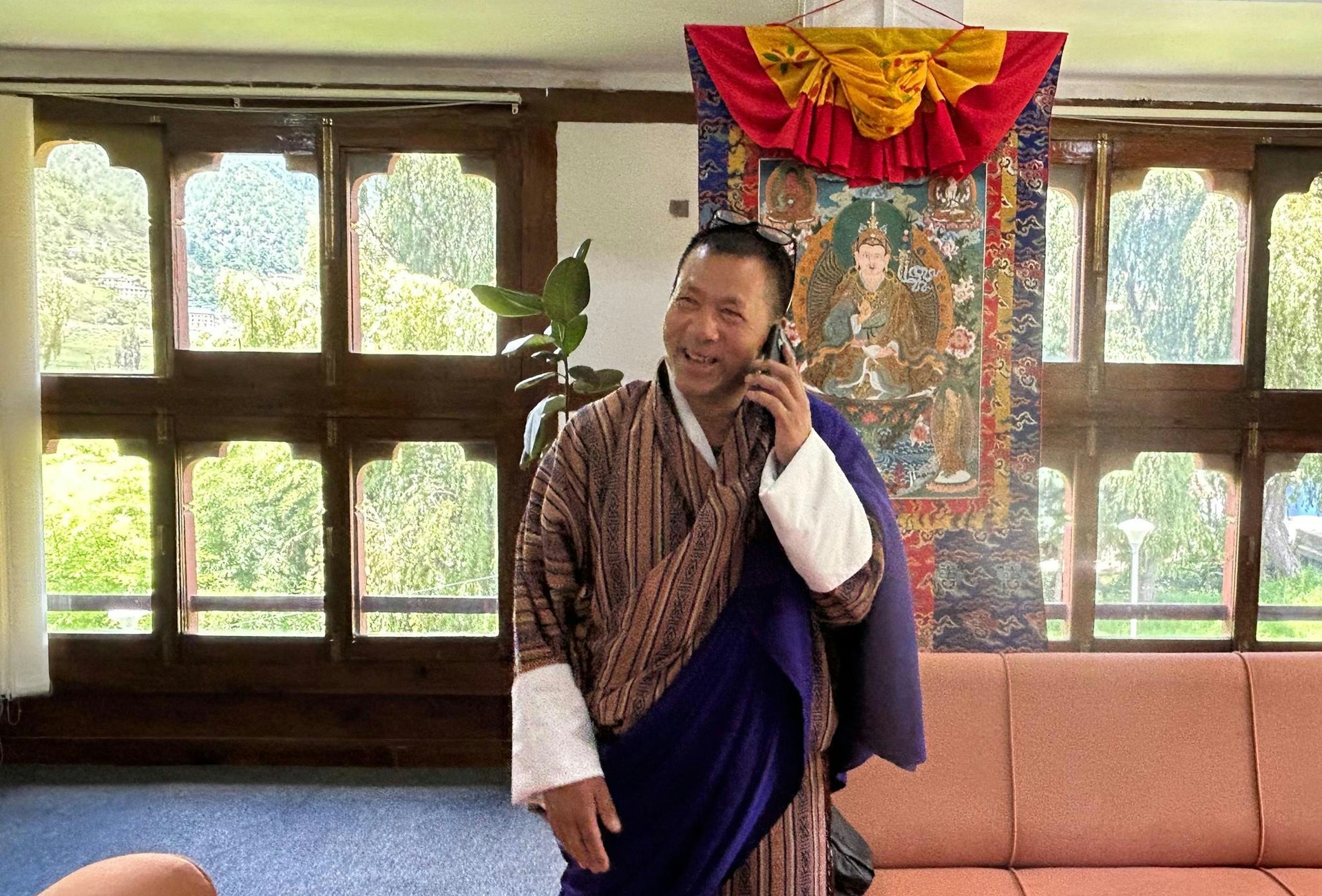
A Historic Moment for Bhutanese Democracy 🎬
In an outcome that defied political expectations and captured the nation's attention, the National Assembly has elected an opposition member to serve as Speaker—a groundbreaking development in Bhutan's democratic journey. This unprecedented decision marks a significant milestone in the country's parliamentary history, demonstrating the maturity and independence of legislative processes that characterize a functioning democracy.
The election of an opposition MP to this prestigious position signals a shift in how Bhutan's political institutions operate, moving beyond traditional party lines to prioritize institutional strength and parliamentary excellence. This moment reflects the evolving nature of democratic governance in the kingdom, where merit and collective judgment can transcend partisan considerations.
The Election Results: A Single Vote Changes Everything 🔥
Tempa Dorji, representing the Bhutan Tendrel Party (BTP) and serving as Member of Parliament for the Maenbi-Tshenkhar constituency in Lhuentse, secured victory with a narrow margin of just one vote. He garnered 24 votes against 23 for Health Minister Tandin Wangchuk, the ruling party's nominee, in an extraordinary session attended by all 47 members of the National Assembly.
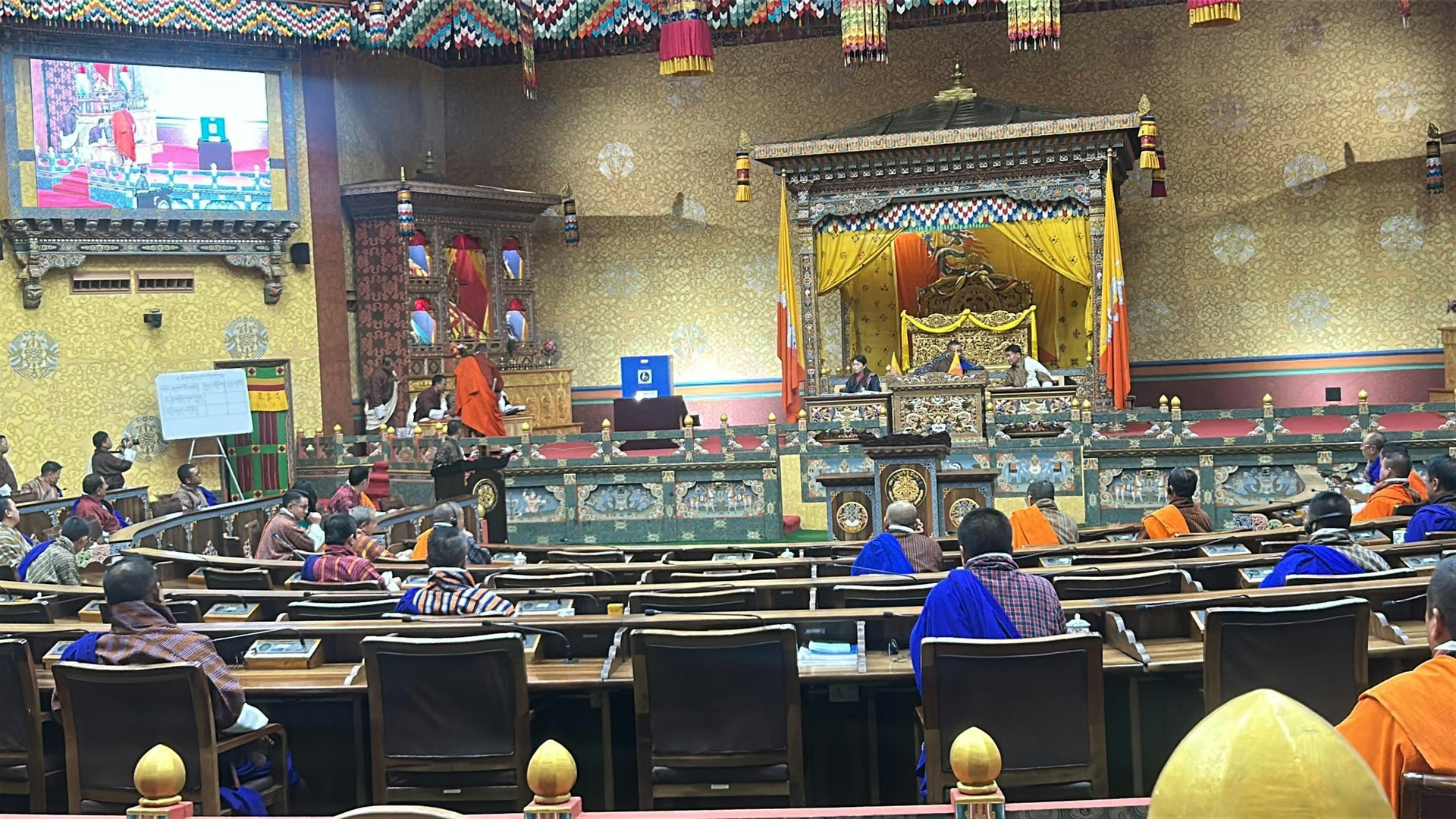
This razor-thin margin underscores the competitive nature of the contest and highlights the genuine deliberation that took place among parliamentarians. The result demonstrates that even in a chamber where the ruling People's Democratic Party (PDP) holds 31 seats compared to the opposition's 16 seats, individual conscience and institutional considerations can override numerical advantages.
The mathematics of the vote reveal a compelling narrative: with the opposition holding only 16 seats, Tempa Dorji's 24 votes indicate that approximately eight ruling party members crossed party lines to support him. This defection represents a significant statement about priorities within the government coalition and raises important questions about how individual MPs weigh party loyalty against broader parliamentary interests.
Meet the New Speaker: Tempa Dorji's Background 📚
Tempa Dorji brings substantial credentials and experience to the Speaker's office. At 58 years old, he holds a Master of Science degree and a Post Graduate Diploma in Electrical Power Engineering, both earned from the prestigious Norwegian University of Science and Technology. His technical background distinguishes him from many political figures and reflects a commitment to evidence-based governance.
His professional journey spans multiple sectors and demonstrates progressive responsibility. From 1992 to 2013, he worked with the Bhutan Power Corporation, rising through the ranks from Section Officer to Divisional Manager—a trajectory that showcases his capability for institutional management and leadership development. This 21-year tenure in the energy sector provided him with deep insights into infrastructure, governance, and organizational dynamics.
Tempa Dorji's parliamentary experience includes a decade of service in the National Council from 2013 to 2023, followed by his current role as an MP since 2024. Within the legislative branch, he serves on the Legislative Committee, House Committee, and Special Committee on Civil Service Reform. Previously, he chaired the Good Governance Committee in the National Council, demonstrating his focus on institutional integrity and administrative excellence.
This combination of technical expertise, corporate management experience, and legislative background positions him uniquely to navigate the complexities of parliamentary administration and institutional governance.
Why This Election Matters: The Democratic Significance 💫
Breaking Barriers in Parliamentary History
The election of an opposition Speaker represents the first such occurrence in Bhutan's democratic history. Since the transition to constitutional monarchy and parliamentary democracy in 2008, the Speaker's position has remained within the ruling party's domain. This precedent-setting decision signals that democratic institutions in Bhutan have matured beyond strict party control, allowing merit and institutional judgment to guide major decisions.
The historical significance cannot be overstated. In many emerging democracies, such institutional independence takes decades to develop. Bhutan's achievement demonstrates the strength of its constitutional framework and the commitment of its parliamentarians to democratic principles.
The Unprecedented Margin
The single-vote victory creates a unique dynamic. Unlike overwhelming mandates that suggest clear consensus, this narrow outcome reflects genuine deliberation and individual decision-making. Several ruling party members apparently concluded that Tempa Dorji's qualifications, experience, or commitment to impartiality made him the superior choice for an office that must transcend partisan interests.
This suggests that within the PDP, there exists a segment of MPs who prioritize institutional strength and parliamentary effectiveness over strict party discipline—a healthy sign for democratic governance.
The Rejected Candidate and Party Response ✨
Health Minister Tandin Wangchuk, despite falling short by a single vote, responded with grace and statesmanship. In a Facebook post, he congratulated Tempa Dorji on his election and commended the BTP for achieving this significant milestone. His response exemplifies mature democratic behavior, acknowledging the legitimacy of the outcome despite the disappointment.
Wangchuk's reaction also reflects broader party sentiment. The PDP acknowledged that the result diverged from expectations but committed to respecting the democratic process. The party statement emphasized its continued dedication to serving the people and maintaining national unity, demonstrating institutional resilience even in the face of an unexpected setback.
Interestingly, some political observers speculated that the ruling party's nominee selection may have influenced the outcome. Deputy Speaker Sangay Khandu, who possessed strong standing within the PDP and extensive parliamentary experience, chose not to contest the position. He cited timing considerations and his responsibility as existing Deputy Speaker to conduct the election fairly. Some analysts suggested that Khandu's candidacy might have produced a different result, given his popularity within ruling party ranks.
Tempa Dorji's Vision for the Speaker's Role 🌟
When commenting on his unexpected victory, the Speaker-elect emphasized the significance of the outcome for democratic governance. He expressed humility about the result while framing it as democracy and parliamentary politics functioning as intended—with the collective will of members ultimately prevailing over predetermined outcomes.
Tempa Dorji articulated a crucial vision for his tenure: maintaining the Speaker's non-partisan status and ensuring impartiality in both principle and practice. He stressed that the office must remain above party interests, serving the National Assembly with fairness, independence, and integrity. These commitments represent the constitutional expectations for the position and signal his understanding of the responsibility he has assumed.
His emphasis on the Speaker serving all members, regardless of party affiliation, reflects an understanding that parliamentary institutions function optimally when they transcend partisan divisions. This perspective suggests his approach will prioritize procedural fairness, equitable treatment of all members, and institutional credibility.
The Opposition Party's Perspective 🎯
The Bhutan Tendrel Party, while naturally pleased with the election outcome, framed the achievement in institutional rather than partisan terms. In an official statement, the BTP thanked National Assembly members for their trust, emphasizing that they had exercised their constitutional responsibility independently and in Parliament's best interest.
Crucially, the opposition party acknowledged that the Speaker bears responsibility to the entire National Assembly, not merely to the party that nominated him. This statement reflects a sophisticated understanding of parliamentary democracy—that institutional offices must transcend party interests to maintain legitimacy and effectiveness.
The BTP expressed confidence that Tempa Dorji would preside fairly, safeguard members' rights, uphold parliamentary procedure, and maintain Parliament's dignity and credibility. This framing positions the opposition party as committed to strong democratic institutions rather than merely celebrating a partisan victory.
Broader Implications for Bhutanese Politics 📊
Strengthening Democratic Institutions
This election outcome strengthens several pillars of democratic governance. First, it demonstrates that individual MPs possess genuine independence in voting on major matters, even when party leadership has endorsed particular candidates. This independence suggests that the National Assembly functions as a deliberative body rather than a rubber-stamp legislature.
Second, the result indicates that Bhutanese parliamentarians understand the distinction between party loyalty and institutional responsibility. The MPs who crossed party lines apparently recognized that certain positions—particularly those requiring impartiality—should prioritize qualifications and commitment to fairness over partisan advantage.
Third, the outcome reflects confidence in constitutional mechanisms. The Constitution provides clear procedures for electing the Speaker, and all parties respected these processes even when outcomes disappointed them. This institutional respect strengthens democratic legitimacy.
Government-Opposition Dynamics
The election also recalibrates relationships between the ruling party and opposition. Rather than viewing parliamentary work as zero-sum competition, this outcome suggests potential for constructive engagement. The Health Minister's gracious response and the PDP's commitment to moving forward indicate that institutions can accommodate unexpected results without triggering political crises.
Further, having an opposition Speaker may encourage more rigorous parliamentary scrutiny of government policies and programs. The Speaker's impartiality becomes crucial in facilitating genuine debate and ensuring that opposition voices receive fair hearing and procedural protection.
What Observers Are Saying 💬
Political analysts and observers have characterized this outcome as genuinely surprising. Few anticipated an opposition Speaker midway through a government's term, particularly given the ruling party's numerical advantage. The result challenges conventional assumptions about how party discipline functions in Bhutanese politics.
Some observers noted that the contest transcended simple opposition-versus-ruling-party dynamics. One opposition member emphasized that the election represented an effort to strengthen Parliament as a supreme institution—the true essence of functioning democracy. This framing suggests that the outcome reflected principled parliamentary considerations rather than partisan maneuvering.
Others questioned the ruling party's strategy in nominating the Health Minister, given his controversial record in the health portfolio. These observers suggested that alternative candidates might have generated different outcomes, highlighting the importance of strategic decision-making in parliamentary contests.
Looking Forward: The Speaker's Agenda ✨
As Tempa Dorji assumes the Speaker's responsibilities, several priorities likely merit attention. First, establishing his credibility as an impartial presiding officer will be essential. His fairness in recognizing speakers, managing debate, and applying parliamentary rules will either validate or undermine the confidence that members placed in him.
Second, he will need to navigate relationships with both the ruling party and opposition, maintaining genuine impartiality while respecting all members' rights and prerogatives. This balance becomes particularly important given the narrow circumstances of his election.
Third, his technical background and good governance focus may position him to advance parliamentary modernization and procedural improvements. His experience with institutional management could translate into enhanced parliamentary operations and administrative efficiency.
The Bigger Picture: Democracy in Action 🌏
This election demonstrates that Bhutan's democratic institutions have matured beyond their initial implementation. Constitutional democracy requires more than holding elections; it demands institutional independence, respect for procedures, and commitment to principles even when outcomes disappoint particular parties.
The National Assembly's decision to elect an opposition Speaker reflects these mature democratic values. It shows that Bhutanese parliamentarians understand their role as custodians of democratic institutions and are willing to prioritize institutional strength over narrow partisan advantage.
For a nation that transitioned to democracy relatively recently, this outcome represents significant progress. It suggests that democratic norms have taken root, that institutions command respect, and that political actors understand the importance of institutional credibility for long-term stability and governance effectiveness.
Conclusion: A New Chapter in Parliamentary Democracy 🎉
The election of Tempa Dorji as Speaker of the National Assembly marks a defining moment in Bhutan's democratic evolution. This unprecedented outcome—the first opposition Speaker in the country's democratic history—demonstrates that parliamentary institutions can transcend party interests when members prioritize institutional strength and democratic principles.
The narrow margin of victory, the gracious response from the defeated candidate, and the commitment of all parties to respect the democratic process collectively illustrate the maturity of Bhutan's political system. Rather than triggering institutional crisis, the outcome has reinforced confidence in democratic procedures and highlighted the independence of individual parliamentarians.
As Tempa Dorji assumes his responsibilities, his challenge will be to validate the confidence that members placed in him by presiding with genuine impartiality, protecting all members' rights, and strengthening parliamentary institutions. His success in this role will have implications extending far beyond his tenure, establishing precedents for how Bhutanese democracy continues to evolve.
This moment reminds us that democracy is not merely about elections or numerical majorities—it's about institutions, principles, and the collective commitment of citizens and representatives to values larger than any single party or interest. Bhutan's National Assembly has demonstrated these commitments powerfully, offering a model of democratic maturity that deserves recognition and study.
You May Also Like
Politics
Bhutan and EU Parliamentarians Unite on Climate Action
September 26, 2026
Politics
Bhutan Launches Four Voter Participation Initiatives for LG Elections
September 16, 2026
Politics
Women in Politics: Breaking Through Barriers Before Election Day
September 15, 2026
Politics
Women Leaders Training: Preparing for 2027 Local Elections
August 31, 2026