Category:
PoliticsTempa Dorji Makes History as Bhutan's First Opposition Speaker
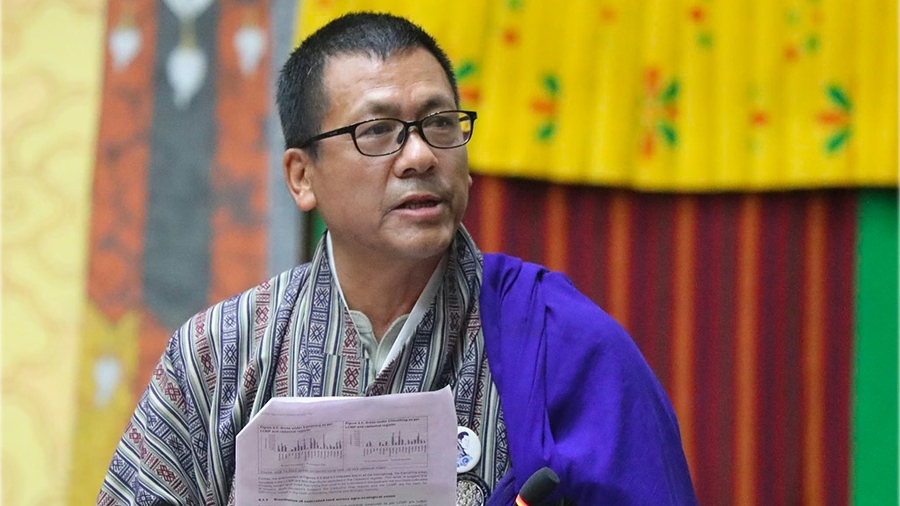
A Landmark Moment in Bhutanese Democracy 🎯
Bhutan has witnessed a pivotal shift in its parliamentary landscape. For the first time since the nation transitioned to democratic governance in 2008, an opposition member has been elected to serve as Speaker of the National Assembly. This groundbreaking development marks a significant evolution in how Bhutan's legislative body approaches leadership and representation.
Tempa Dorji, representing the Maenbi-Tsaenkhar constituency in Lhuntse under the Bhutan Tendrel Party (BTP), secured the Speaker position with 24 votes, narrowly defeating the ruling People's Democratic Party's (PDP) candidate Tandin Wangchuk, who received 23 votes. The razor-thin margin underscores just how contested this historic election truly was.
Breaking Three Decades of Precedent 🏛️
The election outcome shatters a three-term tradition where the Speaker's position consistently went to representatives from the ruling party. This shift is particularly remarkable given the numerical composition of the current National Assembly, which comprises 31 members from the PDP and only 16 from the opposition BTP.
Despite being outnumbered nearly two-to-one, the opposition party's candidate managed to secure the position through strategic voting and cross-party support. This suggests that individual merit and capability transcended party loyalty when members cast their votes.
The Constitutional Framework That Enabled Change
Article 12, Section 3 of Bhutan's Constitution provides the legal foundation for this democratic evolution. The provision stipulates that the National Assembly shall elect a Speaker from among its members but deliberately refrains from mandating that the position come from the ruling party or any specific political affiliation.
This constitutional flexibility has proven instrumental in allowing the legislature to make decisions based on individual qualifications rather than party mechanics. The framers of Bhutan's democratic constitution wisely recognized that such institutional roles should transcend partisan considerations.
Who is Tempa Dorji? 👤
At 58 years old, Tempa Dorji brings substantial experience to the Speaker's role. His political career spans multiple decades, beginning with his election to the National Council in 2013, where he served two consecutive terms until 2023. This council experience provided him with deep institutional knowledge of legislative processes and parliamentary procedures.
Before entering electoral politics, Dorji spent over two decades working with the Bhutan Power Corporation, building expertise in public sector management and technical governance. This background in energy sector administration offers him practical experience in managing complex organizational structures—skills directly applicable to leading the National Assembly.
His transition from the National Council to the National Assembly in 2024 represents a natural progression in his political career, culminating in his election as Speaker just months into his tenure in the lower house.
Dorji's Response to Historic Victory 💭
When addressing his unexpected election, the Speaker-elect displayed measured humility and a clear understanding of his new responsibilities. "We did not expect to be elected," Dorji stated, emphasizing that the outcome represents the democratic will of the assembly members rather than a predetermined outcome.
He articulated a vision of parliamentary unity that transcends party boundaries, noting that both ruling and opposition members share a fundamental commitment to serving Bhutan's foundational principles—the "Tsa Wa Sum" (the Monarch, the Nation, and the People). This framing suggests a leadership approach focused on institutional harmony and collective national purpose.
Dorji's comments reflected pragmatic recognition that parliamentary effectiveness depends on cooperation across party lines, particularly in a bicameral system where consensus-building proves essential for legislative progress.
The Broader Political Context 🌍
This historic election occurred against the backdrop of significant governmental transitions. The position of Speaker became vacant following the resignation of former Speaker Lungten Dorji, creating the opportunity for this unprecedented change.
Simultaneously, the government faces the challenge of filling multiple ministerial vacancies. Health Minister Tandin Wangchuk, who contested for the Speaker position, has not yet formally resigned from his ministerial post, though the PDP planned to convene a meeting to discuss the matter. Additionally, the Home Minister and the Energy and Natural Resources Minister voluntarily stepped down from their positions the previous week, creating a compressed period of significant governmental reorganization.
Understanding Bhutan's Two-Party System
Bhutan's electoral system, established through its 2008 constitution, operates as a unique two-party parliamentary democracy. Only parties clearing a 40% vote threshold in national elections earn parliamentary representation, resulting in a binary political structure that contrasts sharply with multi-party systems elsewhere in South Asia.
This framework creates inherent imbalances where opposition parties, despite significant popular support, find themselves vastly outnumbered in the legislature. The Speaker election demonstrates that numerical disadvantage need not determine all institutional outcomes.
Implications for Bhutanese Democracy ✨
Tempa Dorji's election carries profound implications for institutional development. It signals that Bhutanese democracy has matured sufficiently to separate individual merit from party affiliation when selecting leadership positions. The National Assembly membership demonstrated willingness to prioritize legislative effectiveness and balanced governance over partisan advantage.
This precedent may influence future institutional elections, potentially encouraging greater separation between party loyalty and leadership selection. It also provides the opposition BTP with meaningful influence in parliamentary proceedings, enhancing their ability to shape legislative agendas and scrutinize government proposals.
For Dorji personally, the position represents both validation of his political career and assumption of significant responsibility. As Speaker, he will preside over all parliamentary sessions, maintain legislative order, and serve as the institutional representative of the National Assembly.
Looking Forward: Democratic Evolution 🚀
Bhutan's democratic journey, now spanning approximately 16 years, continues to mature through practical experience. The election of an opposition Speaker represents an organic evolution rather than constitutional amendment—the system functioned precisely as its framers intended.
Future elections may reveal whether this outcome represents a singular anomaly or the beginning of a pattern where party affiliation holds less sway over institutional leadership decisions. Regardless, the precedent has been established: in Bhutanese democracy, institutional positions can transcend partisan boundaries when members collectively decide merit warrants such recognition.
The narrow margin of victory—just one vote separating the two candidates—underscores how closely divided the assembly remains on crucial matters. This dynamic may produce more collaborative governance, as neither party can assume automatic support for all initiatives.
Key Takeaways 📌
- Historic Achievement: Tempa Dorji becomes the first opposition member elected as National Assembly Speaker in Bhutan's democratic history
- Constitutional Flexibility: Bhutan's constitution deliberately avoids mandating that the Speaker come from the ruling party, enabling merit-based selection
- Experienced Leadership: Dorji brings decades of public sector experience and prior legislative service to the role
- Democratic Maturation: The election demonstrates Bhutanese democracy's capacity for institutional independence from partisan considerations
- Narrow Victory: A single vote separated the candidates, highlighting the closely balanced nature of current parliamentary politics
- Broader Implications: The precedent may influence future institutional elections and encourage greater cross-party cooperation
Bhutan's democratic experiment continues to demonstrate that effective governance transcends party boundaries, and that institutional leadership can be determined by the collective judgment of elected representatives rather than predetermined party mechanics.
You May Also Like
Politics
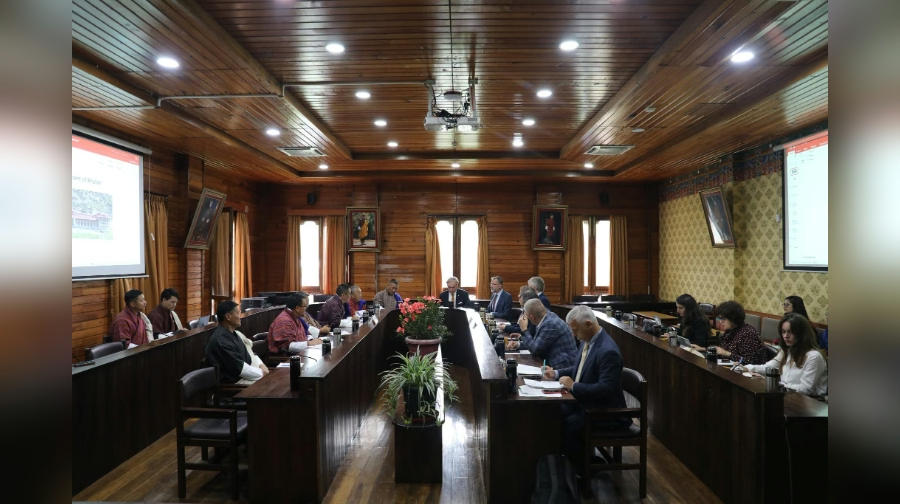
Bhutan and EU Parliamentarians Unite on Climate Action
September 26, 2026
Politics
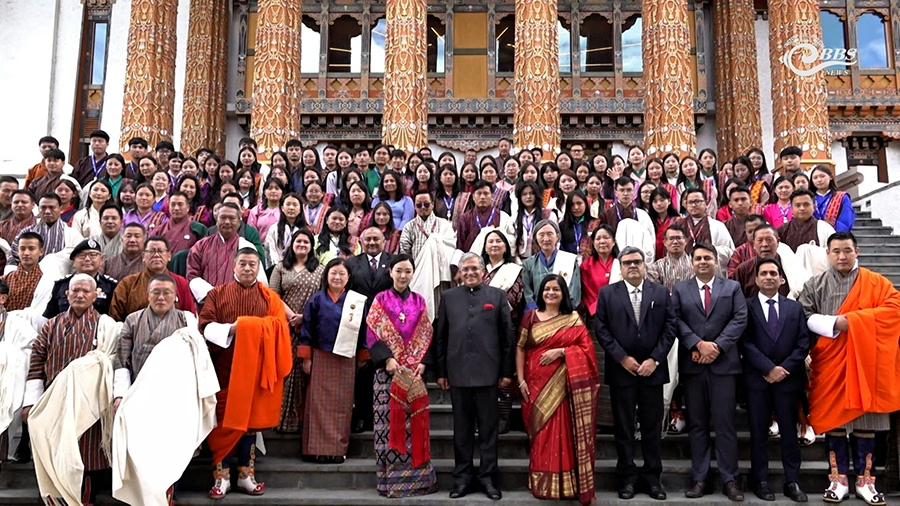
Bhutan Launches Four Voter Participation Initiatives for LG Elections
September 16, 2026
Politics
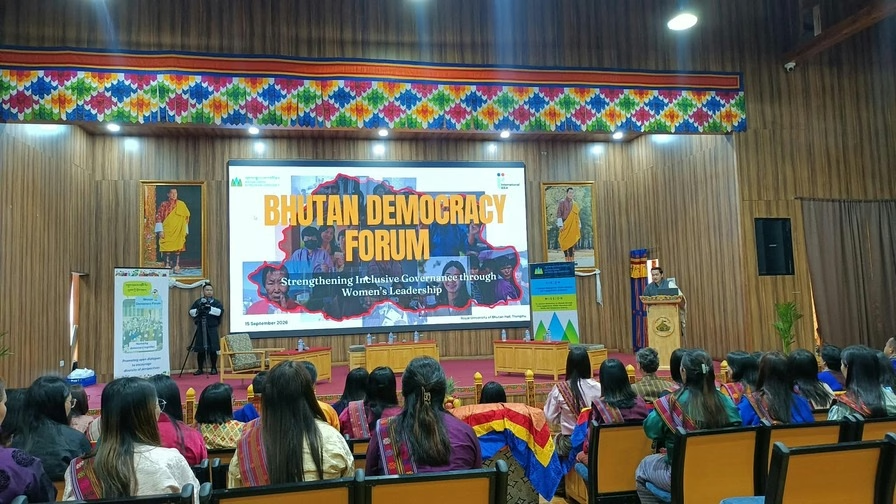
Women in Politics: Breaking Through Barriers Before Election Day
September 15, 2026
Politics
Women Leaders Training: Preparing for 2027 Local Elections
August 31, 2026