Category:
EconomyMongar's One-Stop Service Centre: Solving Business Bottlenecks
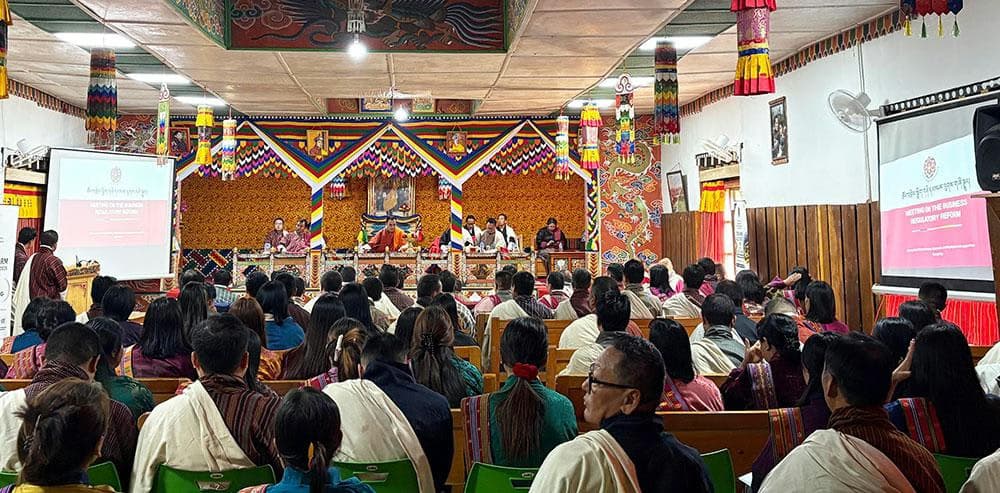
Bhutan's business landscape is undergoing significant scrutiny as regional economies grapple with operational inefficiencies. 🏢 Mongar, one of the country's key commercial hubs, has emerged as a focal point for addressing systemic challenges that continue to hamper entrepreneurial growth. Recent consultations have unveiled critical gaps in how businesses navigate regulatory frameworks, leading to a groundbreaking proposal that could reshape how enterprises operate across the region.
The Current Business Environment in Mongar 📊
Mongar's commercial sector is surprisingly robust, comprising 1,362 registered establishments including hotels, restaurants, cottage industries, and small-scale manufacturing ventures. Among these, five tourism and hospitality operations and 21 entertainment enterprises contribute significantly to the local economy. Despite this diversity, business owners consistently report facing obstacles that prevent them from scaling operations and competing effectively.
The dzongkhag has become a microcosm of broader challenges affecting Bhutan's entrepreneurial ecosystem. What makes Mongar's situation particularly noteworthy is the concentration of complaints around interconnected regulatory and financial barriers that create compounding difficulties for business operators.
Identifying the Core Challenges 🔍
Financial Access and Loan Procedures
One of the most pressing concerns articulated by Mongar's business community revolves around limited access to finance. Small and medium enterprises struggle with lengthy loan approval processes that often span several months, creating cash flow challenges and discouraging investment in facility upgrades or business diversification.
The complexity doesn't end with approval timelines. Documentation requirements vary across lending institutions, forcing entrepreneurs to navigate inconsistent procedures and repeatedly submit similar information to different banks. This bureaucratic friction particularly affects cottage and small industries seeking capital for expansion.
The Multiple Agency Clearance Maze
Perhaps the most frustrating aspect of doing business in Mongar involves obtaining multiple agency approvals. Businesses must secure clearances from an array of government departments including forest, environmental, cultural heritage, and land-use authorities before receiving operational permits. Each agency maintains separate procedures, documentation requirements, and processing timelines.
This fragmented approval system creates a domino effect: delays from one agency cascade throughout the entire approval process. A business owner seeking to establish a new venture might spend six months or longer waiting for coordinated clearances, during which time market opportunities evaporate and financing arrangements expire.
Digital Compliance Barriers
The transition to digital compliance systems has introduced unexpected challenges. The implementation of the Goods and Services Tax (GST) system and Bhutan NDI platforms has left many business owners struggling to adapt their operations and record-keeping practices. 💻
Small entrepreneurs, particularly those in traditional sectors, lack adequate training and digital infrastructure to navigate these new requirements seamlessly. The absence of user-friendly guidance compounds the problem, transforming what should be efficiency gains into sources of frustration and potential non-compliance.
Pricing Disparities and Market Inequities
A particularly contentious issue emerged during consultations regarding pricing disparities in satellite towns. Yadi, classified as a satellite settlement, experienced a sharp increase in commercial licence taxes—jumping from Nu 5,000 to Nu 7,000 annually. This adjustment brought satellite town rates to parity with Mongar town's commercial licensing fees, effectively penalizing businesses located outside the primary commercial zone.
Additionally, steep mark-ups on imported goods distort the market. Products sourced from India at Nu 650 are reportedly being resold domestically for up to Nu 1,500—a 130% markup that raises questions about supply chain efficiency and pricing mechanisms. These disparities create competitive imbalances and reduce consumer purchasing power.
The One-Stop Service Centre Solution ✨
A Transformative Proposal
In response to these interconnected challenges, Mongar's dzongkhag administration has proposed establishing a one-stop service centre—a unified facility where businesses can access all necessary services, approvals, and information without visiting multiple government offices. This innovative approach represents a paradigm shift in how regulatory services are delivered.
The concept isn't entirely novel internationally, but its implementation in the Bhutanese context would address several critical pain points simultaneously. By consolidating services, businesses could reduce processing times, minimize documentation duplication, and navigate regulatory requirements with greater clarity.
How the System Would Function
A comprehensive one-stop service centre would integrate representatives from key agencies—finance, forestry, environment, cultural heritage, and land administration—under one roof. Businesses would submit applications once, with coordinated inter-agency review occurring internally rather than requiring entrepreneurs to manage multiple touchpoints.
This centralized model would enable:
- Simultaneous processing of interdependent approvals
- Reduced documentation requirements through shared information systems
- Standardized timelines with clear communication about approval status
- Dedicated support staff trained in all relevant regulatory frameworks
- Digital integration facilitating seamless information flow between agencies
Broader Context: National Business Regulatory Reform 🌐
Mongar's consultation represents the 12th dzongkhag hosting the Ministry of Industry, Commerce and Employment's (MoICE) Business Regulatory Process Review (BRPR). This nationwide initiative, which commenced in Thimphu on July 31 and concludes in Gasa on August 16, systematically examines regulatory barriers affecting enterprises across all regions.
The comprehensive nature of this exercise indicates a national commitment to business environment improvement. Similar challenges have reportedly emerged across multiple dzongkhags, suggesting that solutions developed in Mongar could inform national policy frameworks.
Government Response and Initiatives 🤝
Financial Accessibility Improvements
The Department of Industry Director General, Chhimi Tshering, acknowledged access-to-finance challenges and confirmed that the ministry has engaged with banking institutions to streamline loan procedures. Planned simplifications aim to reduce processing times and documentation burden, making capital more accessible to small entrepreneurs.
These discussions signal recognition that financial barriers significantly impede business growth and that coordinated engagement with financial institutions is necessary to resolve systemic issues.
Digital Integration Through IBLS
The ministry has already launched the Integrated Business Licensing System (IBLS), designed to consolidate clearances and licensing functions. While this represents progress, implementation challenges persist across dzongkhags. The ministry plans to conduct nationwide advocacy and training initiatives to help entrepreneurs adapt to the digital licensing environment.
This phased approach acknowledges that technological solutions require accompanying capacity-building and change management efforts to succeed.
Policy Reviews and Administrative Improvements
MoICE Minister Namgyal Dorji committed to reviewing several contentious issues: satellite town taxation disparities, domestic pricing mechanisms, and licence renewal fee structures. Additionally, the ministry is developing an SMS notification service to alert business owners before licence expiration dates, reducing inadvertent non-compliance penalties.
These targeted interventions address specific grievances while the broader one-stop service centre proposal tackles systemic inefficiencies.
The Tourism Dimension 🏨
The consultation also introduced the Tourism Minimum Facilities Initiative under the TASHEL Framework for Destination Management. This initiative encourages destinations to enhance cleanliness, accessibility, safety, hospitality, authenticity, and community stewardship through coordinated action and essential visitor facilities.
For Mongar, which hosts five tourism and hospitality ventures, this framework provides structured guidance for improving destination competitiveness and visitor experiences. The integration of tourism development with broader business regulatory reform reflects holistic economic thinking.
Stakeholder Participation and Consensus 👥
The Mongar consultation attracted 125 participants, including 33 Dzongkhag Tshogdue members, 17 sector heads, and 75 business representatives from Mongar town, Gyalpoizhing, Lingmithang, Yadi, and Kidheykhar. This broad representation ensured diverse perspectives informed the discussion and recommendations.
The significant participation rate—particularly the substantial business owner representation—indicates genuine interest in regulatory reform and suggests that proposed solutions have credibility within the entrepreneurial community.
Implications for Bhutan's Economic Development 📈
Mongar's one-stop service centre proposal carries implications extending beyond the dzongkhag. If successfully implemented, it could serve as a prototype for national business facilitation models. The success metrics would include:
- Reduced approval timelines from current months to weeks
- Increased business registration and licensing rates
- Improved entrepreneur satisfaction with regulatory processes
- Enhanced business survival rates and growth trajectories
- Expanded tax revenue from increased commercial activity
These outcomes would contribute to Bhutan's broader economic diversification goals and support the government's vision of creating a business-friendly environment that attracts both domestic and international investment.
Looking Forward: Implementation Challenges and Opportunities 🚀
Transforming regulatory systems requires sustained commitment, adequate resource allocation, and inter-agency coordination. The one-stop service centre concept faces implementation challenges including:
- Securing buy-in from multiple government agencies with distinct mandates
- Developing integrated digital systems connecting disparate databases
- Training staff to operate across traditional departmental boundaries
- Establishing performance metrics and accountability mechanisms
- Securing adequate physical and technological infrastructure
However, the demonstrated support from both government leadership and business stakeholders suggests that these obstacles are surmountable through determined effort.
Conclusion: A Catalyst for Change 🎯
Mongar's proposal for a one-stop service centre represents more than administrative convenience—it reflects a fundamental reimagining of how government can serve business interests while maintaining necessary regulatory oversight. By consolidating services, simplifying procedures, and improving digital integration, such a centre could unlock significant entrepreneurial potential.
The consultation process itself demonstrates that Bhutan's government is listening to business community concerns and willing to implement systemic reforms. As the nationwide Business Regulatory Process Review concludes, the recommendations emerging from Mongar and other dzongkhags will likely shape national policy for years to come.
For entrepreneurs, the message is clear: regulatory reform is coming, and the business environment is set to become more navigable. For policymakers, the challenge lies in translating these recommendations into concrete institutional changes that meaningfully improve how businesses operate across the country. The path forward requires sustained collaboration, creative problem-solving, and unwavering commitment to creating an enabling environment where Bhutanese enterprises can thrive.
You May Also Like

Economy
Fixed Deposit Tax Withholding: What You Need to Know
September 13, 2026
Economy
DRC's QR Payment Innovation: Tracking Business Income
September 2, 2026

Economy
Single Mother Transforms Life Through Beekeeping in Bhutan
August 31, 2026
Economy
Natural Resources: Turning Ore into National Opportunity
August 29, 2026