Category:
EducationMongar's Extended Classrooms Struggle with Declining Student Enrollment
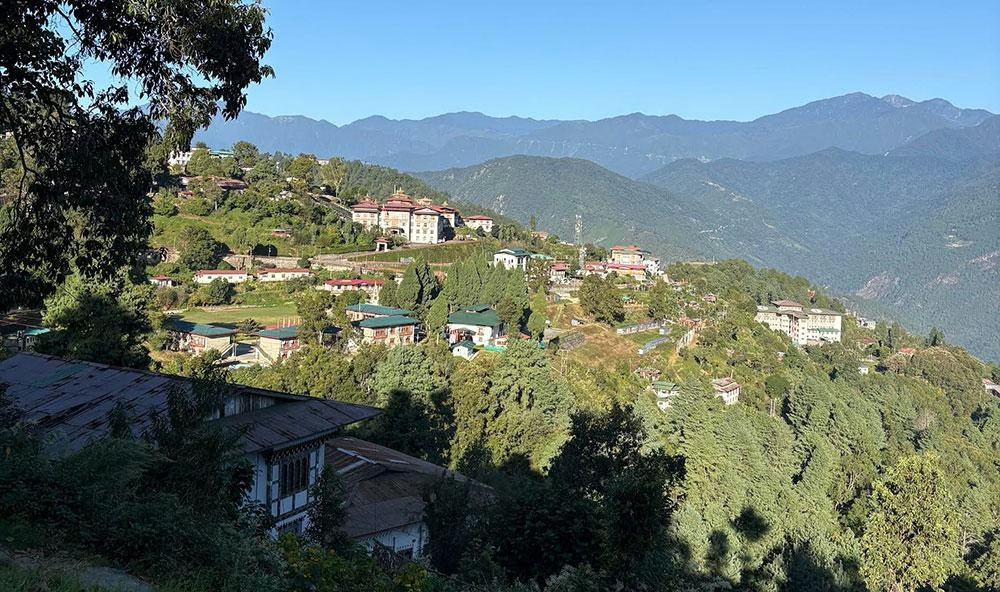
The Silent Crisis in Mongar's Rural Education System 📚
Mongar's remote communities are facing an unprecedented educational challenge. Across the eastern dzongkhag, six extended classroom rooms (ECRs) are grappling with dramatically falling student numbers, forcing education officials to confront difficult decisions about the future of rural schooling. What was once a thriving network of accessible learning centers has transformed into institutions fighting for survival against demographic headwinds.
The situation has become increasingly dire. All six ECRs in Mongar—Jaibab, Saling, Muhung, Chaskhar Pam, Waichur, and Lingkhar—have downsized their operations to offer classes only through Class III, compared to Class VI just years ago. This contraction represents not merely a administrative adjustment, but a fundamental shift in how rural education is being delivered in Bhutan's mountainous eastern regions.
Understanding the Declining Enrollment Crisis 📉
The Numbers Tell a Troubling Story
The statistics paint a stark picture of demographic collapse in these communities. Saling ECR, located in Saling Gewog, exemplifies this trend perfectly. The school currently enrolls just nine students—a precipitous drop from fourteen the previous year. According to local leadership, projections suggest enrollment could plummet to merely two or three students within the near future.
Waichur ECR in Dremtse Gewog presents an even more dramatic case study. When the school first opened, it welcomed 111 enthusiastic students into its classrooms. Today, that number has cratered to just 30 learners. The local community leader notes that the surrounding population has shrunk to approximately 100 residents, predominantly elderly individuals with few young families remaining.
Lingkhar ECR demonstrates a similar downward trajectory. Despite relative stability in recent months, with enrollment hovering around 23 students, the long-term trend is unmistakably negative. The school had 36 students in 2020, illustrating a consistent year-over-year decline that shows no signs of reversing.
The Root Causes Behind the Crisis 🌍
Rural-to-urban migration stands as the primary driver of enrollment collapse. Young families are systematically abandoning these remote villages in search of economic opportunities in urban centers or other dzongkhags. This demographic exodus leaves behind aging populations with few children to fill classroom seats.
Declining birth rates compound the problem. Bhutan, like many developing nations achieving higher living standards, is experiencing lower fertility rates. Families are choosing to have fewer children, and when combined with youth migration, this creates a perfect demographic storm for rural schools.
Agricultural challenges and wildlife conflicts add another layer to the crisis. Some residents have abandoned their homes entirely after struggling to protect their farms from wild animal predation. This environmental pressure accelerates the depopulation of already vulnerable communities. Saling Chiwog, for instance, has only 60 residents across 27 households, with approximately 10 houses standing completely empty.
The Structural Challenges for Extended Classroom Rooms 🏫
Extended classroom rooms were designed as a pragmatic solution to provide primary education access in geographically dispersed communities. However, this model faces fundamental sustainability questions when the underlying population base evaporates.
Mongar's education system currently operates 39 schools across multiple tiers: six ECRs, 22 primary schools, five middle secondary schools, and five higher secondary schools. Combined enrollment stands at approximately 8,273 students supported by 547 teachers. Within this ecosystem, the six ECRs represent a disproportionate resource commitment relative to their student populations.
Each ECR maintains three teachers regardless of enrollment numbers. This creates significant operational inefficiencies—schools with nine students still require the same teaching staff as those with substantially larger cohorts. The financial and human resource implications are substantial for a dzongkhag already managing limited educational resources.
Parental Preferences Shifting Toward Boarding Schools 🎓
Another significant factor contributing to ECR enrollment decline involves changing parental preferences. Many families now actively choose to enroll their children in boarding schools such as Thangrong Primary School, even when local ECRs remain available.
This preference shift reflects several considerations. Boarding schools offer superior teaching and learning facilities, access to specialized subject instruction, and exposure to peer groups from diverse backgrounds. Parents increasingly view boarding school education as providing competitive advantages for their children's academic development and future opportunities.
The quality differential between ECRs and boarding institutions has become increasingly pronounced. While ECRs serve essential access functions, they cannot match the comprehensive educational infrastructure available at larger boarding facilities. This gap has fundamentally altered parental decision-making calculus.
Official Response and Future Planning 🤝
Dzongkhag Education Officer Phuntsho Dorji acknowledges the multifaceted nature of the challenge. "The most difficult and challenging thing that we faced is that we are not able to close down the schools due to their sentimental and emotional attachments," he explained during recent discussions with community stakeholders.
This statement reveals a crucial tension in educational policy. Despite operational inefficiencies and declining viability, communities maintain deep emotional connections to their local schools. These institutions represent more than educational facilities—they embody community identity and cultural continuity in remote areas.
The dzongkhag has adopted a consultative approach to addressing the crisis. Rather than implementing unilateral closures, education officials are engaging affected communities in deliberative processes about the future of their schools. This measured approach recognizes both the practical realities of declining enrollment and the emotional significance these institutions hold for local populations.
Proposed Solutions and Relocation Strategies
The planned strategy involves gradually transitioning students from underenrolled ECRs to nearby boarding schools. This approach would provide several benefits:
- Enhanced educational quality through access to better-equipped facilities and specialized instruction
- Improved teaching and learning environments with adequate resources and infrastructure
- Peer learning opportunities through interaction with students from diverse communities
- More efficient resource allocation for the dzongkhag's education budget
However, implementation faces significant hurdles. Relocating students from home communities to boarding facilities disrupts family structures and traditional ways of life. The transition requires careful planning to minimize negative impacts while maximizing educational benefits.
Broader Context: Bhutan's Education Transformation 🌟
Mongar's ECR crisis reflects broader transformations occurring across Bhutan's education system. The nation has invested substantially in expanding access to quality education, yet faces emerging challenges as demographics and economic opportunities shift.
Rural depopulation represents a nationwide phenomenon, not merely a Mongar-specific issue. Many remote communities across Bhutan are experiencing similar patterns of youth outmigration and aging populations. This structural trend will likely impact educational sustainability across multiple dzongkhags.
Education policymakers must grapple with fundamental questions about the optimal balance between geographic access and educational quality. Can the nation maintain educational facilities in every remote community, or must it accept some consolidation in service of improved educational outcomes?
Looking Forward: Critical Considerations ⚡
The declining enrollment crisis in Mongar's extended classroom rooms demands thoughtful, comprehensive responses. Several key considerations should guide future policy decisions:
Community engagement must remain central to any transition planning. Local stakeholders have legitimate concerns about cultural continuity and educational access that deserve serious consideration.
Transition support for affected students and families should include counseling, orientation programs, and ongoing monitoring to ensure successful adjustment to boarding school environments.
Infrastructure investment in boarding facilities should precede any ECR closures to ensure adequate capacity and quality learning environments.
Alternative models might include hybrid approaches combining distance learning with periodic in-person instruction, leveraging technology to maintain educational access in remote areas.
Demographic monitoring should inform longer-term education planning, with projections accounting for continued rural-urban migration patterns.
Conclusion: Balancing Tradition and Pragmatism 💡
Mongar's extended classroom rooms face an existential challenge rooted in demographic transformation rather than policy failures. Declining student enrollment reflects larger societal shifts—rural depopulation, changing family structures, and economic restructuring—that extend far beyond education.
The path forward requires balancing pragmatic recognition of these demographic realities with genuine respect for community values and educational access. While consolidation may prove inevitable, the transition must be managed thoughtfully, with adequate support for affected communities and students.
Education officials in Mongar are navigating genuinely difficult terrain. There are no perfect solutions, only difficult choices among imperfect alternatives. By maintaining transparent communication, engaging communities meaningfully, and prioritizing student welfare throughout transitions, Bhutan's education system can adapt to these demographic challenges while preserving its commitment to educational quality and accessibility.
You May Also Like
Education
Bridging the Skills Gap: Training and Industry Alignment
October 19, 2026
Education
Team Bhutan Shines at FIRST Global Challenge 2026
October 15, 2026
Education
BFF Academy Achieves Historic Milestone with First Cambridge Checkpoint Exam
October 14, 2026
Education
Dzongkha Pronunciation and Spelling Challenges in Bhutanese Education
October 10, 2026