Category:
EducationMoESD Reviews Vice-Principal Promotion Criteria
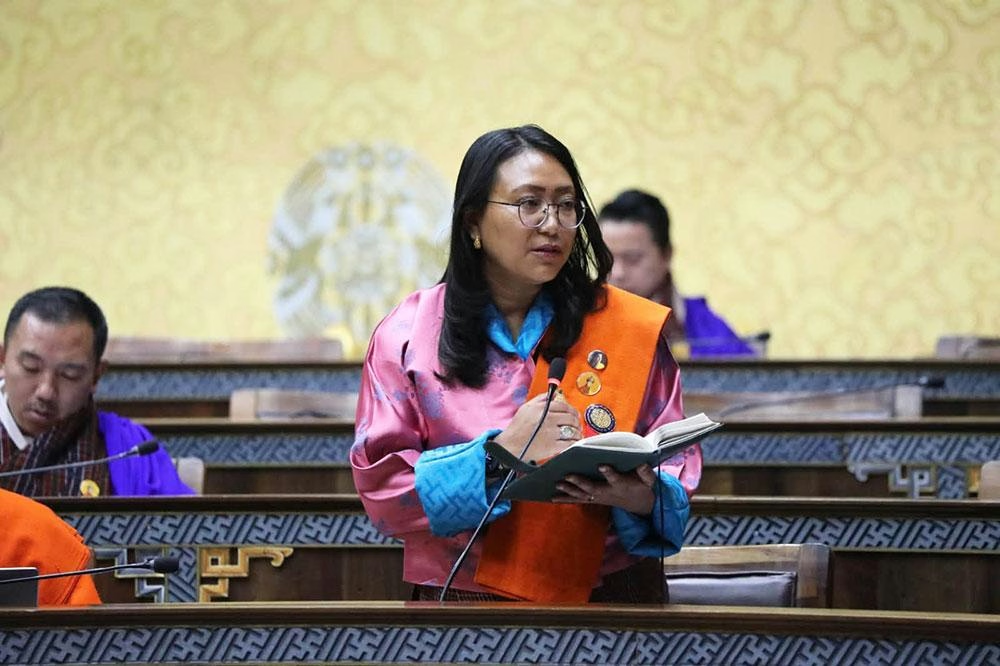
Bhutan's education system is undergoing a critical examination of how school leaders advance their careers. 🎓 The Ministry of Education and Skills Development (MoESD), working alongside the Royal Civil Service Commission (RCSC), is reassessing the promotion pathway for vice-principals to ensure the process remains fair, transparent, and genuinely merit-based—especially for educators serving in Bhutan's rural and remote communities.
Understanding the Current Challenge 🔍
The heart of this review centers on a structural requirement that has sparked legitimate concerns among education professionals and policymakers alike. Currently, vice-principals seeking advancement to the P1 Specialist level must work in schools led by Executive Specialist (ES) Principals. On the surface, this might seem reasonable, but the mathematics reveal a significant problem.
Bhutan's teaching workforce comprises approximately 8,860 educators spread across the nation. Supporting these teachers are 304 principals and 197 vice-principals—a relatively lean leadership structure for a growing education system. However, only 31 principals have achieved ES status. This creates a bottleneck that affects career progression for hundreds of qualified education professionals.
The Rural School Dilemma 🏔️
The policy's impact becomes particularly acute when examining rural and remote school dynamics. Vice-principals in smaller communities often serve in schools with fewer than 500 students—institutions that typically have P1 or P2 level principals rather than ES-level leaders. These dedicated educators face an uncomfortable reality: regardless of their qualifications, experience, or demonstrated leadership competencies, they remain ineligible for promotion simply because their principal hasn't achieved ES status.
This structural constraint creates perverse incentives. Rather than remaining committed to underserved communities, capable vice-principals may seek transfers to larger urban schools where ES principals are more common. The result? Rural schools lose experienced leaders precisely when they need continuity and stability most.
Recent Reforms and Progress 📈
It's important to acknowledge that significant progress has been made. Before 2021, vice-principals faced even steeper limitations—they could advance only to P2 level, the same ceiling applied to other deputy-level civil servants. The RCSC's 2021 approval of a specialized school structure and promotion framework represented a genuine breakthrough.
This framework created a dedicated career track allowing vice-principals to progress from P2 directly to P1 through demonstrated expertise and leadership competencies. Since implementation, 25 vice-principals have successfully navigated this pathway to P1 positions. While this represents meaningful progress, it also highlights how restrictive the current system remains for the remaining 172 vice-principals.
How Position Levels Are Determined 📊
Understanding the rationale behind current policies requires examining how school leadership structures work. Position levels aren't arbitrary—they're determined by institutional requirements based on school size and complexity. Schools exceeding 500 students and all higher secondary institutions must have principals at ES3 level or above. These schools can also establish P1 vice-principal positions.
This framework aims to maintain clear lines of authority and accountability. Promoting a vice-principal to P1 in a school already headed by a P1 principal would create role ambiguity and potentially undermine management effectiveness. The structural requirement thus serves a legitimate organizational purpose.
However, the current system conflates two separate issues: structural requirements for school management and individual assessment of leadership capability. A qualified, high-performing vice-principal in a smaller school might possess ES-level competencies but remain ineligible for advancement due to their school's organizational structure rather than their own limitations.
Merit-Based Assessment vs. Structural Constraints ⚖️
Ministry of Education and Skills Development Minister Yeezang De Thapa has emphasized that "effective school leadership is essential to improving the education system and ensuring quality education." This statement reflects a genuine commitment to educational excellence, yet it also underscores the tension at the heart of this review.
The current promotion criteria do assess individual qualifications, experience, performance, and leadership competencies separately from structural requirements. A vice-principal's readiness for advancement isn't determined solely by their principal's position level. Yet paradoxically, the structural requirement can override individual merit entirely.
Career Pathways Beyond P1 🚀
It's worth noting that vice-principals aren't locked into a single advancement route. Beyond P1 positions, they can compete for principal and chief district education officer roles—positions that can lead to ES-level advancement. Additionally, educators who wish to return to classroom teaching can progress to ES level without competing through open selection processes.
These alternative pathways exist, but they're indirect and uncertain. Requiring a vice-principal to first become a principal before reaching ES status adds years to their career progression and may not align with their professional aspirations or institutional needs.
The Transfer Question 🔄
Some argue that vice-principals in smaller schools can simply transfer to larger institutions where advancement opportunities are more readily available. Technically, this remains possible—transfers can occur based on experience, performance, institutional requirements, and placement guidelines.
However, this solution carries hidden costs. It assumes positions are available in receiving schools, that individual preferences align with institutional placement decisions, and that rural schools can easily absorb losing experienced leaders. In practice, transfers represent a partial solution that doesn't address the fundamental structural limitation.
What the Review Aims to Accomplish 🎯
The ongoing examination seeks to rebalance competing priorities: maintaining organizational integrity and clear management structures while ensuring that individual merit genuinely determines career advancement. The review will reconsider the policy rationale, examining whether current structural requirements necessarily depend on the principal's individual position level or whether alternative arrangements could maintain accountability while expanding opportunities.
Any modifications to the promotion framework will require RCSC approval, ensuring that changes align with broader civil service principles and organizational needs. The ministry has made clear it won't artificially create ES positions simply to generate advancement opportunities—positions exist to serve organizational functions, not to solve career progression problems.
Strategic Considerations for the Education Sector 🌟
This review occurs within a broader context of educational development in Bhutan. As the nation pursues quality education initiatives and addresses learning outcomes, leadership quality becomes increasingly critical. Ensuring that the most capable educators can advance regardless of their school's size or location strengthens the entire system.
The review also reflects growing recognition that rural education requires particular attention. When structural policies inadvertently push talented leaders toward urban centers, rural schools suffer disproportionately. Creating equitable advancement opportunities becomes an equity issue, not merely an administrative concern.
Looking Forward 🔮
The MoESD and RCSC's commitment to reviewing these criteria signals responsiveness to legitimate concerns raised by Members of Parliament and education professionals. The outcome will likely involve nuanced adjustments rather than wholesale policy reversal—modifications that maintain necessary organizational structures while creating more genuine merit-based advancement opportunities.
Vice-principals across Bhutan—particularly those in rural and remote schools—await these outcomes with professional interest. For the education system as a whole, ensuring that leadership advancement depends primarily on demonstrated competence rather than institutional accident represents a significant step toward building a more robust, equitable, and effective educational infrastructure. 💪
The review process itself demonstrates that Bhutan's education leadership remains responsive to feedback and committed to continuous improvement—qualities essential for an education system aspiring to serve all students effectively.
You May Also Like
Education
Building for the Cold: Thermal Insulation Innovation at Chumey TTI
November 28, 2026
Education
Nursing Graduate Employment Crisis: MP Raises Concerns
November 28, 2026
Education
Rural-Urban Migration Crisis Strains Education System
November 27, 2026
Education
Government Launches Free Supplies Program for 10,000 Disadvantaged Students
November 27, 2026