Category:
NewsMeetings, Travel Disrupt Bhutan's Public Service
The Rising Tide of Meetings and Travel 🌊
In recent years, Bhutan's public service delivery has been under scrutiny, not only for its output but also for the underlying inefficiencies within its system. A significant contributor to these inefficiencies is the excessive time spent in meetings and frequent official travel, which have been identified as major disruptors to effective service delivery.
Impact on Public Service Delivery 📉
Public service delivery is a cornerstone of national development. Despite efforts to streamline processes under the Diamond Strategy, launched in 2020, there has been little tangible improvement in Bhutan's public sector efficiency. Citizens often find themselves frustrated, encountering closed offices and absentee officials due to overlapping meetings or field assignments.
Key Issues Include:
- Attrition and understaffing: Constant complaints regarding the absence of officials due to meetings or travel.
- Service delivery gaps: Citizens report delays and inefficiencies in accessing essential services.
Financial Implications 💰
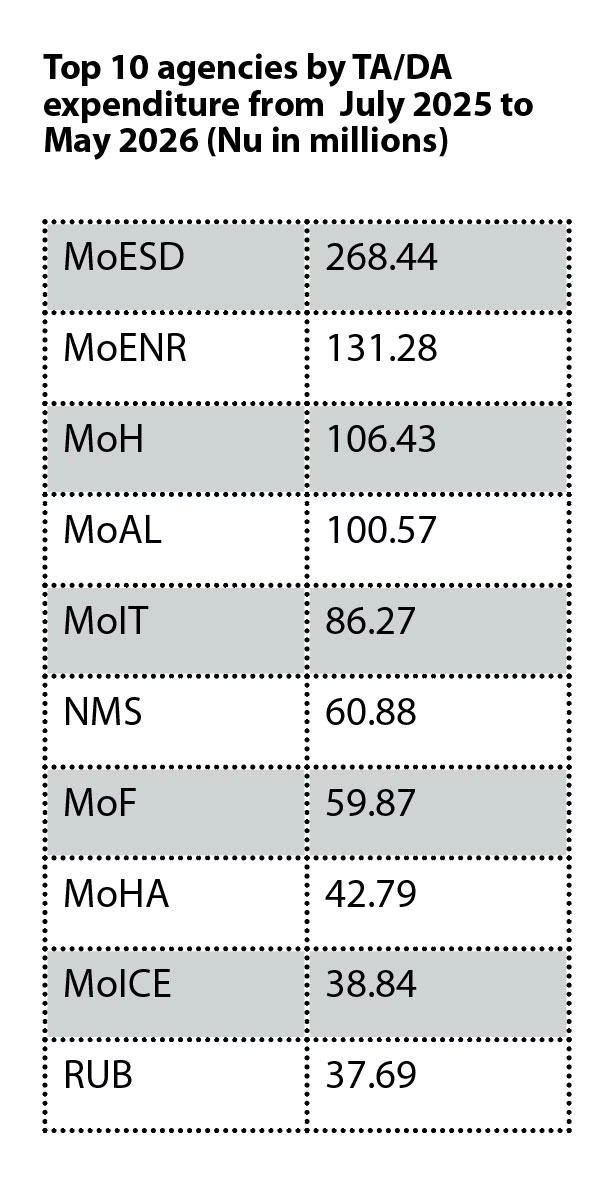
The fiscal impact of these practices is significant. From March to May 2026, travel expenditures surged by Nu 304 million, reaching a staggering Nu 1.413 billion. The central ministries, notably the Ministry of Education and Skills Development, accounted for a major portion of this expenditure.
A Call for Change 🔄
In response to these challenges, the Bhutanese government has initiated a series of reforms. An executive order issued in March 2026 aims to curb non-essential travel and promote remote operations. Finance Secretary Leki Wangmo has called for a rigorous review of travel practices, emphasizing the need to align them with organizational priorities.
The Bigger Picture 🌏
Bhutan's situation is not unique. Globally, governments are grappling with similar issues of balancing essential travel with efficient service delivery. For instance, Singapore is often lauded for its lean governance model, with a civil servant-to-population ratio of 1:71. In comparison, Bhutan's ratio stands at 1:24, hinting at a potential area for optimization.
Comparative Statistics:
- Civil servant growth: Increased from 29,723 in 2024 to 30,159 in 2025.
- Service delivery ratio: Improved but still challenged by inefficiencies.
Future Prospects and Recommendations 📈
Looking ahead, Bhutan aims to integrate more digital solutions and adopt best practices from countries like Singapore to enhance public service efficiency. Key recommendations include:
- Increasing accountability: Officials should be evaluated based on service outcomes rather than meeting attendance.
- Embracing technology: Digital platforms can reduce the need for physical presence, thereby cutting down on travel.
- Fostering a results-oriented culture: Emphasizing results over processes to improve public satisfaction.
Conclusion: A Path Forward 🚀
The path to improved public service delivery in Bhutan lies in minimizing unnecessary meetings and travel, thereby allowing officials to focus on their primary duties. By adopting a more disciplined and technology-driven approach, Bhutan can enhance its service delivery framework, ultimately benefiting its citizens and setting a benchmark in efficient governance.
The journey towards efficiency is both a challenge and an opportunity for Bhutan. By embracing change and learning from global leaders, Bhutan can redefine its public service landscape, ensuring that its citizens receive the timely and effective services they deserve.
You May Also Like
News
Women Entrepreneurs Master AI and Digital Tools in Phuentsholing
September 1, 2026

News
Can Samtse Keep Up With Its Growing Workforce?
August 29, 2026

News
Nepal Flood Exposes Critical Gaps in Bhutan's Early Warning Systems
August 29, 2026
News
High Court Overturns Acquittal: Doctor Sentenced to 10 Years for Child Sexual Abuse
August 29, 2026