Category:
EconomyMatsutake Mushroom Supply Crisis in Genye
🍄 The Growing Gap Between Demand and Supply
Bhutan's matsutake mushrooms have become increasingly coveted in international markets, particularly in Japan where they command premium prices as a luxury delicacy. Yet despite this burgeoning global interest, producers face a critical challenge: the supply simply cannot keep pace with rising demand. In Genye Gewog, located in Thimphu, this supply-demand imbalance has become a defining economic issue, affecting everything from local livelihoods to the sustainability of forest ecosystems.
The matsutake trade represents a unique opportunity for Bhutan's rural communities, offering seasonal employment and income generation. However, as exporters scramble to fulfill international orders, questions about long-term sustainability and resource management have emerged. Understanding this complex situation reveals important insights into Bhutan's emerging agricultural export sector and the delicate balance between economic growth and environmental stewardship.
📊 Understanding the Market Dynamics
The Japanese Connection
Japan's appetite for matsutake mushrooms remains unquenched, with Japanese companies actively seeking reliable suppliers. The matsutake market in Japan reflects deeper cultural preferences—these mushrooms have been prized for centuries in Japanese cuisine, commanding prices that sometimes exceed $100 per kilogram in premium markets.
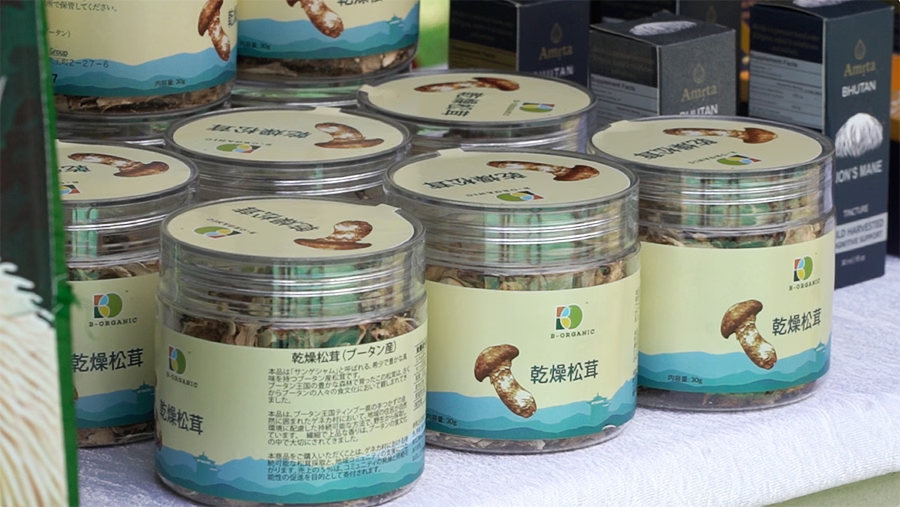
For Bhutanese exporters, this Japanese demand represents enormous commercial potential. However, the reality of fulfilling these orders tells a different story. Take Padma Gourmet and Foods, one of the primary matsutake exporters operating in Genye. Their Japanese clients require approximately 8 metric tonnes annually, yet the company has managed to export only 3.5 to 4 metric tonnes each year—a shortfall of approximately 50-56%.
The Order Size Challenge
Japanese companies typically place orders in bulk quantities, requesting 400 to 500 kilograms per shipment. This wholesale approach reflects the scale at which Japanese distributors and retailers operate. Unfortunately, Bhutan's current matsutake production infrastructure cannot reliably fulfill these large orders, forcing exporters to disappoint clients or negotiate smaller quantities—neither scenario is ideal for building long-term commercial relationships.
🌲 Geographic Limitations and Sourcing Challenges
While Genye remains the primary matsutake collection hub, these prized mushrooms also grow in other regions including Ura in Bumthang and Haa. However, geographic distribution creates significant logistical obstacles. The long distances between collection sites and processing facilities in Genye make commercial sourcing from distant regions impractical.
Transporting perishable mushrooms over Bhutan's mountainous terrain requires careful handling and rapid processing. Mushrooms collected in Bumthang, for instance, face degradation risks during the multi-day journey to Genye. This geographic constraint effectively limits exporters to local Genye supplies, further restricting their ability to meet international demand.
📈 The Exporter Boom and Market Expansion
Interestingly, the matsutake sector has attracted growing entrepreneurial interest. The number of exporters operating in Genye has surged from just three in the previous year to seven in the current year—a 133% increase. This expansion suggests confidence in the market's potential and recognition of matsutake's export viability.
However, more exporters competing for limited supplies creates additional pressure on already strained resources. This competitive dynamic, while potentially beneficial for innovation and quality improvements, also intensifies the urgency around supply constraints.
💰 Economic Impact on Local Communities
Seasonal Income Generation
For Genye's local collectors, matsutake harvesting provides crucial seasonal income. During collection seasons, individual harvesters can earn between 100,000 and 300,000 Bhutanese Ngultrum—a significant amount for rural households. For context, this represents several months of income in a single season, making matsutake collection an essential economic activity for many families.
The mushroom trade has essentially created a valuable seasonal employment opportunity that requires minimal capital investment and leverages existing forest resources. This income stream has become integral to rural household economics in Genye.
Production Trends and Concerns
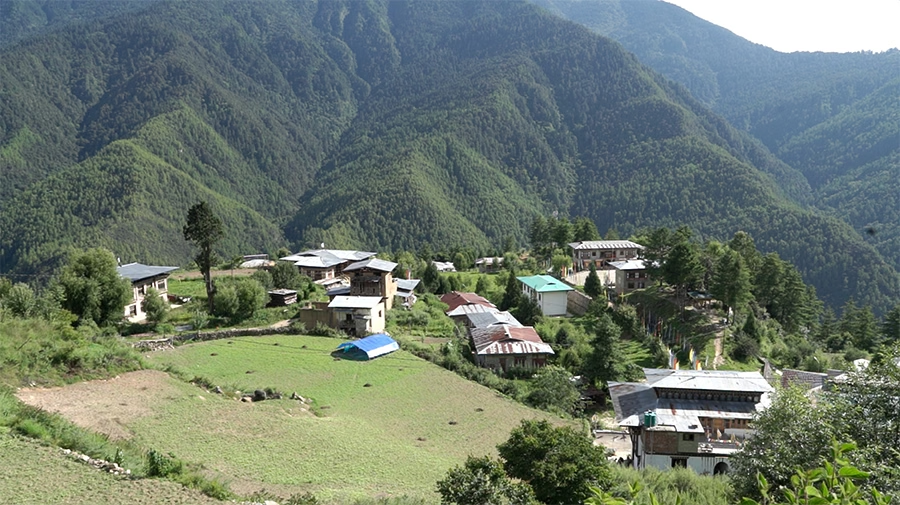
Despite growing market demand, matsutake production has shown troubling trends. According to Genye's gewog forestry office, collectors harvested approximately 7,500 kilograms in 2024 and nearly 7,000 kilograms in the previous year. While these figures represent significant volumes, they reflect relative stagnation rather than growth—production has essentially plateaued despite increased collector participation and market demand.
This disconnect between rising interest and flat production volumes suggests underlying resource constraints or environmental factors limiting mushroom proliferation. Local collectors themselves report long-term production declines, indicating this isn't merely a short-term fluctuation but potentially a structural challenge.
🌍 Climate Change and Ecosystem Concerns
Oak Forest Dependencies
Matsutake mushrooms in Genye grow predominantly in areas where oak trees flourish. This ecological relationship creates a critical vulnerability: any threat to oak forest health directly threatens matsutake production. Forestry officials have identified climate change as a potential risk factor, though direct causal links remain unproven due to limited research.
Temperature increases and shifting vegetation patterns could theoretically reduce oak tree viability in Genye's elevation zones, subsequently diminishing matsutake habitat. As one Range Officer noted, if temperatures rise sufficiently to stress oak trees, matsutake production could decline proportionally. Currently, this remains a concern based on ecological logic rather than empirical data.
Harvesting Pressures and Environmental Damage
The increased number of collectors has introduced new environmental pressures. Some harvesters damage collection sites and soil structure during mushroom extraction. Others cut trees or engage in practices that degrade the forest ecosystem supporting matsutake growth. These activities, while often unintentional or driven by economic necessity, undermine the long-term productivity of mushroom-growing areas.
Forestry officials emphasize that sustainable harvesting practices are essential. Collectors who damage soil structure, remove vegetation indiscriminately, or fell trees compromise future production capacity. The challenge lies in balancing immediate income needs with long-term resource sustainability.
🛡️ Conservation and Sustainability Initiatives
Forest Management Strategies
Recognizing these challenges, forestry authorities have implemented protective measures. The National Mushroom Centre provides training to collectors on sustainable harvesting techniques. Forestry officials work to prevent indiscriminate tree cutting and educate collectors about forest conservation.
Before each collection season, community meetings reinforce sustainability principles and collection guidelines. These proactive measures aim to preserve mushroom-growing areas while supporting collector livelihoods. However, enforcement and compliance remain ongoing challenges in remote forest areas.
The Path Forward
Genye now faces a nuanced challenge: expanding economic benefits from matsutake while protecting the forest resources that enable this trade. This requires balancing several competing interests:
- Economic growth through increased exports and collector income
- Environmental protection of oak forests and mushroom habitats
- Sustainable harvesting practices that maintain long-term productivity
- Infrastructure development to process and transport mushrooms efficiently
- Research initiatives to understand climate impacts and optimize production
🎯 Key Takeaways and Future Outlook
The matsutake situation in Genye exemplifies broader tensions in emerging agricultural export sectors. Strong international demand creates genuine economic opportunities for rural communities, yet resource constraints and environmental concerns complicate expansion. The current supply-demand gap—with exporters fulfilling only 40-50% of international orders—suggests significant untapped economic potential.
Addressing this challenge requires multifaceted approaches: investment in sustainable production techniques, research into climate resilience, infrastructure improvements for logistics, and perhaps most importantly, community engagement in conservation efforts. The matsutake trade can provide sustainable livelihoods for generations, but only if current production is protected and thoughtfully expanded.
As Bhutan positions itself within global agricultural markets, the matsutake sector offers valuable lessons about balancing economic ambition with environmental stewardship. The coming years will determine whether Genye can increase supply to meet Japanese demand while preserving the forest ecosystems that make this trade possible.
You May Also Like
Economy
Bhutan's Bold Vision: Two USD 50M Enterprises by 2030
September 27, 2026
Economy
Mega Dry Port in Pasakha: Bhutan's Trade Revolution
September 25, 2026
Economy
Fixed Deposit Tax Withholding: What You Need to Know
September 13, 2026
Economy
DRC's QR Payment Innovation: Tracking Business Income
September 2, 2026