Category:
NewsMany Hands, One Purpose: Gelephu's Massive Volunteer Movement
A Nation United in Service 🇧🇹
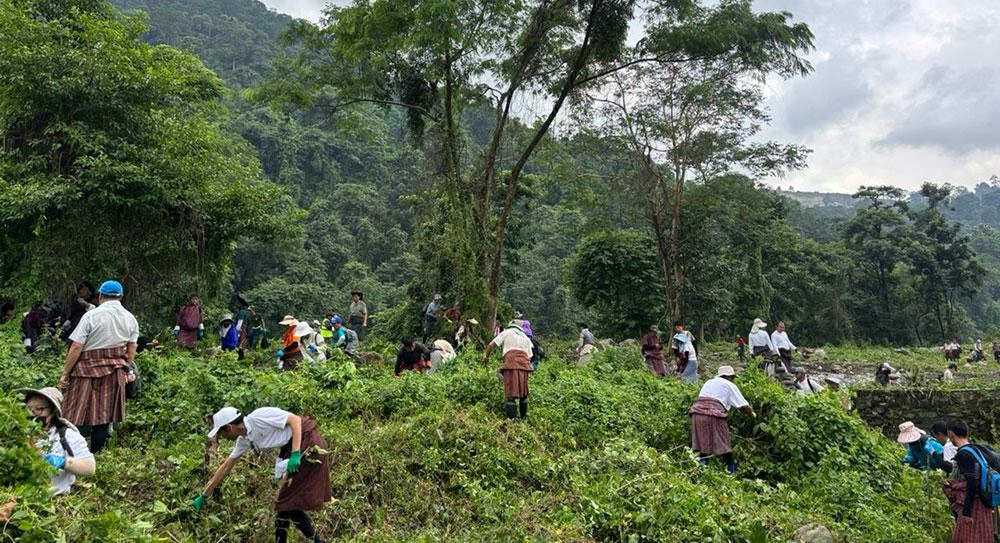
When 3,000 volunteers from every corner of Bhutan converged on Gelephu Public Ground, they weren't just showing up for another community service day. They were answering a deeper call—a commitment to transform their nation's newest city into a thriving, well-maintained public space. This remarkable gathering represents far more than manual labor; it embodies the Bhutanese spirit of collective responsibility and the principle of serving the nation with genuine devotion.
The Gelephu Mindfulness City (GMC) volunteer programme has become a defining feature of the city's development strategy. Now in its seventh iteration, this initiative demonstrates how a shared vision can mobilize thousands across geographical, professional, and generational boundaries to accomplish meaningful work together.
The Seventh Wave: Building Community Through Action ✨
The morning sun illuminated Gelephu Public Ground as volunteers assembled, their energy palpable despite the intense heat. By the time groups dispersed to their designated worksites, the air resonated with singing—a spontaneous expression of unity and purpose that would characterize the entire three-day initiative.
What makes this volunteer programme particularly remarkable is its inclusivity. Farmers, government staff, corporate employees, retirees, and professionals from every sector answered the call. Some participants were joining for the first time, while others had become fixtures at every GMC volunteer event, demonstrating unwavering commitment to Gelephu's development.
The diversity of participants reflects a broader trend in Bhutan's approach to national development—one that emphasizes collective participation over top-down mandates. This grassroots engagement model has proven instrumental in building social cohesion while simultaneously advancing infrastructure and environmental goals.
Stories of Dedication: Commitment Across Generations 💪
At 71 years old, Sangay Tshering embodies the spirit driving this movement. A retired Royal Bhutan Army laboratory technician and Gelephu resident, Sangay Tshering has participated in every single GMC volunteer programme since its inception. His motivation is straightforward yet profound: whenever there's an opportunity to serve the King, Country, and People, he considers it non-negotiable.
"Although I have superannuated, every time I get an opportunity to serve The King, Country, and People, I am going to take it," he explained, his pension a reminder of the country's investment in him and his determination to reciprocate that investment through continued service.
Tenzin Dema's participation tells a different but equally compelling story. The 65-year-old from Phuentsholing faces health challenges that limit her physical capacity, yet she refuses to let circumstance diminish her commitment to service. Traveling to Gelephu for medical check-ups, she previously joined volunteer groups whenever her visits aligned with GMC programmes. This year, she formally registered through the Bhutan Red Cross Society (BRCS), ensuring she wouldn't miss the opportunity.
Working at her own pace at the 108 Chortens site, Tenzin Dema would walk slowly, rest when needed, and return to clearing grass. Her presence represented a crucial lesson: service isn't measured by physical output alone, but by the willingness to contribute within one's capacity. Being assigned to the Project 108 site held special significance for her, adding spiritual and emotional meaning to her volunteer work.
Beyond the Worksites: Unsung Heroes Behind the Scenes 🚕
While thousands labored in the sun clearing vegetation and improving public spaces, another group of volunteers operated quietly but essentially behind the wheel. About 50 taxi operators from the Bhutan Taxi Association provided free transportation throughout the programme, ensuring volunteers could reach their worksites without financial burden.
Choku Dorji has offered his services during every volunteer programme, sacrificing approximately Nu 2,500 in daily earnings for each day of service. When asked why he makes this choice, his response cuts to the heart of the GMC philosophy: "How long are we going to run after money? Giving a few days for others from a selfless heart, for this big cause, means a lot."
This perspective reflects a cultural shift in Bhutan's development narrative—one that prioritizes collective wellbeing and long-term national vision over short-term individual gain. The taxi operators' contribution demonstrates that volunteering extends far beyond physical labor; it encompasses logistical support, resource sharing, and the willingness to temporarily set aside personal economic interests for communal benefit.
Journeys of Commitment: When Distance Is No Obstacle 🌄
Some volunteers traveled considerable distances to participate. Sonam Samten, a ranger with Sakteng Wildlife Sanctuary, and three colleagues made a last-minute decision to join the programme, departing Sakteng at 4:30 AM and arriving in Gelephu at 9 PM—a grueling journey that could have easily discouraged participation.
They had attempted to join earlier GMC volunteer programmes without success. This time, despite the logistical challenges and minimal preparation time, they were determined not to miss the opportunity. Their journey underscores a critical insight: genuine commitment transcends convenience, and the most meaningful contributions often require sacrifice.
These foresters brought specialized expertise alongside their willing hands. Working alongside colleagues from Sarpang, they helped other volunteers identify invasive plants and distinguish vegetation requiring removal from trees and plants worth preserving. This integration of professional knowledge with community service exemplifies how GMC programmes leverage diverse skill sets for maximum impact.
The Work: Transforming Gelephu's Public Spaces 🌱
The seventh volunteer programme focused on multiple strategic locations across Gelephu. Work sites included the 108 Chortens site, Gelephu Old Town, the existing airport road, and various other locations throughout the developing city. Activities encompassed landscaping, clearing and leveling road shoulders, general cleaning, and the careful removal of invasive species while preserving existing trees—particularly fruit-bearing varieties that would benefit the community long-term.
This approach to environmental stewardship reflects sophisticated urban planning principles. Rather than simply clearing land, volunteers engaged in selective vegetation management that balances development with ecological preservation. The retention of fruit-bearing trees, for instance, ensures that Gelephu's public spaces will provide tangible benefits to residents for years to come.
Neither extreme heat nor unexpected rainfall dampened volunteer enthusiasm. Each participant found ways to contribute according to their individual strength and circumstances, demonstrating the programme's flexibility and inclusive design.
Living and Working Together: Building Social Cohesion 🤝
The volunteer programme's impact extended far beyond the physical transformation of Gelephu's public spaces. In guest houses and gewog halls, volunteers from different regions, professions, and backgrounds cooked meals together, slept side by side on floors, and exchanged stories after each day's work.
These shared living arrangements created organic opportunities for relationship-building and cultural exchange. People who arrived as strangers found common ground through the simple routines of living and working together. This social dimension of the GMC volunteer programme addresses a critical need in modern Bhutanese society—maintaining social cohesion and national unity amid rapid development and urbanization.
The programme's conclusion on August 30 with atokha—a traditional Bhutanese celebration—provided the perfect capstone to three days of collective effort, allowing volunteers to reflect on their contributions and celebrate their shared accomplishment.
A Model for National Development 🏗️
The GMC volunteer programme represents a distinctive approach to urban development that prioritizes community participation over external contractors. This model offers several advantages: it builds social capital, distributes development costs across a willing population, and ensures that citizens maintain psychological and emotional investment in their nation's growth.
As Bhutan continues its development trajectory, the success of initiatives like GMC's volunteer programme provides valuable lessons for other emerging cities and development projects. The programme demonstrates that when citizens understand their role in nation-building and feel genuinely valued, participation becomes not an obligation but an honor.
Looking Forward: Sustaining the Momentum 🌟
With nearly 3,000 volunteers contributing three days of labor, the seventh GMC volunteer programme represents an enormous investment of human capital in Gelephu's future. The consistency of participation across seven iterations suggests that this model has achieved genuine cultural resonance—it's not simply a government initiative but a community movement.
As Gelephu continues its transformation from concept to thriving city, the volunteer programmes will likely remain central to its identity. Each iteration builds not just physical infrastructure but also the social fabric that will sustain the city for generations to come. The message is clear: Gelephu isn't being built for the people—it's being built by the people, with many hands united in one purpose.
You May Also Like
News
Women Entrepreneurs Master AI and Digital Tools in Phuentsholing
September 1, 2026
News
Can Samtse Keep Up With Its Growing Workforce?
August 29, 2026
News
Nepal Flood Exposes Critical Gaps in Bhutan's Early Warning Systems
August 29, 2026
News
High Court Overturns Acquittal: Doctor Sentenced to 10 Years for Child Sexual Abuse
August 29, 2026