Category:
NewsLowest Bid System Pressures Public Works Quality
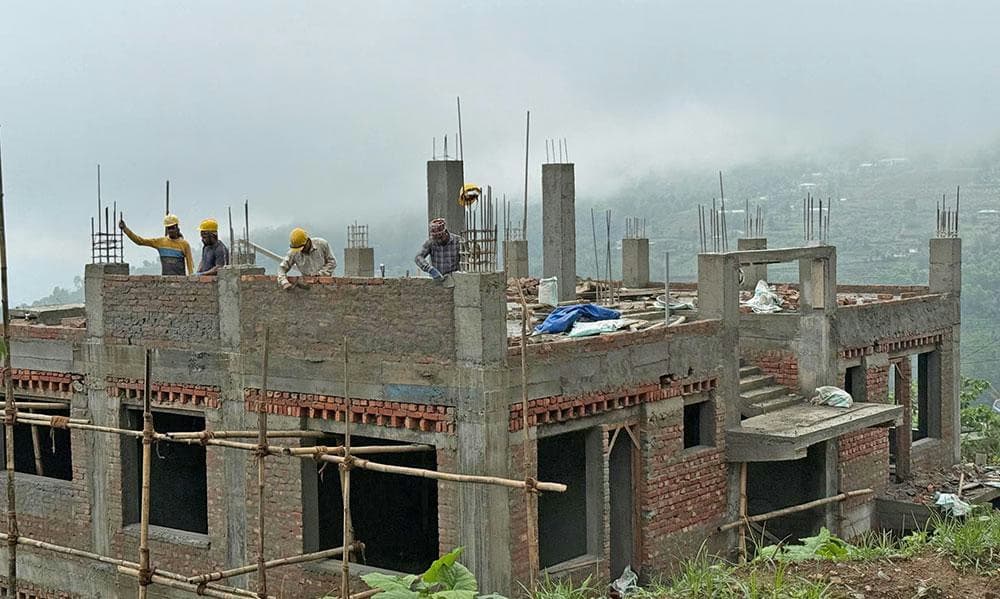
The Hidden Cost of Choosing the Cheapest Option 💰
Bhutan's public infrastructure projects face a critical challenge that extends far beyond initial budget discussions. The widespread reliance on lowest bid procurement systems has created a paradox where selecting the cheapest contractor often results in the most expensive long-term outcomes for taxpayers and communities.
When government agencies prioritize the lowest price above all other considerations, they inadvertently set the stage for construction delays, quality deterioration, and premature maintenance cycles that drain public finances far beyond the original contract value.
Understanding the Lowest Bid Dilemma 🏗️
Competitive bidding exists for sound reasons. The system theoretically ensures transparency, prevents favoritism, and guarantees responsible stewardship of public funds. However, the current implementation of lowest bid selection in Bhutan's procurement framework has created unintended consequences that undermine these noble objectives.
The fundamental problem lies in a flawed assumption: that the lowest price automatically represents the best value for public investment. Contractors operating in Bhutan's construction market increasingly face an impossible choice—quote realistic prices based on actual material, labor, and equipment costs, or submit artificially low bids to remain competitive.
"When the initial contract price is set too low, maintaining construction quality becomes extraordinarily challenging," explains industry professionals familiar with Bhutan's public works sector. The mathematics are simple but damaging: contractors cannot deliver quality work at prices that don't reflect reality.
The Race to the Bottom ⬇️
Bhutan's construction industry has witnessed a troubling trend where firms compete primarily on price rather than capability or quality track records. A contractor that calculates genuine project costs—accounting for imported materials, skilled labor, machinery rental, transportation, and contingencies—frequently loses tenders to competitors willing to bid significantly below market rates.
This creates a perverse incentive structure. Winning government contracts becomes less about demonstrating competence and more about quoting the lowest possible figure, regardless of feasibility.
The Contractor's Dilemma
Once awarded an underpriced contract, construction firms face three problematic options:
- Absorb losses and operate at a financial deficit, potentially jeopardizing company stability
- Cut corners on materials, labor quality, or workmanship to recover losses during implementation
- Extend timelines beyond scheduled completion, causing project delays and community frustration
Each option carries consequences that ultimately harm public infrastructure quality and government finances.
Quality Compromises and Long-Term Costs 📉
A construction project that appears inexpensive at contract award frequently becomes prohibitively expensive when poor workmanship necessitates repairs, corrections, and premature maintenance interventions.
The true cost of infrastructure extends far beyond initial construction. When roads crack prematurely, drainage systems fail, or building materials deteriorate ahead of schedule, governments must allocate additional emergency funding for remedial work. These unplanned expenditures often exceed what would have been invested in quality construction from the beginning.
Hidden Expenses Include:
- Structural repairs addressing workmanship defects
- Maintenance cycles beginning years earlier than designed
- Project delays causing economic disruption to communities
- Contractor disputes over contract interpretation and payment disagreements
- Supervision costs increasing as quality issues require intensive monitoring
The Project Estimation Problem 📊
Weaknesses in public works procurement often originate before bidding even begins. If initial project estimates fail to reflect current market prices, local construction conditions, resource availability, and inflation factors, contractors face an impossible starting position.
When estimates disconnect from reality, contractors must choose between two equally undesirable paths: price according to actual costs and likely lose the tender, or price according to unrealistic estimates and face financial hardship during implementation.
Accurate project estimation requires:
- Current market research on material prices
- Assessment of local labor availability and wage rates
- Understanding of site-specific challenges and conditions
- Realistic equipment and machinery rental costs
- Transportation and logistics considerations
- Contingency provisions for unforeseen circumstances
The Local Products Conundrum 🏭
Bhutan's Procurement Rules and Regulations 2025 include provisions favoring locally manufactured products, designed to support domestic industries and retain government spending within the national economy. However, implementation reveals significant gaps between policy intention and actual practice.
Local manufacturers report a troubling pattern: contractors commit to using domestic products during the bidding phase to secure contracts, then substitute cheaper imported alternatives during project implementation. This bait-and-switch approach undermines domestic industries that have invested in capacity expansion and quality improvements based on anticipated government demand.
When contractors can replace approved local materials without consequences, the preference policy becomes merely a tendering formality rather than a binding contractual obligation. Domestic producers—who may have invested substantial capital in production facilities—lose expected market opportunities to cheaper foreign suppliers.
Supply Chain Disruptions and Payment Delays ⏰
Procurement problems extend well beyond the bidding phase into contract management and implementation. Businesses supplying goods and services to government agencies frequently encounter delays in receiving purchase orders that exceed the prescribed five-day processing period.
Suppliers report additional complications:
- Verbal cancellations without written documentation
- Lengthy approval chains spanning multiple government levels
- Uncertain timelines creating cash flow challenges
- Financial losses when materials are purchased before order confirmation
- Transportation costs incurred for orders subsequently cancelled
These delays can devastate small suppliers who arrange financing based on anticipated government payments. When orders are cancelled verbally or indefinitely postponed, suppliers absorb losses after committing resources and capital.
Evaluating True Value Beyond Price 🎯
A more sophisticated public works procurement approach would evaluate contractors based on comprehensive criteria extending far beyond lowest price. Effective evaluation should consider:
Critical Assessment Factors
Technical Capacity: Does the contractor possess equipment, expertise, and proven methodologies to execute the project successfully?
Financial Strength: Can the contractor sustain operations if the bid price proves insufficient, or will financial stress force quality compromises?
Performance History: What do past projects reveal about the contractor's reliability, quality standards, and ability to meet deadlines?
Construction Methods: Are proposed techniques appropriate for Bhutan's climate, terrain, and material availability?
Bid Realism: Does the quoted price logically align with project scope, or does it suggest underestimation or financial desperation?
Project Completion Probability: Based on contractor resources and bid price, what is the realistic likelihood of timely, quality completion?
Abnormally Low Bids: Red Flags Ignored 🚩
When contract bids fall substantially below project estimates, procurement officials should view these submissions as warning signals rather than financial windfalls. Abnormally low bids typically indicate one of several problems:
- Scope misunderstanding: The contractor may have fundamentally misunderstood project requirements
- Cost underestimation: Essential expenses were overlooked in bid calculations
- Financial desperation: The contractor may be pursuing any work regardless of profitability
- Implementation cost-cutting: The contractor anticipates recovering losses through inferior materials or labor
When procurement systems fail to adequately assess these risks before contract award, consequences shift from the contractor to the public project and ultimately to government finances and community infrastructure quality.
Contract Management Weaknesses 🔍
Bhutan's procurement challenges represent not merely tendering problems but also contract management failures. A system that rigorously scrutinizes contractors during selection but weakly monitors performance after award cannot effectively protect public investment.
Robust contract management requires:
- Regular site inspections verifying material quality and workmanship standards
- Documented approval processes for material substitutions
- Progress monitoring ensuring adherence to timelines and specifications
- Quality testing confirming that completed work meets design standards
- Financial controls preventing unauthorized cost overruns or payment irregularities
The Path Forward: Procurement Reform 🛤️
Addressing these systemic challenges requires comprehensive procurement reform aligned with construction realities and long-term public value considerations. Bhutan's government agencies, contractors, and suppliers must collaborate to establish procurement frameworks that balance cost consciousness with quality assurance.
Recommended Improvements
Enhance Project Estimation: Invest in accurate, market-based project cost analysis reflecting current material prices and local construction conditions.
Implement Value-Based Selection: Evaluate contractors on comprehensive criteria including technical capacity, financial strength, and performance history—not price alone.
Strengthen Local Product Enforcement: Establish monitoring mechanisms ensuring contractors honor commitments to use locally manufactured materials throughout implementation.
Streamline Supply Processes: Reduce approval delays and establish clear, written procedures for order cancellations protecting supplier financial interests.
Improve Contract Monitoring: Deploy adequate supervision resources ensuring quality standards and timeline adherence throughout project execution.
Assess Abnormally Low Bids: Develop protocols requiring detailed analysis of bids substantially below estimates before contract award.
Industry Perspectives and Stakeholder Concerns 💬
Construction professionals, local manufacturers, and government suppliers increasingly voice concerns about procurement system sustainability. Industry stakeholders recognize that current approaches, while appearing fiscally conservative, ultimately generate greater expenses through quality compromises and infrastructure failures.
The construction sector's capacity to deliver quality infrastructure depends not merely on contractor competence but also on procurement frameworks that enable realistic pricing, appropriate material selection, and adequate supervision.
Conclusion: Investing in Long-Term Value 🌟
Bhutan stands at a critical juncture regarding public works procurement. The nation can continue prioritizing lowest-price selection, accepting inevitable quality compromises and long-term cost escalation. Alternatively, policymakers can implement comprehensive procurement reforms emphasizing genuine value creation and sustainable infrastructure development.
The lowest bid may appear economical during budget planning, but premature maintenance, project delays, and infrastructure failures reveal the true cost of this approach. By aligning procurement practices with construction realities, Bhutan can ensure that public investment generates lasting value for communities and taxpayers.
Meaningful reform requires political will, stakeholder collaboration, and commitment to evaluating infrastructure investments through a long-term perspective. The choices made today regarding procurement frameworks will determine whether Bhutan's public works serve communities reliably for decades or require costly interventions within years of completion.
The path to sustainable public infrastructure begins with procurement systems that recognize quality and capacity as essential value components—not unfortunate expenses to be minimized.
You May Also Like
News
Women Entrepreneurs Master AI and Digital Tools in Phuentsholing
September 1, 2026

News
Can Samtse Keep Up With Its Growing Workforce?
August 29, 2026
News
Nepal Flood Exposes Critical Gaps in Bhutan's Early Warning Systems
August 29, 2026
News
High Court Overturns Acquittal: Doctor Sentenced to 10 Years for Child Sexual Abuse
August 29, 2026