Category:
NewsHis Majesty's Historic Address at 108 Stupas Raising
A Momentous Celebration of Bhutanese Spirit and Heritage 🏔️
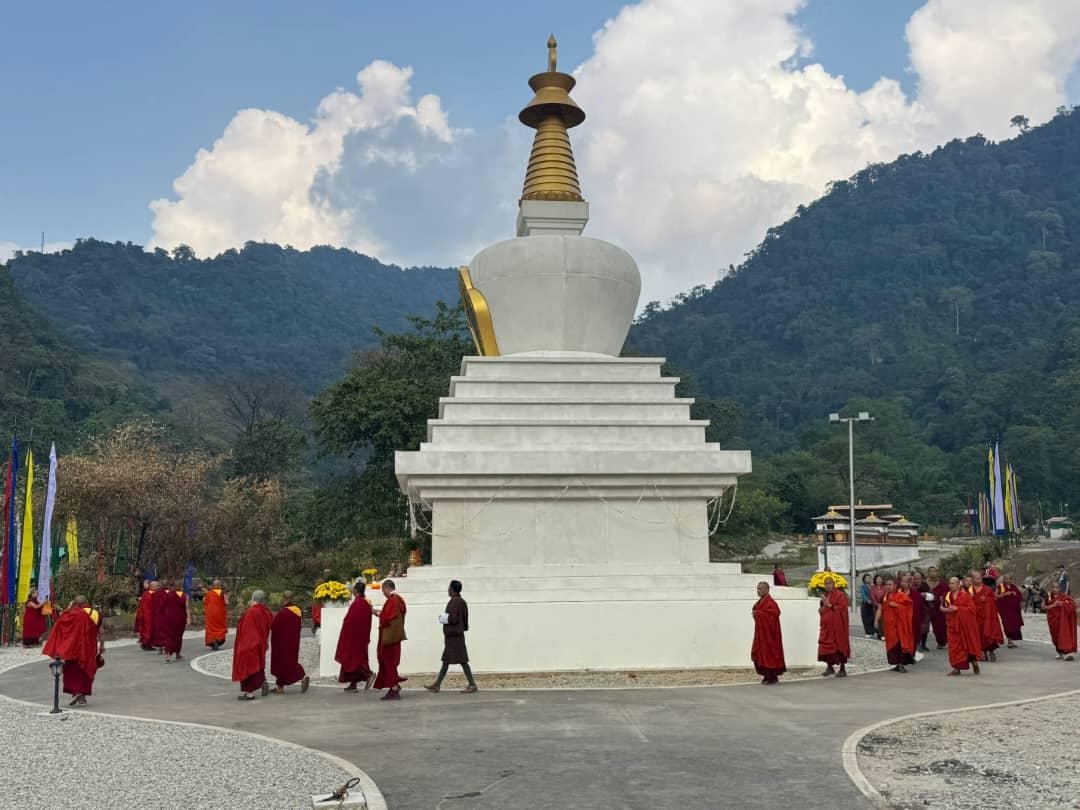
On an auspicious day marked by profound spiritual significance, Bhutan witnessed an extraordinary gathering that transcended the mere construction of religious monuments. The raising of 108 stupas at Gelephu Mindfulness City represented far more than an architectural achievement—it embodied the collective consciousness of a nation devoted to preserving its unique cultural identity while embracing its future.
The event drew international attention, with dignitaries from neighboring nations and spiritual leaders converging to witness what many observers described as a defining moment for the kingdom. The simultaneous construction and consecration of these 108 sacred structures within a compressed timeframe demonstrated the remarkable coordination and dedication that characterizes Bhutanese society.
The Spiritual Foundation: Twelve Centuries of Buddhist Custodianship 🙏
Bhutan's relationship with Buddhism extends far beyond religious observance. When Guru Rinpoche arrived in the 8th century, he introduced the Sangngag Dorje Thekpa—Vajrayana Buddhism—which took root so deeply that it fundamentally shaped the nation's character and governance.
For more than 1,200 years, successive generations of Bhutanese have served as custodians of this sacred tradition, transmitting its teachings and values intact through centuries of change. This unbroken lineage distinguishes Bhutan among Buddhist nations and provides the philosophical framework that guides national policy and personal conduct alike.
The number 108 itself carries profound significance in Buddhist tradition, representing the 108 worldly desires that must be transcended to achieve enlightenment. This symbolism resonated deeply throughout the ceremony, connecting the physical act of construction to timeless spiritual principles.
From Zhabdrung to Modern Vision: Continuity and Progress 🌟
Bhutan's political evolution traces back to Ngawang Namgyal, known as the Zhabdrung, who unified the fragmented principalities and established the foundational principles that continue to guide the nation today. His legacy encompasses not only territorial sovereignty but also the introduction of the dual system of governance—the Chhoesi Nyi—that balanced spiritual and temporal authority.
This historical framework proved essential in maintaining Bhutan's distinctive path even as globalization transformed neighboring regions. The nation's commitment to Gross National Happiness over GDP, its environmental protections, and its measured approach to modernization all trace their philosophical roots to this early governance structure.
The Fourth King, Jigme Singye Wangchuck, inherited this legacy and transformed it for the contemporary era. His visionary leadership introduced democratic reforms, constitutional governance, and economic policies that preserved cultural integrity while enabling measured development. His contributions established the template that current leadership continues to refine.
The Gelephu Mindfulness City Initiative: Building the Future 🏗️
The stupas rising at Gelephu Mindfulness City represent more than religious monuments—they symbolize Bhutan's ambition to create a model urban center that harmonizes economic development with spiritual values. This ambitious project aims to attract international investment and talent while maintaining the nation's philosophical principles.
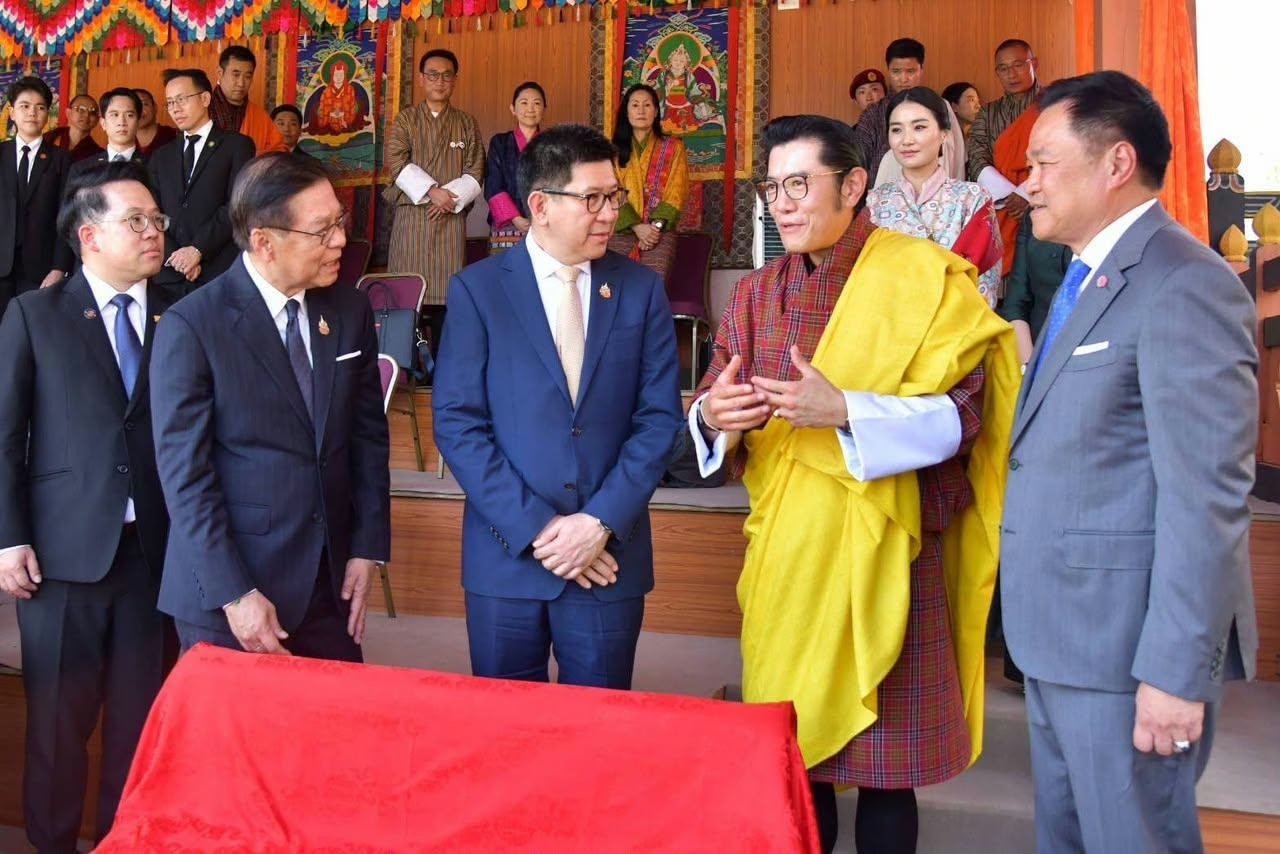
The presence of Prime Minister Anutin of Thailand and Union Minister Kiren Rijiju of India underscored the regional significance of this initiative. Thailand and Bhutan share deep Buddhist connections, while India remains Bhutan's closest strategic partner and largest trading relationship. Their participation validated the project's importance within South Asian geopolitical and cultural contexts.
Gelephu represents a calculated experiment in sustainable urbanism. Rather than replicating the high-density, consumption-driven models that characterize most Asian cities, the project seeks to demonstrate that economic vitality and cultural preservation can coexist. The mindfulness framework embedded in its planning reflects Bhutan's conviction that urban design should support psychological wellbeing alongside material prosperity.
The True Victory: Unity and National Character 💪
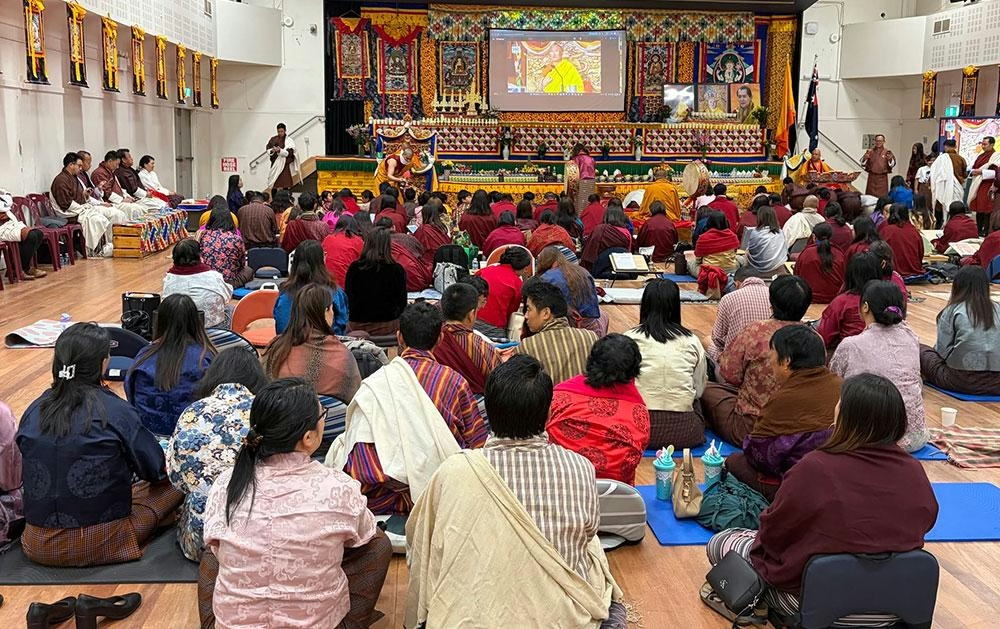
The most striking aspect of His Majesty's address focused not on the architectural accomplishment but on what the event revealed about Bhutanese society itself. The rapid mobilization of citizens from every demographic and professional background—coming together voluntarily to contribute their labor and expertise—demonstrated the social cohesion that distinguishes Bhutan from many developing nations.
This collective action reflected several interconnected factors:
- Shared National Identity: Decades of conscious cultural preservation have created a strong sense of "Bhutaneseness" that transcends regional, class, and generational divisions
- Religious Commitment: The spiritual significance of the project tapped into genuine devotion that motivated participation beyond economic incentives
- Institutional Trust: Citizens' confidence in government leadership and national institutions facilitated voluntary cooperation
- Community Values: Traditional concepts of mutual aid and collective responsibility remain embedded in social practice
This unity proved more valuable than the physical structures themselves. In an era when many nations struggle with polarization and social fragmentation, Bhutan's demonstrated capacity for collective action represented a competitive advantage in addressing future challenges.
Resilience Through Continuity: Addressing Future Challenges 🛡️
The address articulated a sophisticated understanding of national vulnerability and resilience. Bhutan, as a small nation with limited resources, faces genuine risks from natural disasters, economic volatility, and global pandemics. Yet the nation's historical experience suggested that maintaining cultural coherence provided the strongest foundation for weathering such crises.
This perspective departed from conventional development theory, which typically emphasizes infrastructure investment, technological advancement, and economic diversification as primary resilience factors. While Bhutan pursues these objectives, the emphasis on preserving values and social unity reflected a belief that immaterial factors—shared purpose, mutual trust, spiritual grounding—ultimately determine whether societies survive disruptions intact.
The nation's response to the COVID-19 pandemic had already validated this approach. Through a combination of strict public health measures, transparent communication, and social solidarity, Bhutan achieved among the world's lowest infection rates while maintaining social cohesion. This success demonstrated that cultural values could enhance rather than hinder effective crisis management.
International Recognition and Soft Power 🌍
The international attendance at the stupa-raising ceremony reflected growing global interest in Bhutan's alternative development model. As questions mount about the sustainability of conventional growth-focused development, nations and observers worldwide increasingly look to Bhutan as a potential laboratory for different approaches.
The participation of Thai and Indian leadership signified regional validation of Bhutan's trajectory. Thailand, itself navigating tensions between modernization and tradition, found resonance in Bhutan's successful preservation of cultural identity amid change. India, as Bhutan's primary security guarantor and economic partner, demonstrated continued commitment to supporting the nation's development vision.
This international engagement enhanced Bhutan's soft power—the capacity to influence others through attraction rather than coercion. The nation's small military and limited economic resources mean that cultural influence and diplomatic relationships constitute primary tools of statecraft. The global fascination with Bhutanese values and governance models provided intangible assets that complemented traditional diplomatic channels.
The Significance of Lhabab Duchen: Spiritual Timing 📅
The timing of the ceremony on Lhabab Duchen—the day commemorating Buddha's descent from the celestial realm—carried profound symbolic weight. This sacred observance occurs once annually and marks one of Buddhism's most important festivals. Scheduling the stupa consecration on this auspicious date connected the contemporary project to timeless spiritual rhythms.
This choice reflected Bhutanese governance's integration of spiritual and practical considerations. Rather than viewing religious calendars as obstacles to development planning, the nation's leadership deliberately aligned major projects with sacred observances. This approach reinforced the philosophical coherence between national development and religious values.
Looking Forward: Sustaining the Bhutanese Model 🚀
As Bhutan advances Gelephu Mindfulness City and pursues economic development, the nation faces the perennial challenge of maintaining cultural distinctiveness while engaging global systems. The address articulated a determination to resist the homogenizing pressures of globalization without retreating into isolation.
The emphasis on "never changing" required careful interpretation. It did not suggest stagnation or rejection of beneficial innovations. Rather, it expressed commitment to preserving the philosophical and values-based foundation that makes Bhutan distinctive. Within this stable framework, the nation could adopt new technologies, expand economic opportunities, and evolve governance practices.
This balance proved exceptionally difficult to maintain. History demonstrated that nations attempting to preserve traditional values while modernizing often experienced internal tensions. Yet Bhutan's relative success in this endeavor offered valuable lessons for other societies navigating similar transitions.
Conclusion: A Nation's Reflection of Its People 🌈
The raising of 108 stupas at Gelephu represented a culminating moment in Bhutan's contemporary journey. The physical achievement—completing these structures within hours through coordinated national effort—demonstrated practical capability. But the deeper significance lay in what the event revealed about Bhutanese society: a nation whose strength derives from shared values, spiritual commitment, and collective purpose.
As the kingdom continues its measured development path, this event established a marker for future progress. The stupas would stand as permanent reminders that Bhutan's greatest asset remains its people—their unity, their devotion, and their determination to preserve what makes their nation unique. In an increasingly uncertain world, this foundation of cultural coherence and shared identity may ultimately prove more valuable than any economic indicator or infrastructure project.
The international guests who witnessed this ceremony carried with them a powerful message: that small nations guided by clear values and united in common purpose possess capabilities that transcend their apparent limitations. Bhutan's example suggests possibilities for how societies might develop differently—not by abandoning progress, but by ensuring that development serves human flourishing and cultural preservation alongside material advancement.