Category:
EnvironmentCOP17 Yerevan: Global Biodiversity Review Shapes Nature's Future
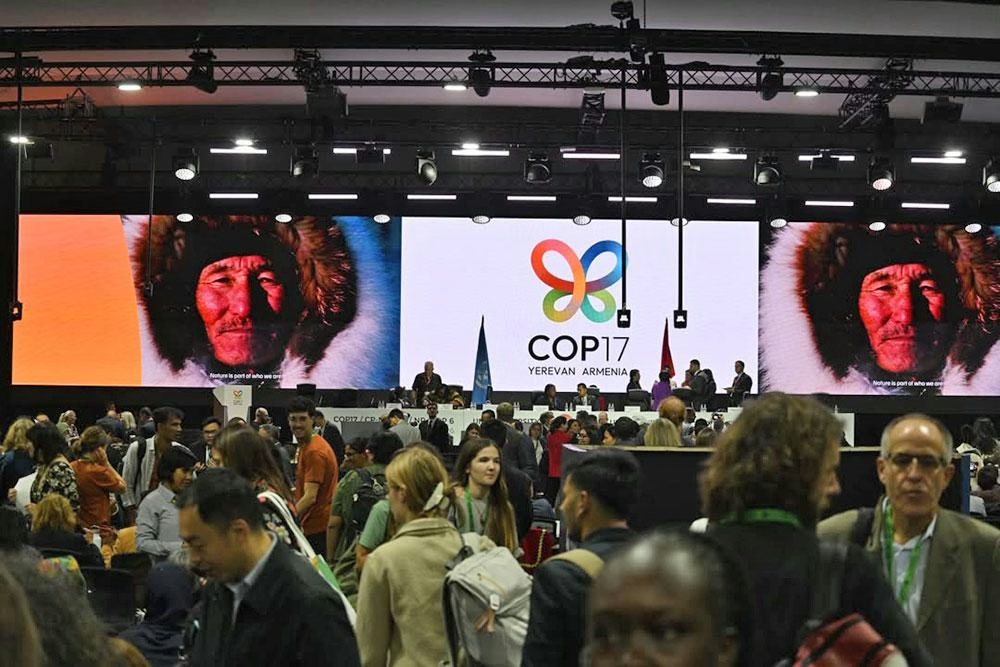
The World Convenes on Biodiversity: What COP17 Means for Global Conservation 🌍
When delegates gathered in Yerevan this October, they brought with them the weight of unprecedented environmental challenges and the promise of transformative action. The 17th Conference of the Parties to the Convention on Biological Diversity (COP17) represents far more than another international summit—it marks the first comprehensive global assessment of whether nations are genuinely delivering on their nature protection promises.
For countries like Bhutan, where ecological integrity is woven into the fabric of national identity and economic survival, these discussions carry profound implications. The decisions made in Armenia's capital will ripple across continents, influencing conservation strategies, funding mechanisms, and development policies for years to come.
Understanding COP17: A Historic Moment for Nature 🌿
The Convention on Biological Diversity: Three Decades of Global Commitment
The Convention on Biological Diversity emerged from the 1992 Rio Earth Summit as one of the world's most ambitious environmental agreements. This landmark treaty established three core objectives that continue to guide international conservation efforts: preserving Earth's biological diversity, ensuring the sustainable use of biological resources, and creating equitable mechanisms for sharing the benefits derived from genetic resources.
Bhutan recognized the convention's significance early, signing the agreement on June 11, 1992, and formally ratifying it just three years later on August 25, 1995. This commitment reflected the nation's deep understanding that ecological preservation and human prosperity are fundamentally interconnected.
Over three decades, the CBD has evolved into a framework encompassing not just protected areas but also addressing pollution, agricultural practices, wildlife trafficking, harmful subsidies, and conservation financing. Today, nearly every nation on Earth has adopted national biodiversity targets, yet the gap between commitment and implementation remains troublingly wide.
The Kunming-Montreal Framework: Ambitious Goals for 2030 and Beyond
In 2022, the international community took a significant step forward by adopting the Kunming-Montreal Global Biodiversity Framework (KMGBF). This comprehensive strategy establishes four long-term goals extending to 2050 and 23 specific targets to be achieved by 2030. COP17 represents the first opportunity for the global community to honestly assess progress toward these ambitious benchmarks.
The framework's most recognizable commitment is the "30 by 30" initiative, which aims to place under protection at least 30 percent of the world's terrestrial and inland aquatic ecosystems, alongside 30 percent of marine and coastal regions, by the end of this decade. Additionally, countries have pledged to restore at least 30 percent of degraded ecosystems, a monumental undertaking that extends conservation efforts far beyond simply designating protected zones.
The Implementation Reality: Where Commitments Meet Challenges 📊
A Sobering Assessment of Progress
The State of Biodiversity Action report, released ahead of COP17, painted a revealing picture of the global conservation landscape. While nearly 90 percent of countries have established national biodiversity targets—demonstrating unprecedented political will—fewer than half of these targets are considered genuinely on track for achievement.
This gap between ambition and execution reflects the complex reality of modern conservation. Protecting biodiversity requires sustained funding, technical expertise, institutional capacity, and political commitment that extends far beyond the lifespan of individual administrations. The transition from policy documents to measurable ecological outcomes demands rigorous monitoring, adaptive management, and the integration of conservation principles into every economic sector.
Key Challenges Emerging at COP17
Delegates quickly identified several critical obstacles that must be overcome:
- Funding Deficits: Developing nations require substantially more financial resources and technical assistance to implement their conservation commitments
- Data Limitations: Many countries lack reliable biodiversity monitoring systems and baseline information needed for effective conservation planning
- Capacity Gaps: Shortage of trained specialists in conservation biology, environmental management, and ecosystem restoration
- Integration Failures: Insufficient coordination between conservation policies and development initiatives in agriculture, infrastructure, and tourism sectors
- Community Engagement: Limited participation of Indigenous peoples and local communities in conservation decision-making processes
Bhutan's Conservation Foundation: Strengths and Emerging Priorities 🏔️
A Nation Built on Ecological Stewardship
Bhutan occupies a unique position in the global conservation landscape. The nation's constitutional commitment to maintaining at least 60 percent forest coverage has created a foundation of ecological integrity that many countries aspire to achieve. According to Bhutan's seventh National Report to the Convention on Biological Diversity, protected areas encompass 52 percent of the country's territory as of 2025.
Beyond formally designated protected zones, Bhutan has implemented biodiversity-inclusive spatial planning across 72.34 percent of its land area, demonstrating an integrated approach to conservation that extends throughout the nation rather than concentrating protection in isolated reserves.
The National Biodiversity Strategy and Action Plan 2025
Recognizing its responsibilities under the global framework, Bhutan developed a comprehensive National Biodiversity Strategy and Action Plan that aligns 20 national targets with the Kunming-Montreal Framework. This strategic alignment ensures that Bhutan's conservation efforts contribute meaningfully to global objectives while addressing the nation's specific ecological and developmental needs.
The strategy acknowledges significant progress in several areas, particularly in spatial planning and the establishment of protected area networks. However, it also identifies critical areas requiring accelerated action:
- Deepening community participation in conservation governance
- Embedding biodiversity considerations into all development project planning
- Strengthening biodiversity monitoring and information systems
- Enhancing technical capacity for ecosystem restoration
- Securing sustainable funding mechanisms for long-term conservation
Beyond Protected Areas: The Real Work of Conservation
Bhutan's experience illustrates a fundamental truth that COP17 discussions must address: designating protected areas represents only the first step in genuine conservation. The real challenge lies in ensuring that these ecosystems remain healthy, functional, and resilient over decades.
Effective wildlife protection requires continuous species monitoring, sophisticated management of human-wildlife conflicts, and institutional mechanisms that persist beyond political cycles. Ecosystem restoration must be evaluated not by the number of trees planted but by whether biodiversity actually recovers and ecosystem functions are restored. These nuanced requirements demand substantial investment and expertise that many nations struggle to maintain.
The Financial Architecture: Funding Conservation at Scale 💰
Addressing the Resource Gap
Funding emerged as perhaps the most contentious issue at COP17, with delegates from developing nations emphasizing that ambitious conservation targets cannot be achieved without corresponding financial commitments from wealthier countries. The disparity between the resources required for global biodiversity protection and the resources currently available remains starkly apparent.
The Cali Fund and Benefit-Sharing Mechanisms
Recognizing these funding challenges, the international community established the Cali Fund as a mechanism for channeling financial contributions toward benefit-sharing arrangements. This fund specifically targets support for developing countries, Indigenous peoples, and local communities—recognizing that those most dependent on ecosystem services often possess the least financial capacity to protect them.
The fund operates in conjunction with the Nagoya Protocol on Access and Benefit-sharing, which addresses how benefits derived from genetic resources should be distributed equitably. This protocol gains particular significance as biotechnology companies increasingly develop medicines, cosmetics, and agricultural products based on genetic material sourced from biodiversity-rich developing nations.
Digital Sequence Information: An Emerging Frontier
COP17 discussions also addressed the complex issue of digital sequence information—the genetic data derived from biological resources in digital form. As artificial intelligence and computational biology accelerate the pace of genetic discovery, determining how benefits from this information should be shared represents a critical frontier in international conservation governance.
Related Agreements Shaping the Conservation Landscape 🔬
The Cartagena Protocol on Biosafety
Working in tandem with the CBD, the Cartagena Protocol provides essential oversight of living modified organisms. This agreement ensures that countries can assess and manage the potential risks that genetically modified organisms pose to biodiversity and human health before they are introduced into new environments.
The Nagoya Protocol on Access and Benefit-sharing
The Nagoya Protocol addresses a critical equity concern: ensuring that developing nations receive fair compensation when their genetic resources are used to develop commercial products. This framework recognizes that biodiversity-rich nations have historically been exploited by corporations and research institutions from wealthy countries, and establishes mechanisms for more equitable benefit-sharing arrangements.
The Opening of COP17: Setting the Stage for Negotiations 🎯
Leadership and Initial Statements
When formal proceedings commenced on October 19, delegates heard opening statements reflecting both the urgency of the biodiversity crisis and the complex political realities of international environmental governance. Armenia's Environment Minister, Hambardzum Matevosyan, was elected president of COP17 and will also lead discussions under the Cartagena Protocol and Nagoya Protocol.
These leadership roles carry substantial responsibility, as the president must guide negotiations through contentious issues while maintaining consensus among nearly 200 participating nations with vastly different economic interests, conservation capacities, and environmental priorities.
Negotiation Priorities and Emerging Consensus
Delegates immediately engaged with core negotiation topics:
- Biodiversity targets and revised national commitments
- Protected area expansion and management standards
- Conservation financing mechanisms and resource allocation
- Monitoring frameworks and accountability measures
- Community participation and Indigenous rights
These discussions reveal the multifaceted nature of modern conservation governance, where ecological science must be balanced against economic development, national sovereignty must accommodate global responsibilities, and immediate needs must be weighed against long-term sustainability.
Implications for Bhutan and the Global South 🌏
Why COP17 Matters Beyond Yerevan
For Bhutan, decisions emerging from COP17 will directly influence the conservation policies available to the nation, the funding mechanisms through which international support flows, the technology and scientific cooperation accessible to Bhutanese researchers and practitioners, and how development projects account for biodiversity considerations.
The nation's livelihoods fundamentally depend on the health of its forests, rivers, and wildlife populations. Bhutanese communities rely on clean water from protected watersheds, depend on forests for fuel and construction materials, benefit from tourism centered on pristine ecosystems, and maintain cultural practices intimately connected to nature. These tangible, daily connections between ecological health and human wellbeing make international biodiversity governance far more than an abstract policy concern.
The Tangible Stakes for Ordinary People
For average Bhutanese citizens, the outcomes of COP17 translate into concrete realities: whether forests remain healthy and productive, whether wildlife populations stabilize or decline, whether water resources remain clean and abundant, whether agricultural productivity can be maintained, and whether economic opportunities exist for future generations.
Conservation cannot be viewed as a luxury or a constraint on development but rather as the foundation upon which sustainable prosperity must be built. COP17 discussions grapple with this fundamental truth, attempting to create frameworks that simultaneously protect nature and enable human flourishing.
The Path Forward: From Promises to Performance 🚀
The Critical 2030 Countdown
With less than six years remaining until the 2030 targets come due, the international community faces a decisive moment. The Kunming-Montreal Framework represents humanity's most comprehensive attempt to reverse biodiversity loss, but only if countries translate commitments into concrete action backed by sustained resources and political will.
Bhutan's strong conservation foundation provides hope that ambitious targets can be achieved, but the nation's challenges—limited funding, specialized skill shortages, technology gaps, and data limitations—are shared by most developing countries and many developed ones. Overcoming these obstacles requires unprecedented international cooperation, financial transfers, technology sharing, and institutional capacity building.
What Success Looks Like
Meaningful progress toward 2030 targets will require:
- Substantial increases in conservation funding flowing from wealthy nations to developing countries
- Technology transfer making advanced monitoring and restoration techniques accessible globally
- Capacity building creating skilled workforces capable of implementing sophisticated conservation strategies
- Integration of biodiversity into agricultural, infrastructure, and tourism development planning
- Community empowerment ensuring that local and Indigenous peoples drive conservation decisions
- Adaptive management allowing conservation strategies to evolve based on monitoring results and changing conditions
- Accountability mechanisms ensuring that commitments translate into measurable ecological outcomes
Conclusion: The Biodiversity Challenge Ahead 🌟
COP17 represents a pivotal moment in humanity's relationship with nature. The international community has articulated ambitious goals, established comprehensive frameworks, and created mechanisms for implementation. The question that will define the coming years is whether this political commitment will translate into the sustained action, adequate resources, and institutional changes necessary to reverse biodiversity loss.
For Bhutan and nations like it, the stakes could not be higher. The decisions made in Yerevan will influence whether future generations inherit forests teeming with wildlife, rivers flowing with clean water, and ecosystems capable of supporting both nature and human communities. The world has agreed on what needs to be done. Now comes the infinitely more challenging work of actually doing it.
You May Also Like
Environment
Wildlife Conflict Crisis: How Neglected Private Land Threatens Tashicholing
October 19, 2026
Environment
Climate Crisis in the Himalayas: Bhutan's Cold Reminder
August 29, 2026
Environment
WBH Conservation Project Delivers Clean Water to Rural Homes
August 29, 2026
Environment
HKH Climate Crisis: Why Regional Unity Matters Now
August 29, 2026