Category:
EconomyEV Demand Surges Amid Rising Fuel Costs

As fuel prices continue their upward trajectory, Bhutan is witnessing a significant surge in interest towards electric vehicles (EVs). 🚗💨 This shift, while promising, is stymied by affordability issues and an underdeveloped charging network.
Rising Interest in Electric Vehicles
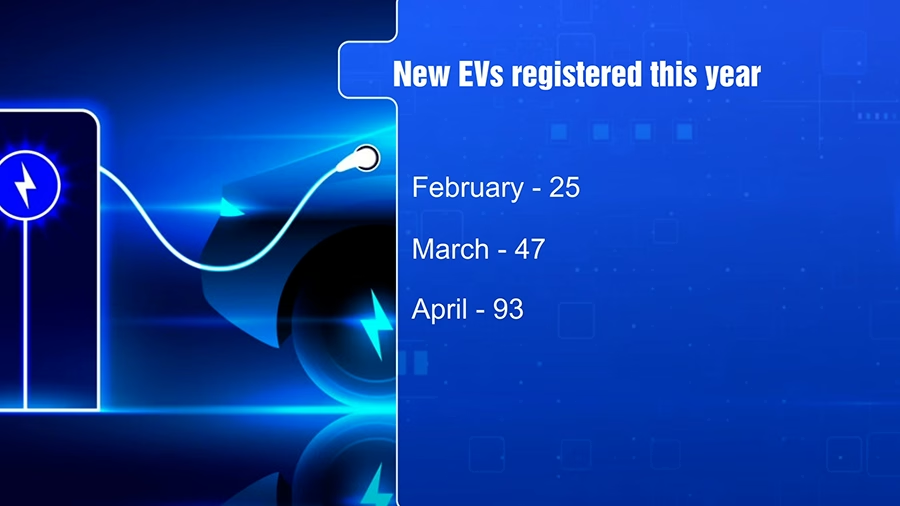
The rising fuel prices have led to a noticeable increase in the demand for electric vehicles in Bhutan. According to the Bhutan Construction and Transport Authority, there has been a notable increment of 165 EV registrations between February and April this year, bringing the total to 1,343. This might seem modest, constituting just over 1% of the total vehicles in the country, but the growth trend is clear. 📈
ST Motors, a prominent EV dealer, reported a significant boost in sales this year. Within the first four months, they sold 40 EVs, nearly 30% of last year's total sales. The surge is attributed to rising fuel costs, encouraging both private consumers and the government to consider EVs seriously.
Government Initiatives
The Bhutanese government is also embracing this shift. Recently, the Prime Minister announced the procurement of 99 additional electric vehicles and 45 electric buses. This move aims to reduce the country's reliance on fuel imports and promote sustainable transport solutions.
Affordability Challenges
Despite the growing interest, affordability remains a significant hurdle. Many potential buyers are deterred by the high upfront costs of EVs. The cheapest EV at ST Motors is priced at over 1.3 million ngultrum, making it inaccessible for middle-income households.
The introduction of the Goods and Services Tax has exacerbated this issue, as it applies uniformly to electric vehicles, which previously benefited from tax exemptions.
Charging Infrastructure Gaps
Another major barrier is the limited charging infrastructure. Currently, Bhutan has 75 EV charging stations spread across 43 locations. While Thimphu boasts the highest concentration, rural areas lag behind, hindering the broader adoption of EVs.

The government plans to expand this network, aiming for one charging station per 15 electric vehicles by 2030. Encouraging private individuals to establish charging stations through government support is also a step in the right direction.
Looking Ahead: The Roadmap to 2035
Bhutan's EV Roadmap envisions 70% of all new vehicle sales being electric by 2035. Achieving this ambitious target requires accelerating current trends, alongside substantial investment in charging infrastructure and financial incentives for buyers.
Key Takeaways
- Rising Fuel Prices: Driving increased interest in EVs.
- Government Support: Procurement of EVs and buses to cut fuel dependence.
- Affordability Issues: High costs remain a barrier for many potential buyers.
- Charging Gaps: Limited stations, especially in rural areas, need addressing.
The path to widespread EV adoption in Bhutan is marked by challenges but also opportunities. With strategic investments and policy support, Bhutan can accelerate its transition to cleaner transport solutions. 🌍🔋
You May Also Like
Economy
Bhutan's Bold Vision: Two USD 50M Enterprises by 2030
September 27, 2026
Economy
Mega Dry Port in Pasakha: Bhutan's Trade Revolution
September 25, 2026

Economy
Fixed Deposit Tax Withholding: What You Need to Know
September 13, 2026
Economy
DRC's QR Payment Innovation: Tracking Business Income
September 2, 2026