Category:
EducationEngineers Master Advanced Solar Training at CST
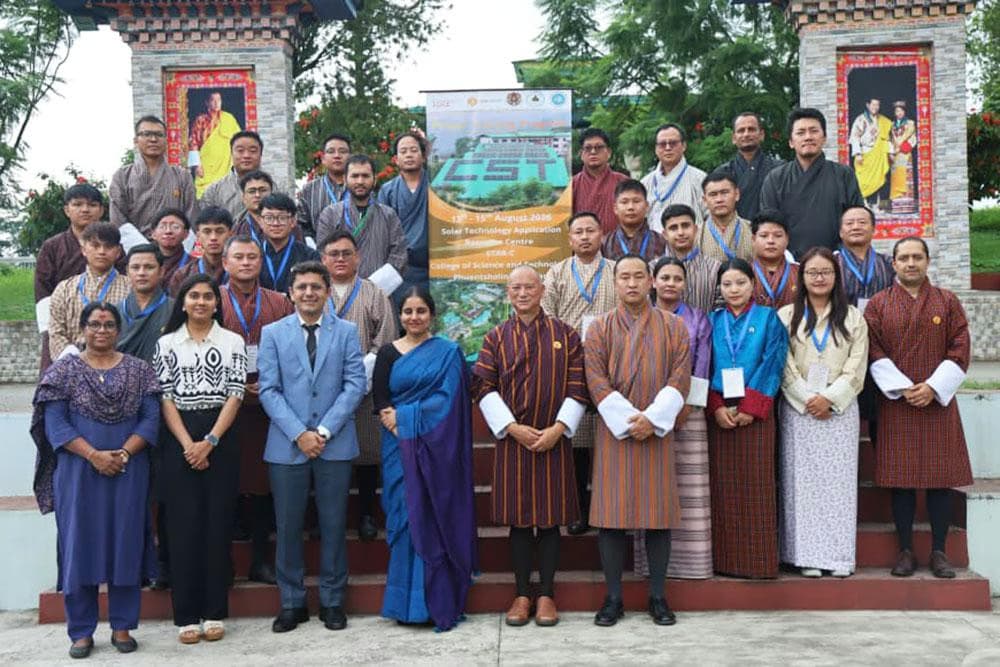
Bhutan is undergoing a remarkable transformation in its renewable energy landscape, and the nation's ambitious vision to harness 5,000 megawatts of solar power by 2040 is creating unprecedented opportunities for skilled professionals. 🌞 The College of Science and Technology (CST) in Phuentsholing has become the epicenter of this revolution, launching cutting-edge solar training programs that are equipping the next generation of engineers with specialized expertise in solar project development.
The Rising Demand for Solar Professionals ⚡
As Bhutan accelerates its transition toward utility-scale solar installations, the nation faces a critical challenge: finding engineers with the technical prowess to design, model, and evaluate complex solar systems. The commissioning of the Sephu Solar Plant—Bhutan's inaugural grid-connected utility-scale solar photovoltaic facility—marks a pivotal moment, signaling that the country is moving beyond pilot projects into serious, large-scale renewable energy infrastructure.
This expansion creates a substantial talent gap. Engineers and energy professionals must now possess advanced competencies that go far beyond basic installation knowledge. They need to understand energy yield simulation, shading analysis, performance optimization, and techno-economic assessments—skills that separate competent practitioners from industry leaders.
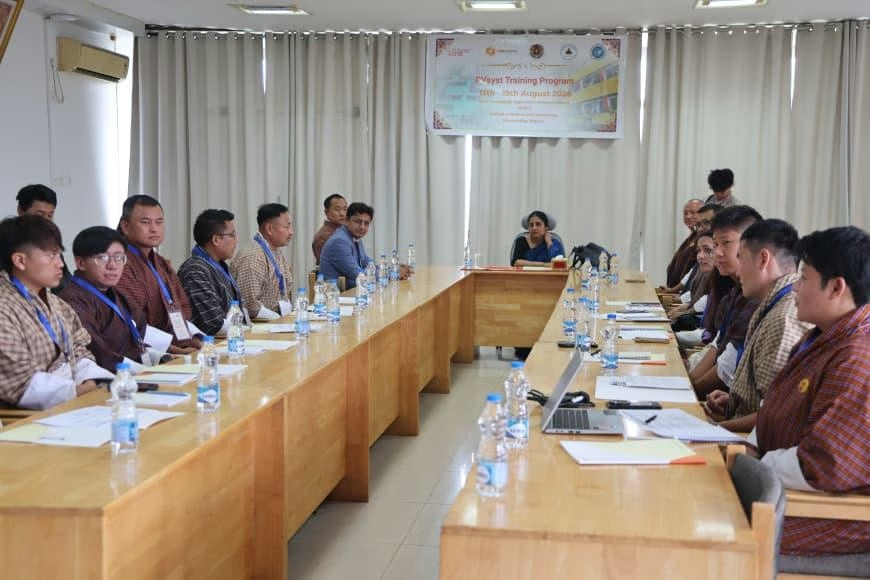
STAR-C Bhutan Launches Level 2 Professional Training 🎓
Recognizing this critical need, STAR-C Bhutan—in partnership with the International Solar Alliance (ISA)—initiated a comprehensive three-day advanced solar training program in mid-August, bringing together 22 engineers and energy professionals for intensive instruction. This Level 2 professional training represents a significant milestone, as it follows seven successful Level 1 technician batches that have already trained 138 participants across the nation.
The distinction between Level 1 and Level 2 training is crucial. While foundational technician training provides essential hands-on skills, the advanced professional program delves into sophisticated technical and economic analyses that determine project viability. Participants in this elite cohort are learning to use PVsyst—industry-standard software for photovoltaic system modeling—to simulate energy production, evaluate site conditions, and assess system performance before capital is committed.
What Engineers Are Learning 📊
The curriculum encompasses several critical competencies that modern solar professionals must master:
- PVsyst Modelling: Advanced software training for designing and simulating photovoltaic systems with precision
- Energy Yield Simulation: Calculating expected electricity generation based on geographical, meteorological, and technical variables
- Shading Analysis: Identifying and mitigating obstacles that reduce solar panel efficiency
- Performance Optimization: Fine-tuning system design to maximize energy output and minimize losses
- Techno-Economic Assessment: Evaluating project costs, financing options, and return on investment
- Levelised Cost of Electricity (LCOE) Evaluation: Determining the true cost of electricity generation over a project's lifetime
These competencies are not academic exercises—they directly influence whether solar projects succeed or fail. In utility-scale developments, even minor inefficiencies can translate into millions of dollars in lost revenue over a project's 25-30 year operational life.
The International Partnership Advantage 🌍
The collaboration between CST, STAR-C Bhutan, and the International Solar Alliance brings world-class expertise to Bhutanese engineers. The ISA, established to promote solar energy adoption globally, ensures that training aligns with international best practices and industry standards. This international dimension elevates Bhutan's solar sector from a regional initiative to a globally-connected professional community.
Sucheta Chatterjee, Consul General of India in Phuentsholing, emphasized that translating Bhutan's ambitious 5,000MW solar target into tangible outcomes requires a pipeline of skilled professionals. Without engineers capable of conducting rigorous technical and economic analyses, even the most promising solar projects may founder on poor planning or inadequate assessment.
Building Bhutan's Solar Workforce Ecosystem 🔧
The progression from Level 1 to Level 2 training reflects a sophisticated understanding of workforce development. CST isn't simply offering isolated courses; it's constructing a comprehensive ecosystem for solar sector growth.
Level 1 Focus: Technician-level skills for installation, maintenance, and basic system operation
Level 2 Focus: Professional-level expertise in design, modeling, analysis, and project development
This tiered approach ensures that Bhutan develops a complete workforce pyramid—from skilled technicians maintaining solar installations to senior engineers directing multi-million dollar projects. The 22 participants in the Level 2 program represent diverse sectors, creating cross-sector networking opportunities and enabling knowledge exchange that strengthens the entire industry.
Why PVsyst Matters for Bhutan's Solar Future 💻
PVsyst is the gold standard software for solar project assessment globally. By training Bhutanese engineers in this platform, CST ensures that local professionals can compete with international consultants and conduct world-class analyses. This capability is particularly important as Bhutan considers larger, more complex solar projects that require detailed environmental and economic justification.
The software allows engineers to account for Bhutan's unique geographical and climatic conditions—mountainous terrain, seasonal weather variations, and specific solar irradiance patterns. Accurate modeling ensures that energy production estimates are realistic, financing is appropriately structured, and projects deliver promised returns.
The Broader Context: Bhutan's Renewable Energy Leadership 🏔️
Bhutan's commitment to 5,000MW of solar capacity by 2040 positions the nation as a renewable energy pioneer in South Asia. Currently, hydropower dominates Bhutan's electricity generation, but the government recognizes that solar development offers complementary benefits: reduced dependence on seasonal water flows, additional export revenue potential, and energy security.
The Sephu Solar Plant's commissioning demonstrates that Bhutan can successfully execute utility-scale renewable projects. With a growing pipeline of solar developments, the nation needs engineers who can evaluate proposals critically, optimize designs intelligently, and ensure projects deliver economic and environmental benefits.
Looking Forward: Scaling Solar Excellence 🚀
As Bhutan's solar sector expands, the demand for advanced training will intensify. STAR-C's Level 2 program is just the beginning. Future training initiatives may include specialized tracks for solar-plus-storage systems, grid integration challenges, and emerging technologies like bifacial panels and tracking systems.
The engineers trained through these programs will become ambassadors for quality and excellence in Bhutan's solar industry. They'll mentor junior professionals, establish best practices, and ensure that solar projects contribute meaningfully to the nation's development goals.
Key Takeaways 🎯
Bhutan's investment in advanced solar training represents far more than technical education—it's a strategic commitment to building national capacity and achieving energy independence. By equipping engineers with world-class skills in PVsyst modeling, economic analysis, and project assessment, CST is creating the human foundation upon which Bhutan's 5,000MW solar ambition will be built.
The convergence of ambitious national targets, international partnerships, and rigorous professional training creates an unprecedented opportunity for Bhutanese engineers to lead their nation's renewable energy transformation. As the solar sector expands, these trained professionals will determine whether projects succeed brilliantly or stumble—making their expertise invaluable to Bhutan's sustainable development future.
You May Also Like
Education
Local Produce Connects Gongthung Farms and School
September 21, 2026
Education
Two Students Transform Library System Into Digital Solution
September 16, 2026
Education
Strengthening School Support for Students Unable to Afford Tuition
September 13, 2026
Education
Student Citizen Journalism: Breaking Silence on Bullying
September 12, 2026