Category:
NewsHimalayan Yak Network Launches at Royal Highland Festival
A Historic Moment for Mountain Communities 🏔️
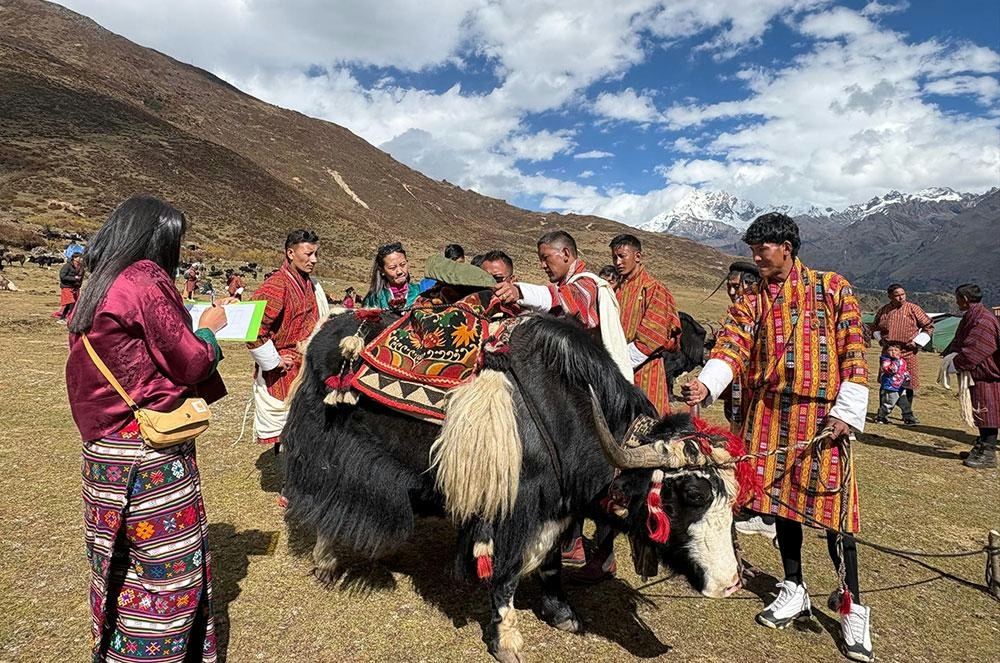
The Himalayan region is witnessing a transformative development as three nations—Bhutan, India, and Nepal—prepare to establish the inaugural Himalayan Yak Herders' Network at the 9th Royal Highland Festival in Laya, Gasa. This groundbreaking initiative represents the first regional platform exclusively dedicated to supporting yak herding communities across the Himalayas, with Bhutan serving as the host of its secretariat. The launch marks a pivotal moment for pastoral communities whose livelihoods have faced unprecedented challenges over recent decades.
The formation of this network addresses a critical crisis affecting mountain economies throughout Asia. Across the region, yak populations have experienced dramatic declines, with Bhutan's national herd shrinking by approximately 28 percent between 2020 and 2024. This decline reflects broader systemic pressures that threaten not only individual herders but entire cultural traditions and ecological management systems developed over centuries.
Understanding the Yak Herding Crisis 📉
The challenges confronting yak herders extend far beyond simple economic calculations. According to specialists at the International Centre for Integrated Mountain Development (ICIMOD), the fundamental issue centers on making herding an attractive and viable livelihood for younger generations. The problem encompasses interconnected factors including changing aspirations, limited economic opportunities, and institutional barriers that make pastoral life increasingly difficult to sustain.
Bhutan currently hosts 746 households managing approximately 29,432 yaks, with an average of 39 animals per household. While yak herding contributes four percent of the nation's livestock products, this figure masks the profound cultural and ecological significance of these animals. Across the broader Asian context, yaks support more than 31 ethnic groups spanning over 10 countries and generate 50 percent of pastoral income in these communities.
The situation has been further complicated by alternative livelihood opportunities. The collection of cordyceps—a high-value fungal product commanding attractive market prices—has diverted attention and labor away from traditional herding practices. While cordyceps currently offers substantial income potential, its long-term reliability as a sustainable livelihood remains uncertain, creating economic instability for communities attempting to transition their economic strategies.
Environmental and Ecological Pressures 🌍
Climate change, rangeland degradation, and shifting land use patterns have created a perfect storm of environmental pressures. Rangelands, known locally as tsamdro in Bhutan, occupy over 60 percent of the Hindu Kush Himalaya region and represent the primary resource base for 25 to 30 million people. These ecosystems face unprecedented stress from multiple directions.
Traditionally, herders managed these critical landscapes through controlled burning practices that maintained grassland health by suppressing shrub encroachment and promoting nutritious grass growth. Species including Rhododendron lepidotum, Berberis, and Rosa varieties, along with weeds such as Rumex and Potentilla, naturally expand without active management. However, burning restrictions implemented over the past three to four decades have allowed shrub and weed proliferation in many areas, reducing grazing quality and affecting both domestic yaks and wild herbivores including blue sheep and deer.
This ecological challenge demonstrates how conservation policies directly influence herding practices and landscape management. The traditional knowledge systems developed by herders over generations have become constrained by modern conservation frameworks that often fail to recognize the ecological importance of open grasslands maintained through active pastoral management.
The Himalayan Yak Herders' Network Explained 🤝
The newly established network operates on principles of collective advocacy, knowledge exchange, capacity building, and regional cooperation. The initiative draws inspiration from the World Reindeer Herders Association in the Arctic, which has successfully maintained herder interests and livelihoods across multiple northern nations for decades.
Three primary organizations form the foundation of this network:
- Bhutan Yak Federation (formalized in 2022)
- Yak and Chauri Farmers Federation Nepal (established in 2023)
- Yak Federation of India (formally recognized in 2025)
This structure creates the first pan-continental center linking yak herding nations across Asia. The network's ambitions extend beyond advocacy to include concrete economic development. Projections indicate that over 50 new highland enterprises will be incubated through the network's support, potentially creating more than 500 green jobs specifically targeted at youth populations. These initiatives aim to demonstrate that pastoral livelihoods can provide viable, sustainable careers for younger generations.
A Strategic Vision for Asia's Mountain Heritage 🎯
Bhutan's role as secretariat host carries significant symbolic and strategic importance. As one specialist noted, while the Andes region is globally recognized for alpacas and llamas, the Sahara for camels, and the Eurasian Arctic for reindeer, Asia currently lacks an internationally recognized flagship animal associated with its high mountain pastoralism. The yak represents an opportunity to establish Asia's distinctive pastoral identity while supporting communities that have stewarded these animals for millennia.
This positioning also aligns with Bhutan's broader economic vision. The network establishment complements national development initiatives including the Gelephu Multipurpose City project, further cementing Bhutan's international reputation as a nature-based destination. The combination of genuine conservation commitment, cultural preservation, and sustainable economic development creates a compelling model for other mountain nations.
The Path to Network Formation 🛤️
The Himalayan Yak Herders' Network did not emerge suddenly but rather represents the culmination of nearly a decade of deliberate relationship-building and institutional development. The concept originated in 2016 when herders, researchers, and government officials convened through ICIMOD's Kangchenjunga Landscape Conservation and Development Initiative. These early discussions recognized the need for regional coordination to address challenges that transcended national boundaries.
A critical turning point occurred in 2018 when representatives attended the Arctic Frontiers conference in Norway and engaged directly with the Association of World Reindeer Herders. This international exposure provided crucial insights into how circumpolar reindeer herders had successfully organized to maintain their interests despite profound environmental and economic changes.
The participating countries adopted a strategic sequencing approach, prioritizing the establishment of strong national federations before attempting regional coordination. This methodical approach ensured that herder institutions possessed genuine legitimacy and capacity before representing their communities at international forums. The strategy proved effective, with formal federation recognition achieved in Bhutan (2022), Nepal (2023), and India (2025), culminating in government commitment to the network at the 10th Sustainable Animal Agriculture for Developing Countries (SAADC) conference in Vietnam during 2025.
Supporting Herders Through Knowledge and Capacity 💡
ICIMOD's support has focused on three critical dimensions: generating evidence, strengthening technical capacity, and empowering herder institutions. This multifaceted approach recognizes that sustainable pastoral development requires both practical skills and institutional voice.
The Bhutan Yak Federation exemplifies this institutional empowerment. By providing herders with a collective voice, the federation transforms individual concerns into organized advocacy capable of influencing policy discussions. This institutional capacity proves essential when engaging with government agencies, conservation organizations, and development initiatives that shape the environment in which herders operate.
Bridging Conservation and Livelihoods 🌱
One of the network's most significant contributions involves demonstrating that conservation and pastoral livelihoods need not represent competing objectives. Bhutan's Forest and Nature Conservation Policy 2023 explicitly recognizes the ecological role of fire in forest management—a critical acknowledgment after decades of blanket burning restrictions.
With ICIMOD support, prescribed burning has been tested systematically, standard operating procedures developed, and the practice incorporated into formal forest management systems. This represents a positive step forward, offering valuable lessons for other Himalayan nations grappling with similar tensions between conservation priorities and pastoral management practices.
However, specialists emphasize that this progress requires careful implementation. Uncontrolled fire poses genuine risks to forests and communities, making proper procedures, supervision, and monitoring essential. The challenge ahead involves developing policies that recognize the ecological importance of open grasslands alongside forest protection while actively supporting pastoral livelihoods.
Recent Momentum and Initiatives 🚀
The timing of the network launch coincides with accelerating momentum in rangeland and pastoral development. On October 19, the Thimphu Dzongkhag Administration launched a project focused on improving yak dairy processing and value addition in Dagala. Simultaneously, the administration inaugurated the Dagala Craft Innovation and Development Centre in Dagala Gewog, creating infrastructure for artisanal product development.
These initiatives align strategically with the designation of 2026 as the International Year of Rangelands and Pastoralists—a global recognition of rangelands' ecological and socioeconomic importance. This international focus creates opportunities for amplifying the Himalayan Yak Herders' Network's message and accessing global support and resources.
Looking Forward: Challenges and Opportunities 🔮
While the network's establishment represents genuine progress, substantial challenges remain. Herders across the region face shrinking and degraded rangelands, loss of yak genetic diversity, wildlife depredation, limited access to markets and services, and ongoing youth migration to urban centers. These interconnected pressures require sustained attention and resources.
The network's success will ultimately depend on translating institutional frameworks into tangible, lasting benefits for herding communities and future generations. This requires not merely symbolic commitments but genuine policy reforms, adequate funding, market development, and educational initiatives that make pastoral careers genuinely competitive with urban alternatives.
Conclusion: A Turning Point for Mountain Communities ⭐
The launch of the Himalayan Yak Herders' Network at the Royal Highland Festival represents far more than an administrative milestone. It signals a fundamental shift in how three nations approach pastoral development, conservation, and mountain community support. By establishing the first regional platform dedicated to yak herding communities, Bhutan, India, and Nepal have created institutional infrastructure capable of addressing challenges that no single nation can resolve alone.
The network embodies a compelling vision: that Asia's mountain heritage, represented by the yak and its herders, deserves recognition and support equivalent to that accorded to reindeer herders in the Arctic or llama herders in the Andes. As the network matures, its success or challenges will offer crucial lessons for pastoral communities worldwide facing similar pressures from climate change, environmental degradation, and economic transformation. The Himalayan Yak Herders' Network stands as a testament to the possibility of building sustainable futures for mountain communities while honoring centuries of ecological knowledge and cultural practice.
You May Also Like

News
Gelephu Prepares for 40,300 Vehicles Ahead of Project 108
October 21, 2026
News
Third Child Plus Programme Disburses Nu 186M to 6,510 Children
October 21, 2026

News
German-Bhutan Society Backs Gelephu Mindfulness City
October 21, 2026
News
Bhutan's Legislative Vision Faces Resource Constraints
October 19, 2026