Category:
EnvironmentCooler Pre-Monsoon Delays Summer Warm-Up in Bhutan
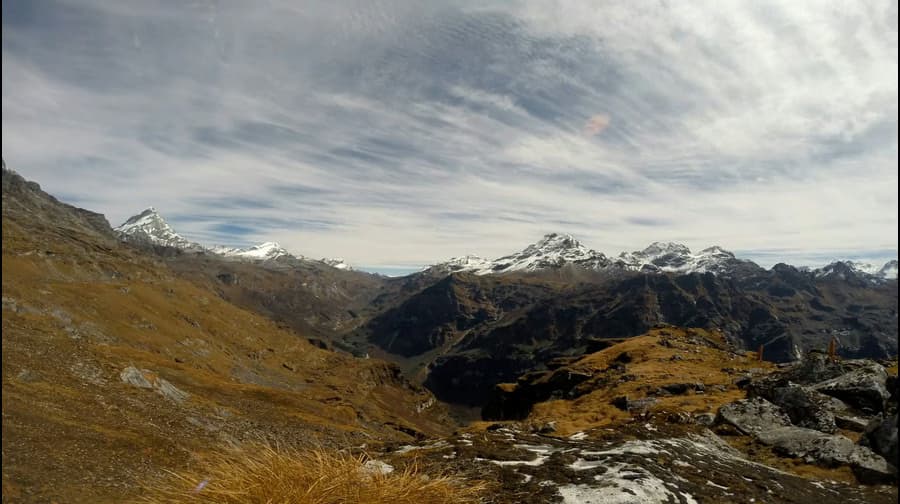
The onset of summer in Bhutan has taken an unusual turn this year. 🌦️ As the country experiences a cooler, wetter pre-monsoon season, the anticipated summer warmth has been delayed. This climatic anomaly has left many wondering about the role of El Niño, a global climate phenomenon typically associated with changes in temperature and precipitation patterns worldwide.
Understanding the Pre-Monsoon Climate Shift
As Bhutan stepped into 2026, the weather conditions markedly differed from the previous year. The period from January to May saw significantly cooler temperatures compared to 2025, with both daytime and nighttime temperatures dropping across various regions. This shift is primarily attributed to increased pre-monsoon rainfall, with many areas recording over 50% more rainfall than in the same period last year. 🌧️ The higher moisture levels and cloud cover have contributed to reduced daytime heating, resulting in persistently lower temperatures.
The Role of Bhutan's Unique Geography
Bhutan’s complex Himalayan terrain plays a crucial role in its climate dynamics. The country's climate is predominantly influenced by orographic lifting, elevation differences, and the inflow of moisture from the Bay of Bengal. These factors can either amplify or negate the effects of large-scale climate signals such as El Niño. Therefore, while El Niño might impact the broader South Asian region, its effects on Bhutan are not as consistent or direct.
Debunking the El Niño Myth
El Niño is a naturally occurring phenomenon characterized by the periodic warming of sea surface temperatures in the central and eastern tropical Pacific Ocean. This warming can alter atmospheric circulation, affecting rainfall and temperature patterns globally. In South Asia, El Niño is often linked to weaker monsoon performance. However, experts from Bhutan's National Centre for Hydrology and Meteorology (NCHM) emphasize that local climate responses are not directly driven by this phenomenon due to the country's topographical nuances.
Current Weather Trends and Future Projections
Based on current seasonal outlooks, the summer monsoon rainfall in Bhutan, spanning from June to September 2026, is expected to stay within the normal to slightly below-normal range. 📅 Rainfall distribution, however, may vary across different regions and time periods. Despite the cooler pre-monsoon conditions, temperatures during the monsoon season are anticipated to be slightly above normal, aligning with long-term warming trends.
Regional Variations in Weather Patterns
Across Bhutan, the weather patterns exhibit strong spatial variability, reflecting the country's diverse topography and localized weather systems. For instance, the southern belt, which usually experiences warmer temperatures, has faced cooler conditions compared to last year. In contrast, western and northern Bhutan have remained under prolonged cold conditions, influenced by elevation and frequent precipitation.
The Importance of Preparedness
While global attention is centered on potential El Niño developments, Bhutan's immediate focus remains on short-range forecasts and preparedness for monsoon-related hazards. Even in normal monsoon years, the nation is prone to natural disasters such as landslides, flash floods, and road blockages. 🚧 Ensuring readiness for these events is crucial, given the country's vulnerability to rapid weather changes.
Conclusion: Navigating Climate Variability
In conclusion, while the global climate conversation often highlights phenomena like El Niño, Bhutan's unique geography and complex climatic interactions mean that local weather outcomes are shaped more by immediate environmental factors. As climate variability continues to rise globally, Bhutan's weather will reflect both large-scale ocean-atmosphere signals and the defining characteristics of its Himalayan landscape.
Looking ahead, the focus should remain on enhancing forecasting accuracy and community preparedness, ensuring that the nation is well-equipped to handle the challenges posed by its dynamic climate. 🌍
You May Also Like
Environment
Climate Crisis in the Himalayas: Bhutan's Cold Reminder
August 29, 2026
Environment
WBH Conservation Project Delivers Clean Water to Rural Homes
August 29, 2026
Environment
HKH Climate Crisis: Why Regional Unity Matters Now
August 29, 2026
Environment
Bhutan's Solar Power Revolution: Energy Security Strategy
August 26, 2026