Category:
CultureChangyuel Galem House Restoration: A Heritage Preservation Challenge
A Cultural Treasure in Limbo ⏳
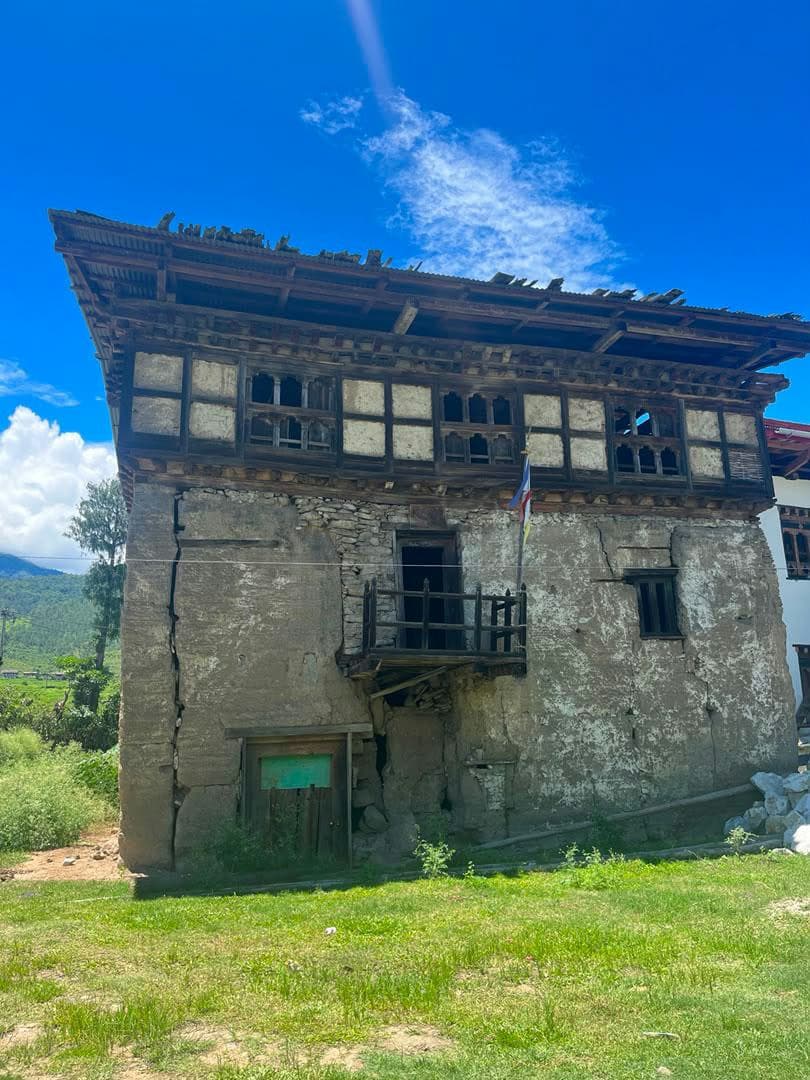
Bhutan's architectural heritage faces a critical juncture as one of its most significant privately-owned historical structures awaits restoration funding. Changyuel Galem House, nestled in the heart of Punakha, represents centuries of cultural history intertwined with legendary tales and traditional craftsmanship. Yet despite years of meticulous planning and international collaboration, this remarkable edifice continues to deteriorate, standing as both a symbol of cultural pride and a cautionary tale about heritage preservation challenges in the modern era.
The government has consistently reaffirmed its unwavering commitment to breathing new life into this centuries-old structure. However, the path forward remains uncertain, clouded by bureaucratic processes, funding complexities, and the unpredictable nature of international development partnerships. As structural concerns mount and the building's condition gradually worsens, stakeholders continue to navigate an intricate web of administrative requirements and financial negotiations.
The Historical Significance Behind the Walls 🏛️
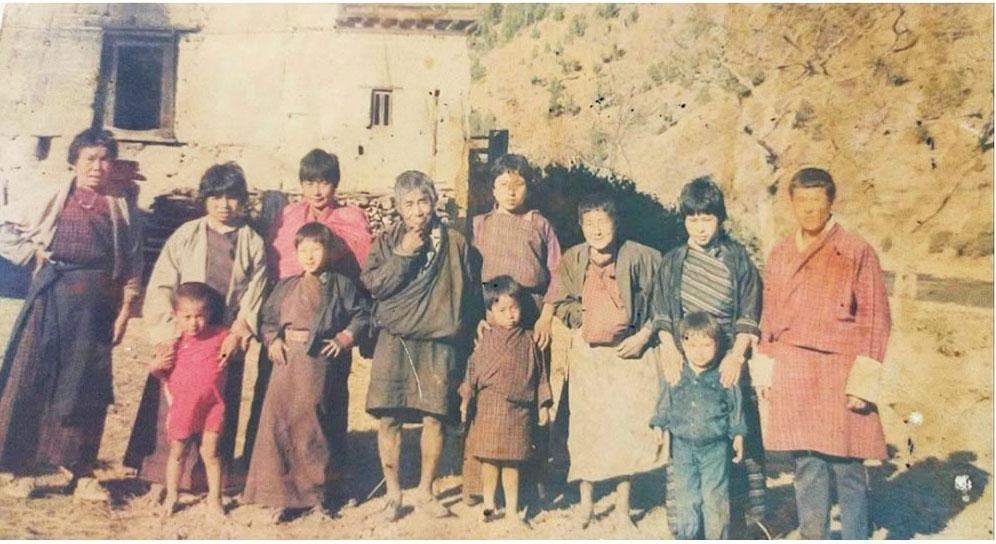
Changyuel Galem House carries profound historical weight within Bhutan's cultural narrative. Associated with the legendary 17th-century figure Gasa Lamai Singye and the revered Changyuel Bum Galem, this structure embodies the spiritual and architectural traditions that define Bhutanese identity. The house represents more than mere bricks and mortar—it encapsulates stories of faith, resilience, and the artistic mastery of traditional builders whose techniques have been passed down through generations.
The transformation of this private residence into a public heritage museum would represent a significant milestone in Bhutan's cultural tourism strategy. Such adaptive reuse models are increasingly recognized globally as sustainable approaches to heritage preservation, allowing historical properties to generate revenue while remaining accessible to the public. This particular project stands as a pioneering example within Bhutan's emerging framework for privately-owned heritage properties.
Understanding the Restoration Delays 🔧
The journey toward restoration has been anything but straightforward. Multiple factors have conspired to postpone the much-anticipated conservation work:
Funding and Procurement Challenges
- Initial contractor quotations exceeded budget expectations significantly
- International funding cycles operate on rigid timelines that don't always align with project readiness
- German donor requirements have evolved, necessitating proposal revisions
Bureaucratic Complexity
- Formal agreements between the Dzongkhag Administration and the private owner required careful negotiation
- The German Federal Foreign Office imposed updated requirements for funding consideration
- Multiple approval stages within the international funding apparatus create lengthy processing periods
External Geopolitical Factors
- Germany's parliamentary elections in February 2025 affected funding decision-making processes
- Budget pressures stemming from the Russia-Ukraine conflict have constrained available development resources
- Global economic uncertainties have made donor institutions more cautious with capital allocation
These interconnected challenges illustrate how heritage preservation in the 21st century extends far beyond local architectural concerns, intersecting with international politics, economic cycles, and bureaucratic machinery.
The German Funding Partnership Model 🤝
The restoration initiative depends critically on securing financial support from German development partners. Approximately Nu 10 million (roughly Euro 130,000) was initially sought from Pro Bhutan, Germany, to fund comprehensive restoration efforts. A revised proposal is currently being prepared to align with updated donor requirements before submission to Pro Bhutan and ultimately to the German Federal Foreign Office for final consideration.
This international partnership represents a broader trend in heritage conservation, where developing nations increasingly leverage bilateral relationships and multilateral funding mechanisms to preserve cultural assets. Germany's involvement reflects the country's substantial commitment to supporting heritage projects across Asia, recognizing that cultural preservation strengthens global understanding and diplomatic relationships.
The Punakha Dzongkhag Administration has committed to covering any restoration costs exceeding the donor contribution, demonstrating local institutional dedication to the project's completion. However, no separate government budget has been earmarked specifically for this initiative, meaning the entire endeavor hinges on German funding approval.
Structural Concerns and Earthquake Impacts 🌍
The urgency surrounding Changyuel Galem House restoration intensified following the magnitude 5.5 earthquake that struck Bhutan on June 7. A comprehensive structural assessment is currently underway to evaluate the earthquake's impact on the centuries-old structure and determine whether additional stabilization measures are necessary before full restoration commences.
Pre-earthquake evaluations had identified that the house's rammed earth walls maintained structural integrity, with primary deterioration concentrated in the roof and upper sections. Protective fencing has already been installed around the building to mitigate immediate risks and prevent further damage from environmental exposure or unauthorized access.
The detailed post-earthquake documentation is being treated as a priority, with findings to be shared upon assessment completion. These technical evaluations will inform decisions about necessary emergency interventions, which will be separately documented from the comprehensive restoration plan to ensure accurate record-keeping and appropriate resource allocation.
A Model for Privately-Owned Heritage Conservation 🏗️
Changyuel Galem House represents the most advanced project among Bhutan's privately-owned heritage properties, featuring an established international funding partnership and formal co-management framework under development. This initiative establishes a replicable model that balances multiple stakeholder interests:
Key Components of the Model:
- Donor Financing - International funding sources provide capital for restoration work
- Shared Management - Joint oversight between private owners and local authorities ensures accountability
- Public Access - Heritage sites function as community resources, not exclusive private properties
- Revenue Sharing - Income generated through museum operations supports long-term maintenance
- Private Ownership Preservation - Buildings remain under private ownership while serving public cultural functions
This innovative framework addresses a critical gap in Bhutan's heritage preservation landscape. The country has identified more than 2,000 heritage sites nationwide, yet only approximately 300 have received formal registration status. Many significant structures remain in private hands, creating preservation challenges that government resources alone cannot address.
The Broader Heritage Conservation Framework 📋
The Department of Culture and Dzongkha Development (DCDD) is actively drafting updated guidelines for privately-owned heritage properties, building upon heritage clearance guidelines introduced in 2025. This comprehensive framework aims to achieve multiple objectives:
- Enhanced Documentation - Systematic recording of architecturally and culturally significant buildings
- Technical Support Expansion - Partnerships providing specialized expertise to private owners
- Financial Assistance - Access to funding mechanisms previously unavailable to private property holders
- Adaptive Reuse Encouragement - Support for transforming heritage properties into museums, homestays, and cultural tourism attractions
These policy developments reflect Bhutan's maturing approach to cultural preservation, recognizing that government ownership is neither practical nor necessary for effective stewardship. Instead, public-private partnerships and community engagement create sustainable models for long-term heritage management.
Timeline and Next Steps ⏰
Once German funding receives official approval, the restoration timeline will accelerate significantly. The Punakha Dzongkhag Administration will initiate contractor procurement procedures, followed by commencement of comprehensive restoration work. However, the exact timeline remains contingent upon international funding approval processes, which typically involve multiple layers of bureaucratic review.
The revised proposal currently being prepared represents a critical juncture. Meeting updated donor requirements and successfully navigating the approval process at both Pro Bhutan and the German Federal Foreign Office will determine whether restoration commences within the coming year or faces additional delays.
Why This Matters for Bhutan's Future 🌟
The Changyuel Galem House restoration transcends a single building's preservation. It represents Bhutan's commitment to maintaining cultural identity amid rapid modernization and global integration. As tourism expands and international interest in Bhutanese heritage grows, demonstrating effective conservation practices becomes increasingly important for the nation's soft power and cultural diplomacy.
Moreover, the successful completion of this project will establish precedents and confidence in the privately-owned heritage preservation model, potentially unlocking restoration efforts for dozens of other significant structures across the country. The framework being developed could serve as a template for heritage conservation initiatives throughout Asia and beyond.
Looking Ahead: Hope and Determination 💪
Despite prolonged delays and mounting frustrations, government officials maintain that these postponements reflect neither wavering commitment nor fundamental obstacles—merely the complex realities of international heritage conservation in the contemporary context. The project remains actively progressing through funding approval channels, with all stakeholders demonstrating sustained determination.
Changyuel Galem House awaits its restoration moment. When German funding ultimately receives approval and restoration work commences, this centuries-old structure will undergo a transformation that honors its historical significance while positioning it for sustainable future use. The house will stand not merely as a museum artifact, but as a living testament to Bhutan's dedication to preserving its irreplaceable cultural heritage for generations yet to come.
You May Also Like
Culture
Sacred Heart of 108 Chortens: Bhutan's Spiritual Masterpiece
August 26, 2026
Culture
When Colour Drains From the Scene: Spiritual Gatherings in Bhutan
August 15, 2026
Culture
The Vanishing Trade of Drukor: Bhutan's Fading Cultural Exchange
August 15, 2026
Culture
Yojay: Ancient Buddhist Prayer Practice Goes Global
August 12, 2026