Category:
EconomyBumthang Potato Crisis: Farmers Face Unsold Stock Crisis
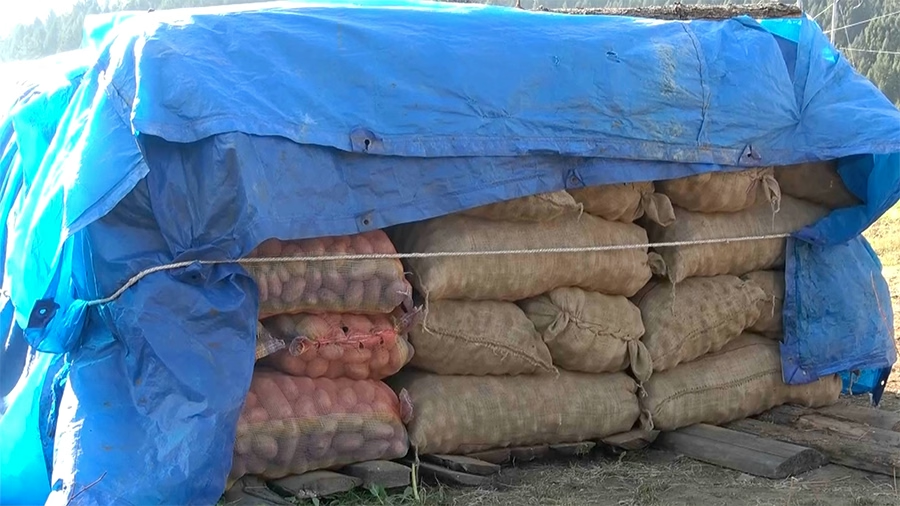
🥔 The Growing Concern in Bhutan's Potato Heartland
As the new planting season approaches, farmers across Bumthang district find themselves in an increasingly precarious situation. Warehouses overflow with unsold potatoes from the previous harvest, prices have plummeted to unsustainable levels, and the prospect of taking on new loans for the upcoming season looms heavily. This agricultural crisis represents far more than just a seasonal setback—it threatens the economic stability of thousands of rural families who depend entirely on potato cultivation for their survival.
The situation has become so dire that many farmers now question whether continuing to grow potatoes makes economic sense. What was once considered a reliable income source has transformed into a source of anxiety and financial uncertainty.
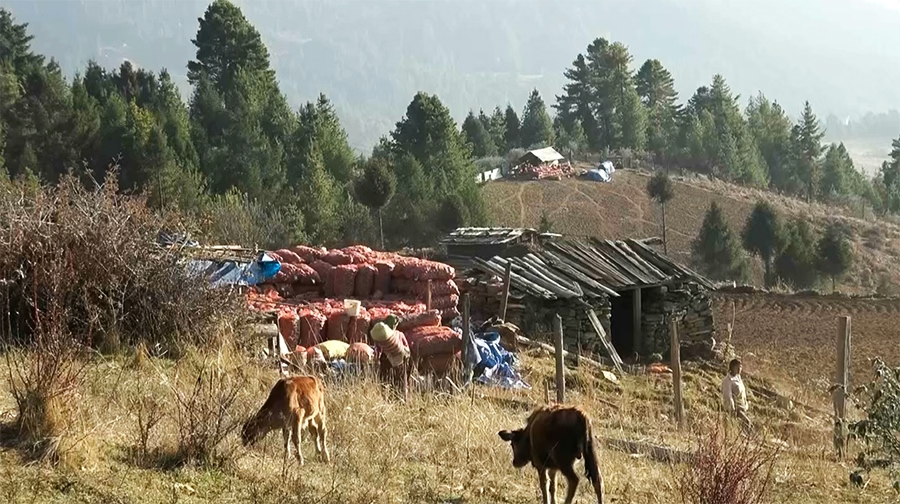
## The Debt Trap: When Harvests Don't Translate to Income 💸
The fundamental problem facing Bumthang's agricultural community stems from a broken supply chain. Farmers traditionally borrow money before planting season, expecting to repay loans after selling their harvest. However, when buyers disappear and prices collapse, this cycle becomes impossible to maintain.
Farmers from villages like Shingngyer and Shingkhar report that their inability to sell potatoes at reasonable prices has created a cascading financial crisis. One farmer eloquently described the situation: families cannot even borrow money for basic necessities like children's education and healthcare because lenders know repayment is impossible without successful potato sales.
Understanding the Price Collapse
The economics tell a troubling story. Brokers in remote areas are offering just Nu 250 for a 50-kilogram bag of potatoes—a price so low it barely covers production costs, let alone generates profit. When transportation, labor, fertilizer, and seed costs are factored in, farmers actually lose money on every kilogram sold at these rates.
This represents a dramatic shift from previous years when potato farming provided steady, predictable income. The sudden price collapse has left farmers scrambling to understand what went wrong and how to recover.
## Supply Exceeds Demand: Understanding the Market Imbalance 📊
The root cause of the crisis lies in a fundamental mismatch between production and market capacity. Over the past several years, Bumthang district authorities have actively encouraged potato cultivation through various support programs:
- Distribution of improved potato seed varieties to enhance productivity
- Supply of chain-link fencing materials to improve farm security
- Agricultural training programs to increase yield
- Infrastructure investments in rural areas
These initiatives successfully increased production volume significantly year after year. Farmers responded enthusiastically, expanding cultivation areas and adopting better farming practices. However, no corresponding expansion occurred in market infrastructure or buyer networks.
The result: exponential growth in supply without matching growth in demand. Warehouses across Bumthang, Chhukha, Haa, Paro, and Wangdue Phodrang now hold massive quantities of unsold potatoes with no clear path to market.
## Government Restrictions Compound the Problem 🚫
Adding another layer of complexity, the government has issued notifications restricting farmers from bringing their produce directly to the Phuentsholing auction yard. While such restrictions may serve legitimate regulatory purposes, they have effectively cut off one of the few remaining market channels available to desperate farmers.
Farmers who hoped to bypass local brokers and access better prices at auction facilities now find that avenue closed. This restriction, however well-intentioned, has paradoxically worsened the situation by eliminating options for farmers seeking fair market value.
The Desperation Measures
With no viable buyers and mounting storage challenges, some farmers have resorted to feeding unsold potatoes to livestock. While this prevents total waste, it generates virtually no income. Others spend their days guarding stored potatoes against wild animals, an exhausting and ultimately futile effort that yields no economic benefit.
## Policy Responses and Government Initiatives 🏛️
Recognizing the severity of the crisis, the National Assembly's Special Committee has proposed several measures to address the structural problems in potato marketing and distribution:
Proposed Solutions:
- Improving Storage Infrastructure - Better cold storage facilities to preserve quality and extend market windows
- Import Restrictions During Off-Season - Protecting domestic farmers from cheap imported potatoes during their peak selling season
- Private Sector Engagement - Encouraging businesses to participate in potato processing and value addition
- Export Market Development - Exploring new international markets, particularly Thailand and neighboring regions
- Market Information Systems - Providing farmers with real-time price data to make informed decisions
The government is currently reviewing these recommendations and considering implementation timelines. However, the urgent question remains: how quickly can solutions be deployed before more farmers abandon potato cultivation entirely?
## The Broader Context: Bhutan's Agricultural Challenges 🌾
The Bumthang potato crisis reflects wider challenges facing Bhutan's agricultural sector. As the country pursues development and urbanization, younger generations increasingly migrate to cities for employment. This creates labor shortages in rural areas and reduces the farming population.
Simultaneously, climate variability and changing weather patterns have begun affecting crop reliability. Farmers face unpredictable growing seasons, pest pressures, and soil degradation issues that complicate production planning.
The potato crisis serves as a cautionary tale about agricultural development without corresponding market development. Increasing production without ensuring stable demand and fair pricing ultimately harms the very farmers the policies intended to help.
## What's at Stake: Livelihoods and National Food Security 🇧🇹
Potato cultivation is not merely an economic activity in Bumthang—it represents the primary livelihood for thousands of families. When farmers cannot sell their harvest at viable prices, entire communities face economic collapse.
Beyond individual hardship, the crisis threatens Bhutan's food security ambitions. If farmers abandon potato cultivation due to economic desperation, the country becomes more dependent on imports. This vulnerability could prove problematic during supply chain disruptions or global price spikes.
Furthermore, the current crisis may discourage agricultural investment and innovation precisely when the sector needs more dynamism and modernization.
## Looking Ahead: Uncertainty About Next Season ❓
As the new planting season approaches, many Bumthang farmers face an agonizing decision. Should they plant potatoes again, hoping the market situation improves? Or should they diversify into other crops or income sources?
This uncertainty itself creates problems. Farmers cannot plan effectively when they lack confidence in market outcomes. Agricultural investment decisions require confidence that effort will be rewarded with fair compensation.
The decisions made in the coming weeks will shape Bumthang's agricultural landscape for years to come. If too many farmers abandon potato cultivation simultaneously, the district loses years of investment in agricultural infrastructure and expertise.
## Potential Solutions and Path Forward 🛤️
Addressing this crisis requires coordinated action across multiple fronts:
Immediate Actions:
- Facilitate emergency market linkages with buyers in other districts and neighboring countries
- Establish temporary price support mechanisms to prevent catastrophic losses
- Provide technical assistance for value-added processing (chips, flour, starch)
Medium-Term Strategies:
- Develop cold chain infrastructure to extend market seasons
- Create farmer cooperatives to improve bargaining power
- Invest in market information systems for price transparency
Long-Term Solutions:
- Diversify agricultural production to reduce dependency on single crops
- Develop agro-processing industries to absorb excess production
- Build export capabilities for regional markets
## The Human Cost: Stories Behind Statistics 💔
Behind every statistic about unsold potatoes are real families facing real hardship. Children's education may be postponed. Healthcare needs may go unmet. Loans may default, damaging farmers' creditworthiness for years.
The stress and anxiety ripple through communities, affecting mental health and social cohesion. Farmers who invested in farming equipment and infrastructure now watch their investments deteriorate with no income to maintain them.
This human dimension often gets overlooked in policy discussions, yet it represents the true cost of agricultural market failures.
## Conclusion: A Critical Juncture for Bhutanese Agriculture 🎯
The unsold potato crisis in Bumthang represents a critical test of Bhutan's commitment to supporting its farming communities. While government support programs successfully increased production, the failure to develop corresponding market infrastructure has created a painful paradox: success in farming became a source of economic distress.
The coming months will determine whether this crisis becomes a temporary setback or a permanent blow to Bumthang's agricultural sector. Swift, coordinated action addressing both immediate market needs and structural supply chain problems is essential.
Farmers deserve more than sympathetic policy discussions—they need tangible solutions that enable them to sell their harvest at fair prices. The potato crisis is ultimately a test of whether Bhutan's development prioritizes rural livelihoods or merely urban growth. The answer will reverberate through farming communities for years to come.
You May Also Like
Economy
Bhutan Launches Revised Accounting Standards for 2026
November 24, 2026
Economy
Tingtibi's Sunday Market Revival Transforms Local Vegetable Sales
November 24, 2026
Economy
Norbugang Industrial Park: Driving Employment and Economic Growth
November 23, 2026
Economy
Modernizing Regulations: Unlocking Economic Growth
November 21, 2026