Category:
PoliticsBhutan's Housing Crisis: NC Demands Action on Stalled Policy
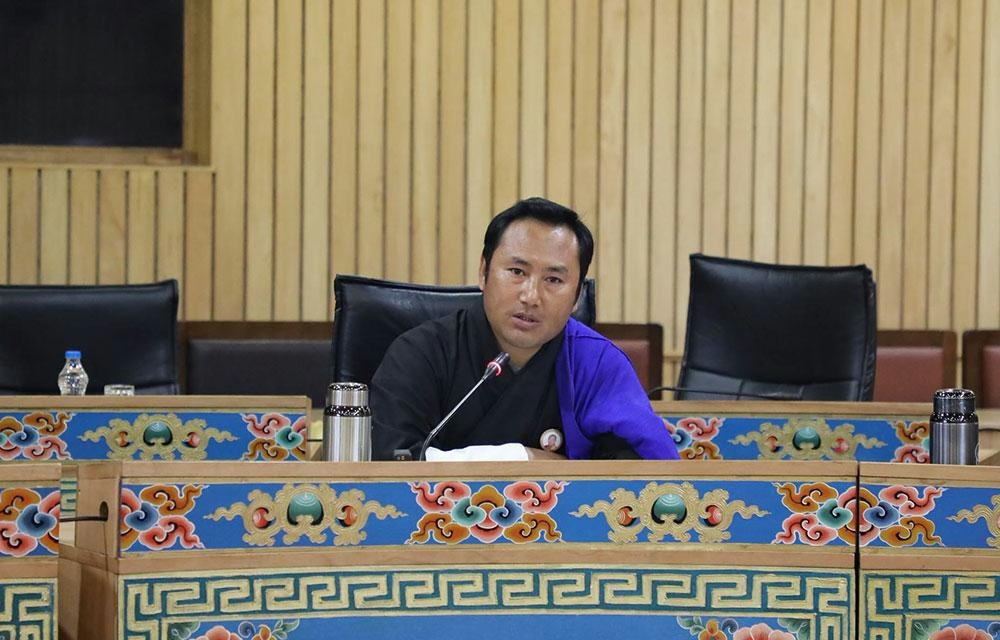
A Nation's Housing Emergency Reaches Critical Point 🏠
Bhutan faces an unprecedented housing affordability crisis that threatens to widen the gap between aspirational homeowners and the dream of property ownership. After six years of policy endorsement without implementation, the National Council is finally stepping up to scrutinize the systemic failures preventing meaningful progress on housing solutions.
The urgency couldn't be clearer. Ordinary Bhutanese families are caught in a perfect storm of rising rents, persistent inflation, and construction costs that have spiraled beyond reach. For many, the prospect of owning a home has shifted from a realistic goal to an increasingly distant fantasy.
The Six-Year Policy Stalemate: What Went Wrong? 📋
When the National Housing Policy received endorsement in 2020, it represented a significant commitment to addressing the nation's housing challenges. Yet today, that promise remains largely unfulfilled. The policy languishes without the critical infrastructure needed to translate ambitious objectives into concrete action.
According to the National Council's Social and Cultural Affairs Committee, three fundamental barriers have prevented implementation:
- No supporting legislation - The policy lacks the legal framework necessary for enforcement
- Absent lead agency - No designated institution has been assigned responsibility for driving the initiative forward
- Zero budget allocation - Financial resources have not been earmarked to support implementation efforts
This institutional paralysis represents a troubling pattern in policy execution. When comprehensive national strategies remain unfunded and unassigned, they effectively become symbolic rather than transformative. The consequences for Bhutanese households struggling with housing affordability are very real and deeply personal.
Understanding the Affordability Crisis 💰
The housing affordability squeeze gripping Bhutan reflects multiple converging pressures. Rising rental costs now consume disproportionate shares of household budgets, leaving families with minimal disposable income for savings, healthcare, education, or other essential needs.
Phub Dorji, the committee's chairperson and Member of Parliament for Wangdue, articulated the severity during recent parliamentary discussions: in some cases, monthly house rent now exceeds what workers earn in an entire month. This inverted economics leaves renters perpetually vulnerable to economic shocks and unable to build wealth through property ownership.
Construction costs have become another formidable barrier. Even families fortunate enough to own land find themselves unable to finance home construction due to material costs, labor expenses, and regulatory requirements that continue climbing. The traditional pathway to homeownership—purchasing land and building incrementally—has become financially unviable for middle and lower-income households.
The Housing Finance Barrier: Locked Out of Loans 🔐
Access to housing finance represents perhaps the most systematically exclusionary aspect of Bhutan's current housing landscape. Financial institutions have established lending criteria that effectively price out significant portions of the population from mortgage eligibility.
Current banking requirements typically demand a monthly household income between Nu 60,000 and Nu 70,000 to qualify for housing loans. This threshold reflects banks' conservative approach to repayment risk, but it simultaneously excludes workers earning below these levels—potentially encompassing a substantial segment of Bhutan's workforce.
The equated monthly installment (EMI) requirements imposed by financial institutions further compound the challenge. Even borrowers who technically qualify often find themselves unable to sustain repayment obligations alongside other living expenses. The mathematics are unforgiving: when EMI commitments consume 30-40% of household income, families lack sufficient resources for food, utilities, education, and healthcare.
This creates a perverse outcome where homeownership becomes accessible primarily to those already possessing significant wealth—those least in need of financial assistance. The very populations the housing policy should serve remain systematically excluded from credit markets.
The National Council's Investigation: What's at Stake? 🔍
The National Council's 38th session, commencing November 12, represents a pivotal moment for housing policy accountability. The review will examine affordable, accessible, and sustainable housing through a comprehensive lens that addresses both structural barriers and institutional failures.
This investigation will scrutinize several critical dimensions:
- Structural impediments - How regulatory frameworks, zoning laws, and land policies constrain housing supply
- Institutional accountability - Why designated agencies have failed to implement the existing policy framework
- Financial mechanisms - Whether current lending criteria and government support programs adequately serve lower-income households
- Implementation pathways - What specific legislative, budgetary, and administrative actions could translate policy into reality
The committee's findings will inform broader parliamentary deliberations on measures to strengthen housing affordability, establish clearer institutional responsibilities, and address implementation gaps that have plagued housing initiatives.
Broader Legislative Context: Housing Within Larger Reforms 📜
The housing crisis doesn't exist in isolation within Bhutan's policy landscape. The National Council's 38th session addresses multiple interconnected policy areas that influence housing outcomes and economic opportunity.
The Marriage Amendment Bill and Pay Revision Amendment Bill reflect broader efforts to modernize legal frameworks and ensure compensation structures remain competitive. Agricultural investment ecosystem reviews address rural development and livelihood security—factors that influence housing demand and affordability across different regions.
A joint parliamentary sitting will also examine performance audits of the Commercial Agriculture and Resilient Livelihoods Enhancement Programme, recognizing that housing affordability ultimately depends on sustainable income generation and economic opportunity across sectors.
International Context: How Other Nations Address Housing Crises 🌍
Bhutan's housing challenges reflect patterns observed across developing and developed economies worldwide. Countries ranging from Singapore to Rwanda have implemented innovative policy responses that merit consideration:
Singapore's approach emphasizes government-backed housing schemes with subsidized loans and cooperative ownership models. Over 80% of Singaporean residents own their homes through such programs.
Rwanda's housing initiatives combine microfinance mechanisms with cooperative savings groups, enabling lower-income households to accumulate capital for construction.
India's Pradhan Mantri Awas Yojana targets urban and rural housing through direct government subsidies, concessional financing, and public-private partnerships.
These international examples demonstrate that housing affordability crises yield to policy intervention when governments commit adequate resources, establish clear institutional accountability, and design mechanisms specifically targeting lower-income populations.
The Path Forward: What Needs to Happen Now ⚡
Transforming housing policy from aspiration to reality requires decisive action across multiple fronts:
Legislative action - Parliament must enact supporting legislation that provides legal authority for policy implementation and establishes enforcement mechanisms.
Institutional assignment - A designated lead agency must receive clear mandate, authority, and accountability for driving housing initiatives forward.
Budget allocation - Government must commit dedicated financial resources to support affordable housing programs, down payment assistance, and construction cost management.
Financial innovation - Banking regulations should be reformed to expand lending eligibility for lower-income borrowers through government guarantee programs or specialized housing finance institutions.
Supply-side interventions - Land policies, zoning reforms, and construction standards should be evaluated for opportunities to reduce housing costs without compromising quality or safety.
The Human Dimension: Why This Matters 💙
Beyond statistics and policy frameworks, Bhutan's housing crisis represents a fundamental challenge to economic opportunity and social stability. When ordinary workers cannot afford housing, they face impossible choices: spend excessive portions of income on rent, live in substandard conditions, or remain trapped in dependent relationships that limit autonomy and opportunity.
Young professionals leave Bhutan for opportunities abroad partly because housing costs consume disproportionate resources. Families delay education investments for children because housing expenses preclude school fees. Entrepreneurs struggle to establish businesses because housing costs eliminate startup capital.
Housing affordability thus represents far more than a real estate issue—it's fundamentally about economic mobility, social cohesion, and national development.
Looking Ahead: The Session and Beyond 🔮
The National Council's 38th session, running through December 26, 2026, represents a critical juncture for Bhutanese housing policy. Parliamentary deliberations will determine whether the six-year policy stalemate finally ends or continues indefinitely.
The outcomes of this session will signal whether Bhutan's leadership genuinely prioritizes housing affordability or whether the issue remains relegated to aspirational rhetoric without substantive commitment. Observers should watch closely for concrete timelines, budget commitments, and institutional assignments emerging from parliamentary discussions.
The housing crisis won't resolve through policy endorsements alone. It requires the political will to implement, the institutional capacity to execute, and the budgetary commitment to fund meaningful change. Whether Bhutan rises to this challenge will define the economic prospects and life possibilities for an entire generation of citizens.
You May Also Like
Politics
ACC Pushes for Stricter Penalties as Abuse of Power Surges
November 11, 2026
Politics
Pay Revision Bill Set for Parliamentary Deliberation
November 10, 2026
Politics
GMC and Democracy: Building Bhutan's Dual Future
November 7, 2026

Politics
Women's Caucus Forms Interim Committee to Advance Women in Politics
October 29, 2026