Category:
NewsBhutan's Historic 108 Stupas Raised in Single Day
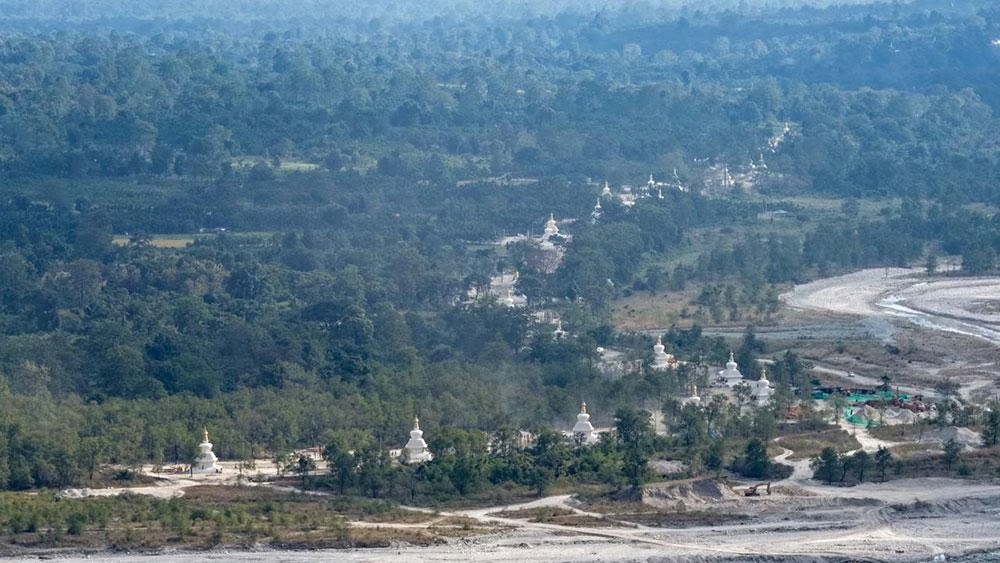
A Monumental Achievement in Gelephu Mindfulness City ✨
In an extraordinary display of collective determination and spiritual devotion, Bhutan accomplished what many would consider impossible: the simultaneous construction and raising of 108 sacred stupas in just nine hours. On November 1, 2026, the kingdom witnessed a historic convergence of over 130,000 participants gathered along the Mau Chhu River in Gelephu Mindfulness City to participate in this unprecedented undertaking. The completion of this monumental project, which surpassed its 12-hour scheduled timeline, stands as a testament to Bhutanese unity and organizational excellence.
The vision for this remarkable feat originated from His Majesty The King's announcement in February 2026, inspiring a nation-wide mobilization that would ultimately reshape the landscape of Gelephu. What began as an ambitious concept evolved into a carefully orchestrated reality, demonstrating the transformative power of shared purpose and collective action in modern times.
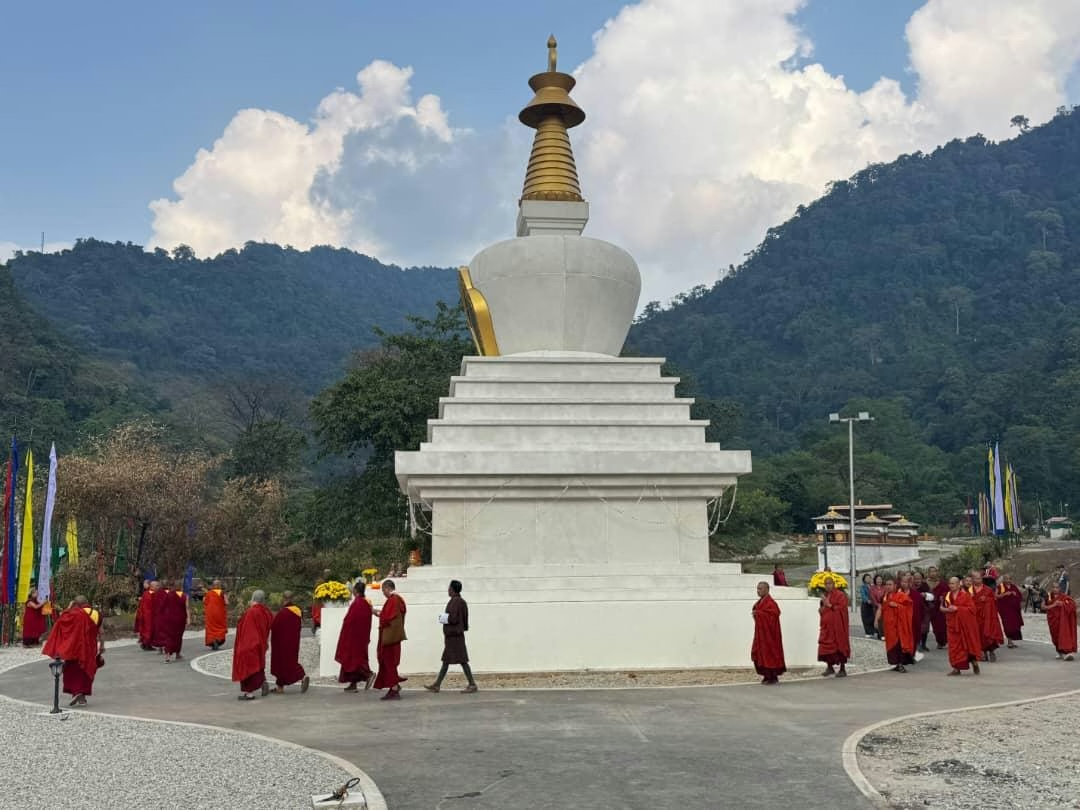
The Sacred Significance of 108 Jangchub Chortens 🙏
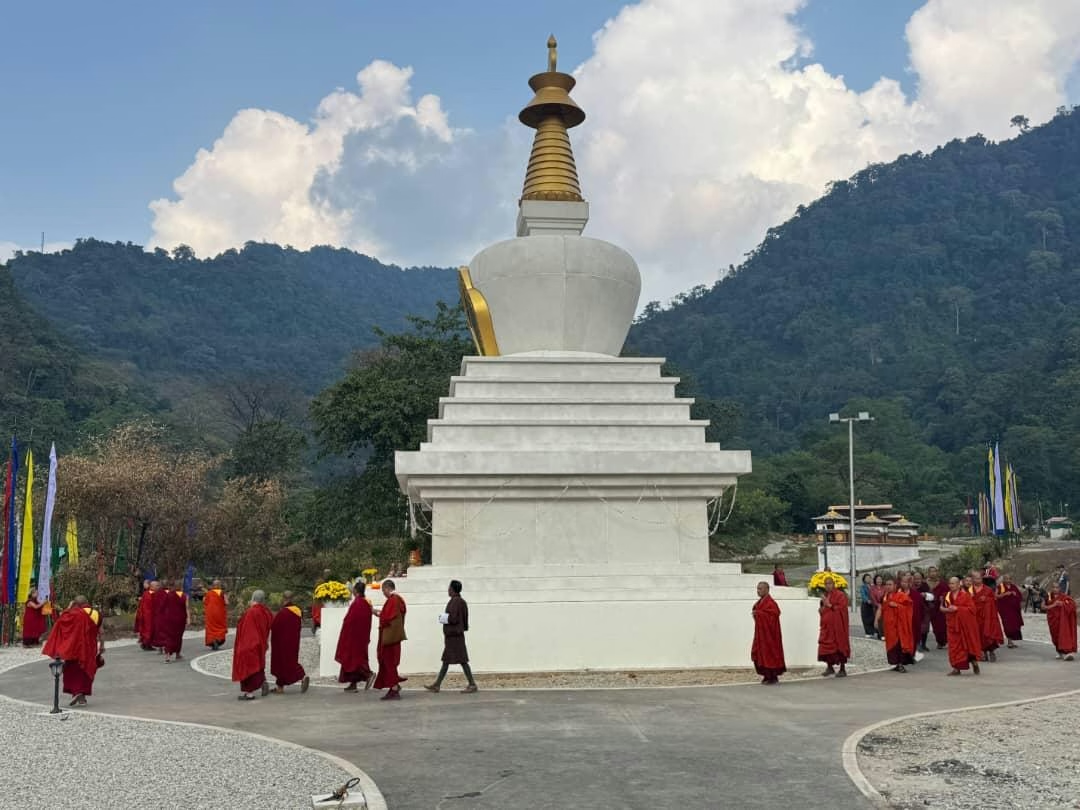
The 108 Jangchub Chortens, known in Sanskrit as Stupas of Enlightenment, are far more than architectural structures. Each stupa represents a profound spiritual intention—prayers for universal peace, protection, harmony, and the well-being of all sentient beings. This number holds deep significance in Buddhist tradition, appearing frequently in sacred texts and rituals throughout the religion's history.
The stupas stretch across 12 kilometers, beginning near the Serzhong cremation ground and extending toward Zombabe in Chhuzagang. Remarkably, each chorten is positioned exactly 108 meters apart, creating a continuous spiritual corridor. The structures themselves are engineering marvels: each rests on a concrete foundation measuring 9.8 meters square and 1.2 meters high, constructed from carbon steel with reinforced metal components securely fastened with industrial bolts.
The placement of these stupas wasn't arbitrary. The project transforms Gelephu into a living mandala, with each chorten serving as a focal point for meditation and spiritual practice. Connecting roads designed for pedestrians and cyclists link all 108 structures, while streetlights are being installed to facilitate evening circumambulation—a sacred Buddhist practice of walking around holy objects in a clockwise direction.
An Unprecedented Mobilization of Resources 🏗️
The successful completion of this project required extraordinary preparation and coordination. More than 2,000 trained volunteers worked tirelessly across the 108 sites, having undergone nearly three months of intensive training to handle the technically demanding aspects of the construction. Their precision, timing, and cooperation were essential to the project's success.
Complementing the volunteer workforce were over 1,000 monks who participated in the installation of Zung (sacred relics) within each chorten. This integration of spiritual practitioners with construction workers created a unique synergy—blending technical expertise with devotional practice.
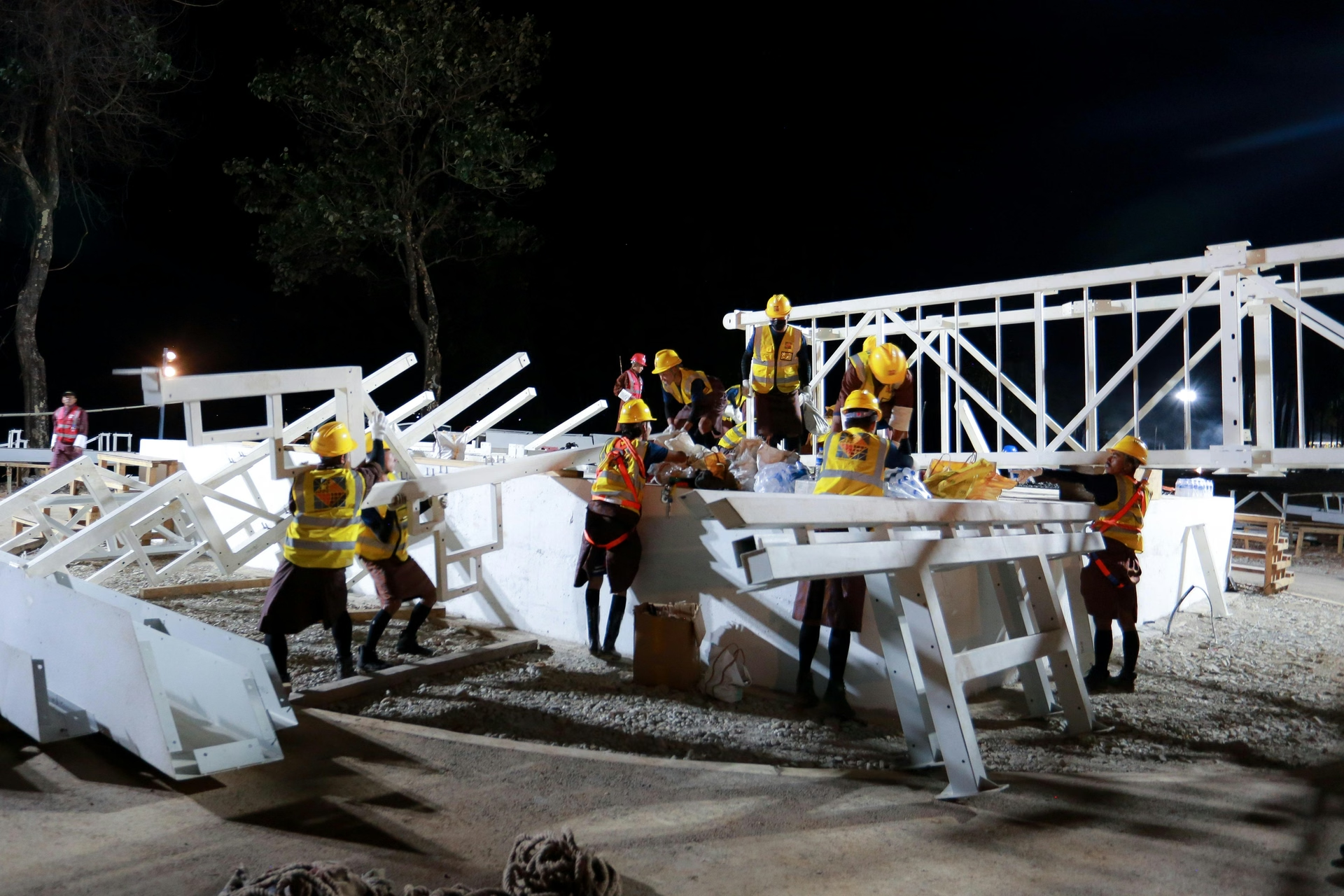
The logistics alone were staggering:
- 2,000+ trained volunteers coordinating across 108 simultaneous construction sites
- 1,000+ monks performing ritual installations of sacred relics
- 130,945 registered participants from 54 countries
- 77,009 registered general helpers providing support services
- Three months of pre-project training for construction teams
The Timeline: From Dawn to Completion ⏰
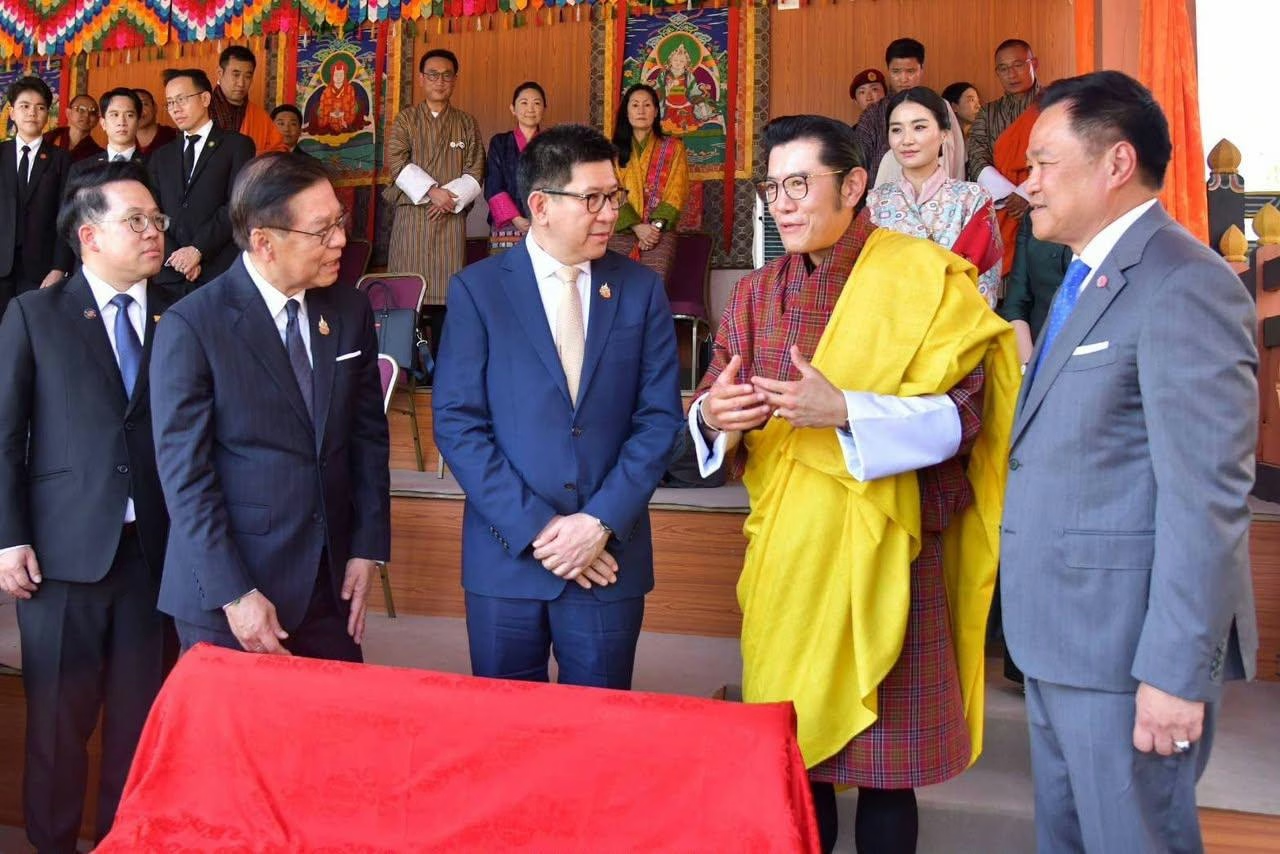
The raising of the stupas began before dawn, with construction volunteers assembling at designated sites from 1:30 AM to make final preparations. His Majesty The King and members of the Royal Family arrived at Chorten No. 1 in Serzhong around 2:45 AM, preceding the sacred Sungchoe (consecration ceremony) presided over by His Holiness the Je Khenpo.
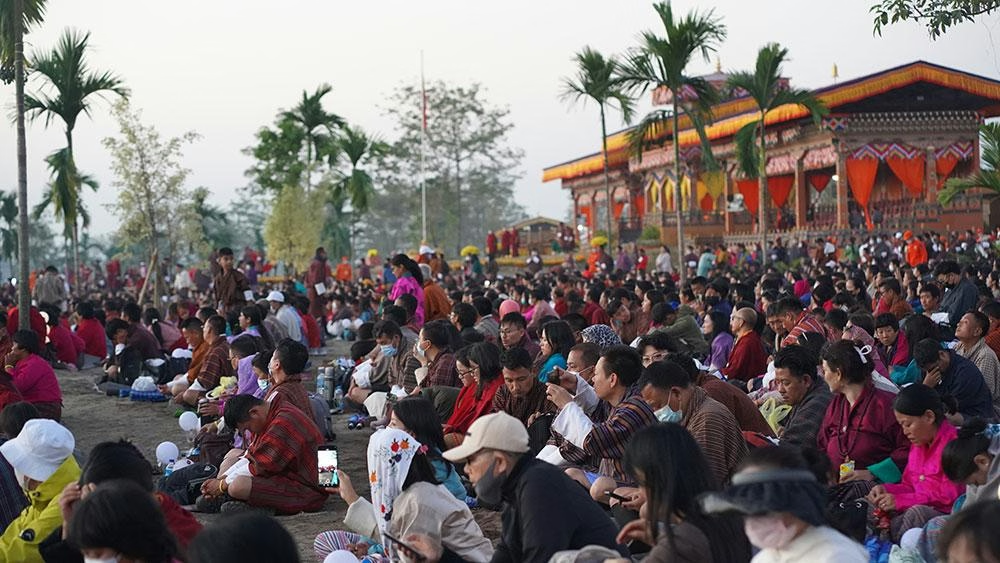
At precisely 3:00 AM, the deep, resonant sounds of 18 sets of Dungchen (traditional long ritual horns) echoed across the Mau Chhu River, signaling the commencement of the historic raising. Tens of thousands of attendees, who had filled their designated viewing sites as early as 2:00 AM, held aloft light offerings called Marme while reciting the six-syllable mantra of Chenrezig, the Buddha of Compassion: Om Mani Padme Hung.
By 8:00 AM, nearly 45 percent of the work had been completed, with the stupas gradually rising above the surrounding landscape. By noon, all 108 sacred structures stood complete—accomplished in just nine hours, exceeding expectations and demonstrating the remarkable efficiency of the coordinated effort.
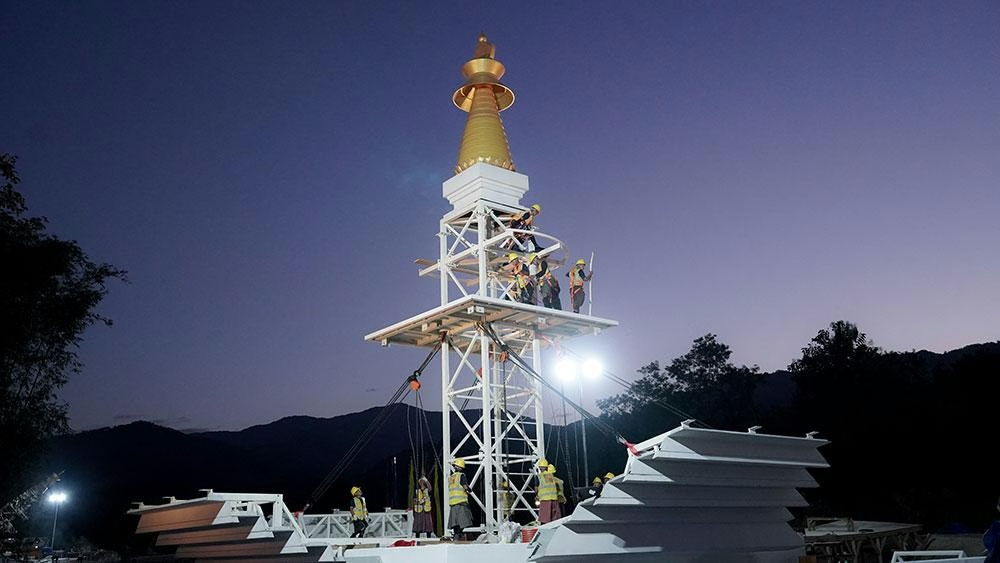
As the final chortens reached their full height, the Dungchens sounded once more, marking the triumphant completion of the undertaking. The moment embodied a Bhutanese proverb that resonated throughout the project: "A confederation of frogs can even kill a tiger"—a powerful reminder that collective strength surpasses individual limitations.
A National and International Gathering 🌍
The scale of participation reflected the project's significance within Bhutanese society and its growing international recognition. The 130,945 registered participants represented an unprecedented mobilization:
Domestic Participation:
- Bhutanese participants: 129,857 (99.2% of total registrations)
- Highest participation from Thimphu: 22,474 registrants
- Significant representation from Sarpang (17,543), Chukha (9,208), Samtse (8,548), and Trashigang (7,381)
International Representation:
- China led international registrations with 405 participants
- India followed with 181 registrants
- Australia contributed 55 participants
- United States sent 31 representatives
- Participants from 54 countries in total
Demographic Diversity:
- Male participants: 70,338 (54%)
- Female participants: 60,175 (46%)
- Median age: 39 years
- Largest age group: 37,587 participants aged 35-45
- Elderly participants: 979 aged 76-90, with 19 above 90 years old
The oldest participant was 100-year-old former Yangbi Lopen Baso Karp from Haa, followed by 99-year-old Chan Siu Wan from China and 98-year-old Dorji from Punakha. Their presence underscored the project's spiritual importance across generations.
Logistical Excellence and Community Support 📋
The successful execution required meticulous planning for accommodation, meals, and volunteer coordination:
- 33,497 participants requested accommodation assistance
- 64,675 participants indicated they would prepare their own meals
- 35,550 participants utilized designated mess facilities
- 77,009 registered as general helpers providing essential support services
This infrastructure ensured that participants from across Bhutan and beyond could focus on the spiritual significance of the event without logistical concerns.
Sacred Timing and Religious Significance 🙏
The timing of this historic undertaking held profound religious meaning. November 1, 2026, coincided with two significant observances: the 18th Coronation Anniversary of His Majesty The King and Lhabab Düchen, which commemorates Lord Buddha's descent from the celestial realms. This convergence of secular and spiritual anniversaries elevated the project's significance within Bhutanese culture.
Following the completion of the 108 stupas, a series of sacred ceremonies unfolded:
- November 1 (Evening): Consecration of all 108 stupas
- November 2: A 12-kilometer ceremonial walk from Chorten No. 1 to Chorten No. 108, followed by a complete circuit of the entire stretch
- November 4: Religious masters conferring Wang (empowerment) and Lung (oral transmission) to participants
Personal Stories of Devotion 💫
Beyond the statistics and logistics, the project was fundamentally about individual acts of faith and commitment. Eighty-two-year-old Lam Sangay Wangdi from Thimphu exemplified this spirit, choosing to witness the raising in person rather than watching from home. He reported chanting approximately 80,000 repetitions of the mani mantra beginning at 2:00 AM, demonstrating the depth of spiritual practice integrated into the event.
Thousands of similar stories unfolded throughout the morning—individuals and families who traveled considerable distances to participate, holding their light offerings aloft and joining in collective recitation. These personal acts of devotion, multiplied across over 130,000 participants, created the emotional and spiritual foundation upon which the project's success was built.
The Vision Behind Gelephu Mindfulness City 🌟
Gelephu Mindfulness City represents a broader strategic vision for Bhutan's development. Rather than pursuing conventional economic growth models, the project integrates spiritual practice with sustainable urban planning. The 12-kilometer corridor of stupas creates a unique infrastructure for meditation and mindfulness practice—transforming daily activities like walking and cycling into opportunities for spiritual engagement.
This approach aligns with Bhutan's constitutional commitment to prioritize Gross National Happiness over Gross Domestic Product. By designing urban spaces that facilitate mindfulness and spiritual practice, Gelephu Mindfulness City offers an alternative model for development that other nations increasingly recognize as valuable.
What This Achievement Means for Bhutan 🎯
The successful raising of 108 stupas in a single day transcends the completion of a construction project. It demonstrates several critical truths about contemporary Bhutan:
National Unity: Despite geographic distances and demographic diversity, Bhutanese citizens mobilized around a shared vision, proving that collective purpose can overcome logistical challenges.
Organizational Capacity: The coordination of 2,000+ volunteers, 1,000+ monks, and over 130,000 participants showcases Bhutan's capacity for complex project management and execution.
Spiritual Resilience: In an increasingly secular world, Bhutan's commitment to integrating spiritual practice into national projects reflects the kingdom's distinctive cultural identity and values.
International Recognition: The participation of over 1,000 international visitors from 54 countries signals growing global interest in Bhutan's unique approach to development and well-being.
Looking Forward: The Continuing Journey 🚀
The completion of the 108 stupas marks not an ending, but a beginning. The structures now stand as permanent spiritual anchors in Gelephu, inviting ongoing pilgrimage, meditation, and circumambulation. The connecting roads, pedestrian pathways, and streetlights will facilitate daily spiritual practice for residents and visitors alike.
Future generations will walk these 12 kilometers, circumambulate these stupas, and participate in ceremonies yet to unfold. The project's true measure of success will emerge over decades, as the structures become woven into the daily spiritual life of Gelephu's residents and pilgrims from across the Buddhist world.
What Bhutan accomplished on November 1, 2026, was more than construction—it was a collective affirmation of shared values, spiritual commitment, and the transformative power of unified action. In an era of increasing fragmentation and division, the raising of 108 stupas in a single day offers a profound reminder that extraordinary achievements become possible when communities stand together with clear intention and unwavering purpose.