Category:
EnvironmentBhutan's Freshwater Abundance: A Global Perspective
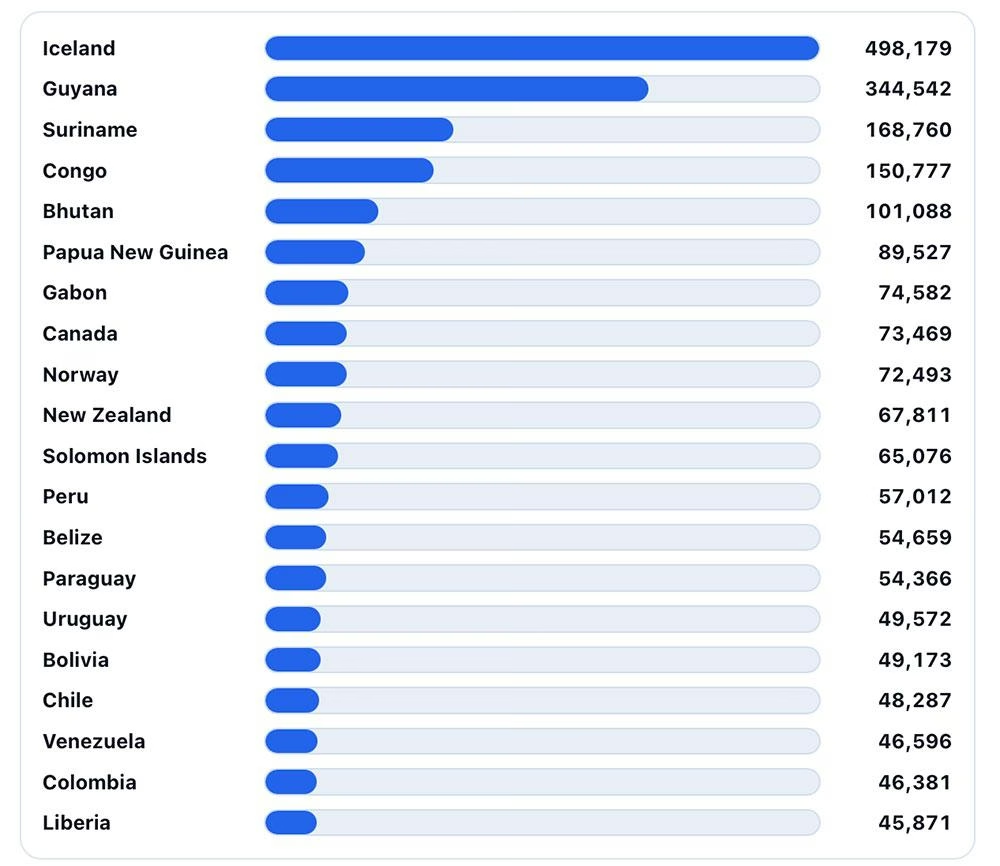
Bhutan, the picturesque Himalayan kingdom, has recently achieved a remarkable feat by ranking fifth globally in freshwater resources per capita. This accolade, highlighted in a report by StatRanker.org, places Bhutan as the only Asian nation in the top 10, showcasing its significant natural water wealth. 🌍💧
Understanding Bhutan's Water Wealth
The report evaluated 100 countries based on renewable freshwater availability per person each year. Bhutan impressively stands out with vast water resources, ranking just behind Iceland, Guyana, Suriname, and the Republic of the Congo. This ranking is a testament to Bhutan's rich hydrological endowment, derived from its numerous rivers, lakes, and groundwater sources.
However, it is essential to note that these figures represent a country's natural water resources and do not necessarily translate to water security or quality. Several factors such as infrastructure, pollution levels, and governance play a crucial role in determining access to safe drinking water. 🌱
Water Quality Challenges in Bhutan
Despite Bhutan's abundance of freshwater, the quality of drinking water remains a pressing concern. A study by the Royal Centre for Disease Control (RCDC) highlights that drinking water quality has not seen significant improvements over the past eight years. This is despite continued investments in infrastructure and monitoring systems. 🏗️
Key Findings on Water Quality
- Only 52.8% of urban water samples meet national microbial standards.
- Eastern Bhutan shows the lowest compliance levels.
- Serious gaps exist in water disinfection systems, with only 11.9% of samples meeting chlorine standards.
The Impact of Microplastics
Microplastic contamination has emerged as a global concern, and Bhutan is not immune. The highest concentration of microplastics was found in stream water. Although bottled water showed lower levels, the presence of polyethylene terephthalate (PET) particles remains significant. Microplastics pose potential health risks, and Bhutan has yet to establish specific standards for their management. 🧴
Government Initiatives and Future Goals
Recognizing the challenges, Bhutan's government is implementing measures to enhance water quality. The Drinking Water Quality Standard 2025 aims to increase the proportion of people using safely managed drinking water from 70.3% in 2023 to 90% by 2025. This initiative underscores the government's commitment to addressing water quality issues and ensuring sustainable water management. 🚰
Strategic Priorities
- Focus on reducing microbial contamination, particularly E. coli.
- Strengthen regulatory oversight on water quality standards.
- Expand safely managed drinking water access in urban and rural areas.
Broader Environmental Context
Bhutan's environmental policies have always been forward-thinking. As a carbon-negative country, Bhutan prioritizes ecological balance and sustainable development. The nation's commitment to preserving its natural resources is evident through its conservation efforts and environmental policies. This dedication extends to managing its water resources sustainably, ensuring that future generations continue to benefit from its natural wealth. 🌿
Conclusion: A Path Forward
Bhutan's ranking in freshwater resources is a proud achievement, reflecting its natural endowment. However, the journey towards achieving comprehensive water security and quality is ongoing. With strategic investments, improved infrastructure, and robust governance, Bhutan is poised to overcome its water challenges, ensuring that its citizens enjoy the benefits of its abundant water resources safely and sustainably. 🌟
As Bhutan continues to navigate its path towards enhanced water management, it remains an inspiring example of balancing natural wealth with sustainable practices. The future holds promise as Bhutan strives to turn its water abundance into a model of water security and quality. 💪
You May Also Like
Environment
Climate Crisis in the Himalayas: Bhutan's Cold Reminder
August 29, 2026
Environment
WBH Conservation Project Delivers Clean Water to Rural Homes
August 29, 2026
Environment
HKH Climate Crisis: Why Regional Unity Matters Now
August 29, 2026
Environment
Bhutan's Solar Power Revolution: Energy Security Strategy
August 26, 2026