Category:
EnvironmentMillions in Waste: Why Three Incinerators Remain Idle
A Costly Infrastructure Crisis in Bhutan's Waste Management ♻️
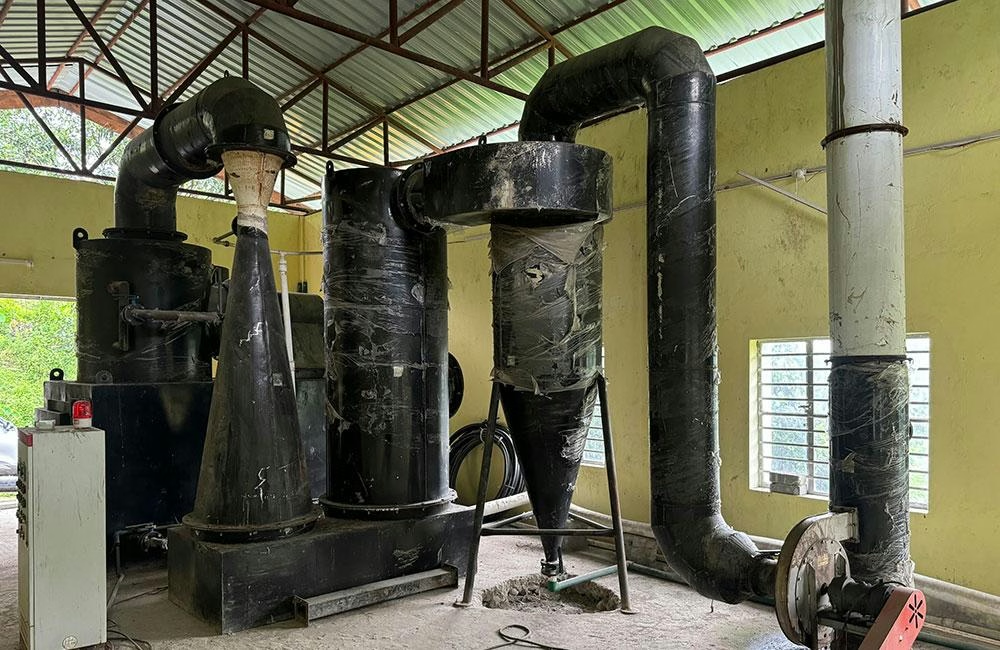
When the Covid-19 pandemic swept across the globe, governments scrambled to find emergency solutions for managing unprecedented volumes of hazardous medical waste. Bhutan was no exception. In 2020, the government invested approximately USD 374,000 in donor funding to procure three state-of-the-art incinerators designed to safely dispose of biomedical and infectious waste. Nearly four years later, these machines—located in Thimphu, Mongar, and Phuentsholing—sit broken, abandoned, or completely unused. 😔
This situation represents far more than just a financial loss. It highlights systemic failures in infrastructure planning, operational oversight, and long-term sustainability that continue to plague Bhutan's environmental management sector.
The Pandemic-Era Emergency Purchase 🏥
The three 300-kilogram capacity incinerators were procured by the National Environment Commission with funding from the United Nations Development Programme under the Covid-19 Response and Recovery Project. At the time, the rationale seemed sound. Healthcare facilities across Bhutan were overwhelmed with infectious waste that required immediate, safe disposal.
These machines featured advanced technologies including scrubbers and enclosed chambers—sophisticated systems designed to minimize harmful emissions and ensure compliance with environmental safety standards. Unlike open burning, which poses severe health and environmental risks, these incinerators represented a modern, regulated approach to hazardous waste management.
The Department of Environment and Climate Change (DECC) emphasized that these facilities were procured under extraordinary circumstances when rapid disposal capacity was critical to containing virus spread. However, what was meant as a temporary pandemic response has become a permanent reminder of poor infrastructure planning.
Phuentsholing: Broken After Just Two Uses 🔧
The Phuentsholing incinerator at Pekarzhing tells a particularly troubling story. According to local officials, the machine operated successfully only twice before experiencing a critical component failure. The diesel ignition system burned out, rendering the facility non-operational.
In an attempt to restore functionality, Phuentsholing Thromde brought in local technical experts from neighboring Indian towns of Jaigaon and Siliguri. Unfortunately, these specialists lacked the expertise to repair the sophisticated equipment. The incinerator has remained defunct for four years since that initial breakdown.
DECC officials maintain that the facility remains strategically important infrastructure for managing highly toxic waste from Phuentsholing General Hospital. They claim coordination efforts continue with local authorities to assess technical requirements and determine next steps for operation and maintenance. Yet despite these stated intentions, no concrete progress has materialized.
Thimphu's Memelakha Facility: Under Perpetual Review 🔍
The incinerator at Memelakha in Thimphu presents a different kind of problem. Unlike Phuentsholing's equipment failure, this machine's inactivity stems from bureaucratic uncertainty about its role in the capital's broader waste management strategy.
The previous government had specifically selected pyrolytic incineration—also known as controlled-air or double-chamber incineration—for this facility. This technology is widely recognized as the most reliable and commonly used process for healthcare waste treatment globally. The project was jointly led by the National Environment Commission and the Ministry of Health.
Currently, DECC is reassessing the appropriate role of incineration alongside other treatment and resource-recovery options. This review considers waste characteristics, environmental safeguards, and technical feasibility. In practical terms, this means the Memelakha facility remains idle while bureaucratic processes unfold, with no clear timeline for operational status.
Mongar: Technically Sound, Operationally Absent 🤷
The Mongar incinerator presents perhaps the most frustrating scenario—the machine is fully functional but sits unused due to the absence of a dedicated operator. Located below Konbar farmroad, this facility has the technical capacity to handle 300 kilograms of waste in a 12-hour cycle.
However, a project engineer involved in the installation revealed that unclear operational guidelines have been a primary obstacle to deployment. Despite the facility's proven capability and the infrastructure investment surrounding it, bureaucratic ambiguity has rendered it dormant.
The supporting infrastructure alone—including a 100-meter approach road, cooling tank, boundary fencing, water supply, and electricity systems—cost approximately 5.8 million Bhutanese Ngultrum, excluding the incinerator itself. This represented most of the approved 6.2 million Ngultrum budget.
Interestingly, the Mongar facility was originally designated for Gelephu but was relocated following community objections and land designation challenges. This administrative shuffling suggests broader governance issues affecting environmental infrastructure projects.
The Royal Audit Authority's Damning Assessment 📋
These operational failures did not escape scrutiny. In June 2024, the Royal Audit Authority released a performance audit report that characterized the underutilization of incineration facilities as a systemic failure across the country's waste management infrastructure.
The audit identified recurring problems including:
- High fuel consumption rates that made operations economically unsustainable
- Extended burning durations that reduced operational efficiency
- Critical component failures affecting multiple facilities
- Lack of preventive maintenance protocols
- Insufficient operator training and certification
This wasn't merely criticism of the three pandemic-era incinerators—it exposed fundamental weaknesses in how Bhutan manages hazardous waste infrastructure across all facilities.
Why Infrastructure Investment Fails in Practice 💔
The idle incinerators reveal several interconnected problems affecting Bhutan's environmental management sector:
Inadequate Planning: The facilities were procured as emergency pandemic responses without comprehensive long-term operational strategies. This created a mismatch between infrastructure procurement and operational capacity.
Technical Expertise Gaps: Local technicians lack familiarity with sophisticated incineration technology. When equipment fails, repair options are limited to expensive international specialists or complete replacement.
Bureaucratic Ambiguity: Unclear operational guidelines, undefined responsibilities between agencies, and uncertain funding mechanisms have paralyzed facility activation. DECC, local thromdes, and dzongkhag administrations operate without clear mandates.
Sustainability Challenges: The facilities were never integrated into comprehensive waste management systems with dedicated funding, trained personnel, and maintenance protocols. They exist as isolated infrastructure rather than components of cohesive environmental management.
The Broader Context of Bhutan's Waste Crisis 🌍
These three incinerators represent just one aspect of Bhutan's larger waste management challenges. As the country develops economically, waste generation increases faster than disposal infrastructure can accommodate. Healthcare facilities, industries, and urban centers all struggle with proper hazardous waste management.
The pandemic highlighted these vulnerabilities acutely. Healthcare waste volumes surged unpredictably, forcing emergency procurement decisions. However, the transition from emergency response to sustainable long-term management has proven difficult.
Bhutan's commitment to environmental conservation—enshrined in the constitutional mandate that 60 percent of the country remain forested—makes proper waste management increasingly important. Uncontrolled burning and improper disposal threaten these conservation goals.
Moving Forward: What Needs to Change 🚀
DECC officials now emphasize that incineration should not be treated as the sole solution to Bhutan's waste management challenges. Instead, they propose reviewing the role of incineration within broader waste management systems, prioritizing solutions based on:
- Waste characteristics and composition
- Environmental safeguards and emissions standards
- Operational feasibility and local capacity
- Long-term sustainability and cost-effectiveness
- Resource recovery options and circular economy principles
This represents a more sophisticated approach than the pandemic-era emergency procurement. However, translating this philosophy into operational reality requires sustained commitment, adequate funding, and clear accountability structures.
Key Takeaways: Lessons for Infrastructure Development 📌
The story of Bhutan's idle incinerators offers important lessons for policymakers and environmental managers:
Emergency procurement requires transition planning. Facilities acquired during crises must have clear pathways to sustainable operation once emergency conditions resolve.
Technical capacity must precede infrastructure investment. Acquiring sophisticated equipment without trained operators and maintenance expertise guarantees failure.
Bureaucratic clarity is essential. Ambiguous responsibilities, unclear guidelines, and undefined funding mechanisms paralyze infrastructure utilization.
Systemic thinking beats isolated solutions. Individual facilities require integration into comprehensive waste management ecosystems with coordinated agency roles.
Accountability mechanisms matter. Performance audits revealed problems, but without enforcement mechanisms, systemic failures persist.
Conclusion: From Waste to Wisdom ✨
Bhutan's experience with idle incinerators demonstrates that infrastructure investment alone cannot solve environmental challenges. The three machines gathering dust in Thimphu, Mongar, and Phuentsholing represent millions in donor funding that failed to deliver intended benefits.
Yet this situation is not irredeemable. DECC's evolving approach—prioritizing comprehensive waste management systems over isolated infrastructure—suggests learning from past failures. The Royal Audit Authority's performance audit provides accountability and transparency.
The path forward requires sustained commitment to operational excellence, technical capacity building, and bureaucratic coordination. As Bhutan continues its development journey, how it manages waste—both literally and administratively—will define its environmental legacy. The idle incinerators serve as a cautionary reminder that good intentions and adequate funding, without proper planning and execution, cannot guarantee environmental success.
You May Also Like
Environment
Punakha's Record Heat: Climate Crisis Threatens Bhutan's Future
August 15, 2026
Environment
Leopards Thrive Alongside Growing Tiger Population
August 15, 2026
Environment
Taba Waste Facility: Five Years Idle, Accountability Missing
August 12, 2026
Environment
Informed Governance: The Key to Inclusive Climate Resilience
August 8, 2026